
Stop Fighting Financial Fires: CFO Services for Swiss CEOs & SMEs
Quick Answer
Senior CFO expertise without the full-time cost. Scalemetrics delivers outsourced CFO services for Swiss SMEs in Zürich, Basel & Zug. Book a free call today.
For founders and CEOs of startups and established SMEs across Switzerland from the biotech corridors of Basel to the luxury markets of Geneva the impulse to maintain total control is understandable. You built the business, and you know every detail. Yet, when it comes to finance, the desire for solo control often becomes the biggest obstacle to sustainable Swiss-level scaling.
The CEO’s mandate is to drive vision and growth. When you’re constantly pulled into the financial weeds, the cost is clear: lost strategy, missed opportunities, and looming risk.
At Scalemetrics, we see this pattern daily. We are the strategic partners who turn financial stress into structure, ensuring your business stays on a confident, compliant, and profitable course.
The CEO’s Financial Gauntlet: 3 Crisis Points of Solo Management
When a CEO handles the complex financial function alone, the initial good intentions quickly give way to three predictable points of failure that threaten even the most robust Swiss companies.
1. Cash Flow Turns Turbulent (The Liquidity Trap) 🌊
A common mistake in fast-growing Swiss businesses is confusing revenue with liquidity. The CEO, focused on sales, often misses the operational signs of trouble:
- The Problem: Delayed invoicing, unmanaged payment terms, and a lack of rolling cash flow forecasts create blind spots. You’re making strategic decisions based on bank balances, not future viability.
- The Result: You suddenly find yourself in a reactionary mode, struggling to cover payroll or critical supply chain payments, turning potential growth into a fight for survival.
2. Forecasts Slip Away (The Strategy Drift) 📉
In Switzerland’s competitive and regulated environment, strategic planning must be precise. Financial forecasting is not about guessing; it’s about modeling future growth, capital needs, and risk exposure.
- The Problem: Without a dedicated financial strategist, forecasts are often static, failing to account for market shifts, currency fluctuations (CHF volatility), or regulatory changes (e.g., Swiss tax law updates).
- The Result: Strategic investments, hiring plans, and expansion decisions are based on shaky assumptions, causing strategy drift and wasting precious capital.
3. Fighting to Stay Afloat (The Risk Overload) 🆘
When financial governance lacks professional oversight, the business exposes itself to regulatory, compliance, and internal fraud risk-a critical failure point in Switzerland’s high-trust business ecosystem.
- The Problem: Financial processes aren’t structured, reporting is delayed, and compliance with local (e.g., Swiss GAAP, VAT) and international standards is compromised.
- The Result: Before you know it, financial chaos replaces clarity, demanding all the CEO’s time and energy to fix the past instead of building the future.
The Solution: How Scalemetrics Delivers Financial Clarity with a Strategic CFO Team
You are an expert in your product or service. We are experts in financial navigation. Scalemetrics is not just an accounting firm; we are a strategic CFO-as-a-Service partner designed to meet the demands of modern Swiss startups and SMEs.
Here is how we turn chaos into a predictable, scalable framework:
1. Proactive Cash Flow and Liquidity Management
| CEO Alone (Reactive) | Scalemetrics CFO Team (Proactive) |
| Focus: Current bank balance | Focus: 12-24 month rolling cash flow forecast |
| Action: Cut costs when cash is low | Action: Optimize working capital, manage FX risk, and identify funding gaps before they occur. |
| Result: Stress, volatility, missed payments | Result: Stable liquidity, confident investment, and clear runway. |
2. Precision Forecasting and Strategic Modeling
We provide the financial intelligence that allows you to manage risk and exploit growth opportunities across the Swiss and international markets.
- Investor-Grade Financials: We build robust, verifiable financial models and reporting packages essential for successful fundraising or securing capital in a discerning financial market.
- Scenario Planning: We model multiple outcomes (e.g., best case, worst case, new market entry) to equip the CEO with data-driven decision tools, eliminating the need for “gut feeling.”
- KPI Alignment: We move beyond basic profit and loss to align operational Key Performance Indicators (KPIs) with financial metrics, giving the CEO a single, holistic view of business health.
3. The Strength of E-E-A-T and Compliance
In the Swiss market, Trustworthiness is paramount. A professional financial function elevates the credibility of your entire company-essential for banks, investors, and regulators.
- Regulatory Shield: Our team ensures complete compliance with local regulations, minimizing the risk of costly fines and protecting your business reputation.
- Scalable Infrastructure: We implement modern, automated financial systems and processes that are built to handle 10x growth, giving you a financial foundation that is future-proof.
[Scalemetrics]: Your Strategic Co-Pilot for Swiss Success
Even the strongest leaders need a team that’s got their back when the current gets rough. A CEO managing a scaling company should be focused on product, people, and markets-not on daily spreadsheet reconciliation.
Scalemetrics provides:
- Executive Expertise: The strategic insight of a full-time CFO, without the full-time expense.
- Unbiased Perspective: An objective partner to challenge assumptions and ensure decisions are data-led.
- Swiss Market Know-How: Deep understanding of local tax, compliance, and funding landscapes.
Ready to exchange your financial turbulence for a clear, strategic sailing plan?
Let’s talk. Our mission is to transform your financial chaos into your greatest competitive advantage. 🤝
💡 Conclusion: The Takeaway for Swiss CEOs
The decision is simple: continue fighting fires alone, or partner with a strategic financial team to finally focus on what you do best-leading your business to new heights.
Related Resources
Scalemetrics helps Swiss SMEs act on decisions like this before market conditions shift. Our SME financing services and outsourced CFO team give finance directors the senior expertise to move first.
Sources & References
Frequently Asked Questions
What failure points arise when a CEO manages the company’s financial function without dedicated support?
When a CEO handles the complex financial function alone, the initial good intentions quickly give way to three predictable points of failure that threaten even the most robust Swiss companies.
What should a CEO focus on instead of daily spreadsheet reconciliation as a company scales?
Even the strongest leaders need a team that’s got their back when the current gets rough. A CEO managing a scaling company should be focused on product, people, and markets, not on daily spreadsheet reconciliation.
What does a fractional CFO do for a Swiss SME?
A fractional CFO manages the full financial infrastructure of a Swiss SME: OR-compliant bookkeeping, quarterly MWST filings, AHV payroll, budgeting, financial modelling, and board-level reporting. The engagement is part-time and flexible, delivering CFO-level expertise at a fraction of the cost of a full-time hire (CHF 3,000–12,000/month vs CHF 216,000–350,000/year).
When should a Swiss SME engage CFO-as-a-Service?
A Swiss SME typically needs CFO-as-a-Service once annual revenue exceeds CHF 1M, headcount grows beyond 10 employees, or fundraising or M&A activity begins. The fractional model is optimal between CHF 1M and CHF 20M revenue. Above CHF 20M with active deal flow, a full-time CFO hire becomes justified.
The Financial Fires That Consume Swiss SME CEOs
Financial firefighting — the constant reactive management of cash crises, compliance surprises, and reporting failures — is the mode in which too many Swiss SME CEOs operate their finance function. They are not choosing to manage reactively; they have simply not built the proactive financial infrastructure that would allow them to operate differently. The consequences are measurable: time spent on finance problems that should be spent on strategy and customers, decisions made under cash pressure that would have been different decisions made from a position of financial clarity, and compliance risks that accumulate in the background until they become expensive to resolve.
The three financial fires that most consistently consume Swiss SME CEO attention are: cash flow emergencies (the month-end bank balance is lower than expected, a payment cannot be made, a payroll run is at risk), compliance crises (a MWST filing is overdue, an AHV contribution was calculated incorrectly, the annual accounts are six months late), and investor-readiness failures (an investor has expressed interest but the financial model is not ready, the accounts are not current, the data room does not exist). Each of these fires is entirely preventable — and the prevention cost is a fraction of the resolution cost, both financially and in terms of leadership time and credibility.
Preventing cash flow emergencies requires a rolling twelve-month cash flow model, updated weekly, that shows the timing of every significant inflow and outflow: customer receipts, supplier payments, payroll, AHV contributions, BVG pension payments, MWST quarterly remittances, and cantonal tax prepayments. This model does not need to be sophisticated — it needs to be accurate and current. A Swiss SME CEO who reviews this model weekly will never be surprised by a cash problem that has been building for three months.
Building a Proactive CFO Function That Prevents Fires Before They Start
A proactive CFO function — whether delivered by an in-house CFO, a fractional CFO partner, or a finance manager supported by a part-time CFO — operates on a rhythm that is incompatible with firefighting. The monthly close is a defined, repeatable process. The compliance calendar is managed prospectively, with provisions made monthly and filings submitted before deadlines. The cash flow model is updated weekly as a standard activity, not a crisis response. The investor data room is maintained as a living document, updated quarterly, so that it is always within two weeks of being ready to share with a prospective investor.
Building this infrastructure from a firefighting starting point takes, typically, one to three months of intensive work: cleaning up the accounting system, rebuilding the chart of accounts, establishing the compliance calendar, building the cash flow model, and creating the management reporting pack. This is not pleasant work — it involves confronting the accumulated disorder of a finance function that was not a priority during a period of growth focus. But the return on this investment is immediate and sustained: from the first month of the new system, the CEO spends less time on finance and more time on the business, compliance risks are identified and managed before they become problems, and the financial clarity that supports good decision-making is available on demand rather than on a three-week lag.
Fire Prevention vs. Firefighting: Time and Cost Comparison for Swiss SME CEOs
| Finance Problem | Firefighting Cost | Prevention Cost |
|---|---|---|
| Cash Flow Emergency | Emergency financing at poor terms + CEO stress | Weekly cash model update (1 hr/week) |
| MWST Filing Overdue | 4% p.a. interest + penalty + resolution time | Monthly accrual + calendar management |
| AHV Contribution Error | Correction + interest + audit risk | Correct calculation process, reviewed monthly |
| Investor Data Room Not Ready | 4–8 weeks delay + loss of momentum | Maintained quarterly, always 2 weeks from ready |
| Late Annual Accounts | Banking relationship risk + tax penalty risk | Monthly close within 5 days + fiduciary coordination |
The CFO services that prevent financial fires are not overhead — they are the most important investment a Swiss SME can make in protecting and growing the business. Our strategic CFO services give Swiss CEOs the proactive financial management that converts reactive crisis management into strategic financial leadership.
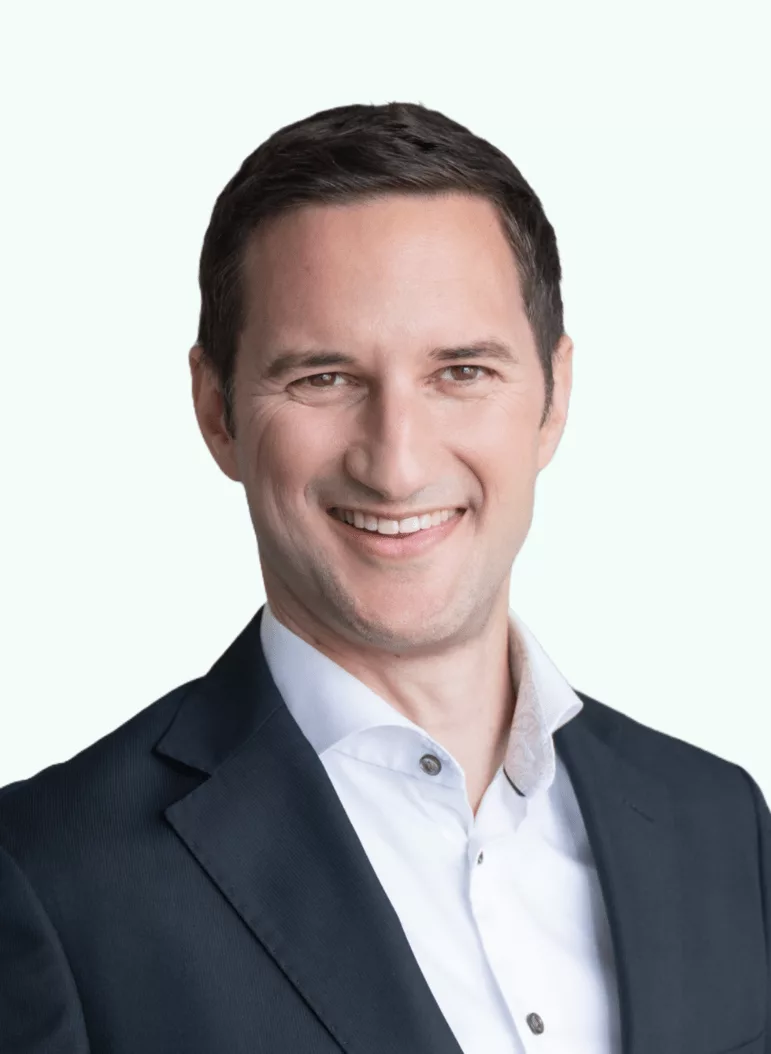
Pascal Stämpfli leverages over a decade of expertise in corporate finance and venture capital to scale and optimize businesses. A CFA charterholder with a Master's in Economics from the University of St. Gallen, Pascal specializes in market & company assessments, strategy, and business value creation. Having assessed more than 1,000 companies for financial and strategic investors provides him with a sophisticated understanding of investor rationale and capital allocation. As the Managing Director of Scalemetrics and Managing Partner at COREangels Big Data & AI Europe, Pascal operates at the intersection of financial discipline and technological innovation.