
Best Practices for Converting a GmbH into an AG in Switzerland
Quick Answer
Convert GmbH to AG in Switzerland: CHF 100k minimum capital, notary costs CHF 3-8k, timeline 4-8 weeks. When it makes sense and when to stay as a GmbH.
Converting a Gesellschaft mit beschränkter Haftung (GmbH) into an Aktiengesellschaft (AG) is a significant step for businesses looking to enhance their capital access, facilitate share transfers, and attract more investors. This transformation can open doors to new opportunities but requires careful planning and execution. In this blog, we will explore the best practices for successfully converting a GmbH into an AG in Switzerland, ensuring you save both time and money during the process.
Understanding the GmbH to AG Conversion
Before delving into the specifics, it’s essential to understand the motivations behind this conversion. The primary reasons include:- Improved Capital Access: An AG structure allows for easier capital acquisition through share issuance.
- Easier Share Transfers: Shares in an AG can be transferred more freely than those in a GmbH, making it attractive for investors.
- Greater Investor Appeal: An AG is often perceived as more stable and credible, enhancing investor confidence.
Key Steps for Conversion
The conversion process involves several critical steps. Here’s a detailed breakdown:1. Capital Increase 💵
The first requirement for converting a GmbH into an AG is ensuring that the company meets the minimum capital requirement.- Minimum Capital Requirement: An AG must have a minimum share capital of CHF 100,000, with at least CHF 50,000 paid in.
- Raising Capital: If your current capital does not meet this requirement, consider the following options:
- Deposits into a Blocked Account: This method allows you to raise necessary funds while keeping them secure until the conversion is complete.
- Converting Retained Earnings: If your GmbH has accumulated profits, these can be converted into share capital.
- Preparation of Documents: To save costs and time, prepare all necessary documents in advance. It’s advisable to combine the capital increase meeting with the notary session to streamline the process.
2. Legal Documentation 📄
Legal documentation is crucial for the conversion process.- Engaging a Legal Advisor: A qualified legal advisor will help prepare essential documents, including:
- Conversion Plan: This outlines how the conversion will take place.
- Balance Sheet: A recent balance sheet (no older than six months) must be included.
- Simplified Procedures for SMEs: Under the Swiss Merger Act, small and medium-sized enterprises (SMEs) may benefit from simplified procedures. If all shareholders agree, certain steps can be skipped, which can significantly reduce both time and legal expenses.
3. Shareholders’ Meeting 🗳️
A formal shareholders’ meeting is necessary to approve the conversion.- Agenda Items:
- Approval of the conversion.
- Adoption of new articles of association.
- Election of a new board of directors.
- Automatic Transfer of Rights and Obligations: The Swiss Merger Act ensures that all rights and obligations automatically transfer to the new AG upon conversion approval.
- Efficient Coordination: To expedite the process further, coordinate this meeting with other necessary steps and aim to finalize everything in one session.
4. Registering with the Commercial Register 📅
The final step in the conversion process is registration with the Commercial Register.- Legal Effectiveness Upon Registration: The conversion becomes legally effective only after registration.
- Timeline and Costs: The registration process typically takes between 2 to 4 weeks. Costs range from CHF 4,000 to CHF 5,000, covering legal fees, notary fees, and registration costs.
- Cost-Saving Strategies: By streamlining document preparation and utilizing SME-friendly options under the Swiss Merger Act, you can minimize both costs and processing time effectively.
Key Legal and Financial Considerations for GmbH to AG Conversion
When planning your conversion from GmbH to AG, consider these additional factors:- Tax Implications: Consult with a tax advisor to understand any potential tax consequences associated with the conversion.
- Impact on Stakeholders: Communicate openly with stakeholders about how this change may affect them. Transparency can help maintain trust during this transition.
- Future Growth Strategy: Align your conversion strategy with your long-term business goals. An AG structure may facilitate future expansions or mergers more effectively than a GmbH.
Is Converting Your GmbH to an AG the Right Move?
Converting a GmbH into an AG in Switzerland can significantly enhance your company’s growth potential by improving access to capital and appealing to investors. By following these best practices-ensuring adequate capital increase, preparing comprehensive legal documentation, holding an efficient shareholders’ meeting, and registering promptly-you can navigate this complex process smoothly and cost-effectively. If you’re considering this transition or need expert financial guidance tailored to your specific situation, don’t hesitate to reach out for professional assistance. Your journey towards becoming an AG could be just around the corner!Related Resources
👉 A legal restructuring always warrants a financial review. Our due diligence services for Swiss SMEs surface hidden liabilities before you complete the conversion.
Need senior financial guidance for your Swiss SME? Learn how our outsourced CFO services can help your business respond to change faster.
Corporate Tax Switzerland: What Every Swiss SME Needs to Know for 2026
Switzerland’s competitive corporate tax Switzerland environment – effective rates ranging from 11.9% in Zug to 19.7% in Geneva at the combined federal, cantonal, and municipal level – is one of the country’s key competitive advantages. But for Swiss SMEs, the advantage only materialises if the tax position is actively managed. The introduction of the OECD Global Minimum Tax (Pillar Two) from 2024, applying a 15% minimum effective rate for groups with consolidated revenue above EUR 750 million, has changed the planning landscape for larger Swiss holding structures. More relevant for most Swiss SMEs is the Qualified Domestic Minimum Top-Up Tax (QDMTT), which affects Swiss subsidiaries of multinational groups.
For typical Swiss SMEs below the Pillar Two threshold, the highest-value corporate tax Switzerland planning levers remain: choosing the right cantonal domicile, optimising the timing and form of profit distributions (dividend vs. salary), maximising the R&D super-deduction (150% of qualifying R&D costs under cantonal law in many cantons), and managing hidden equity contributions and distributions that trigger withholding tax exposure. Scalemetrics prepares corporate tax returns for Swiss SMEs across all cantons, coordinates with cantonal tax authorities on advance rulings, and flags planning opportunities that generic accounting firms often miss because they lack the CFO-level strategic overlay to connect the tax position to the broader financial plan.
Sources & References
Frequently Asked Questions
What financial services does Scalemetrics provide for Swiss SMEs?
Scalemetrics provides Swiss SME owners and CFOs with practical financial expertise: from accounting and tax compliance to financial planning, KPI monitoring, and on-demand CFO services. The goal is to give growing businesses access to senior financial leadership without the cost of a full-time hire.
When does a Swiss SME need a fractional CFO?
A fractional CFO becomes valuable from around CHF 1–2M in annual revenue, or ahead of specific events: bank financing applications, investor rounds, M&A, or rapid growth phases. The cost is a fraction of a full-time CFO salary, with expertise available immediately.
How does Scalemetrics differ from a traditional Swiss fiduciary firm?
Traditional fiduciary firms focus on tax compliance and year-end accounts. Scalemetrics adds strategic financial leadership: rolling forecasts, cash flow modelling, KPI dashboards, and financing advisory, delivered as an ongoing mandate or for a specific project.
Which Swiss cantons does Scalemetrics cover?
Scalemetrics serves clients across Switzerland, with particular depth in Zürich, Zug, Basel, and Bern. Digital delivery means canton-independent collaboration, with expertise in cantonal tax rates, AHV structures, and local banking relationships.
What does outsourced accounting for Swiss SMEs include?
Outsourced accounting for Swiss SMEs covers OR-compliant bookkeeping under Arts. 957–963b, monthly bank reconciliation, accounts payable and receivable management, payroll runs with AHV/BVG/UVG deductions, quarterly MWST filings, and monthly financial statement preparation, delivered by an external specialist without the fixed cost of an in-house team.
Which Swiss accounting standards apply to SMEs?
Swiss SMEs must maintain accounts under the Code of Obligations (OR), Arts. 957–963b, using accrual-basis bookkeeping with a balance sheet and income statement. Companies with turnover above CHF 500,000 or 10+ employees require a statutory limited audit (eingeschränkte Revision) unless all shareholders formally opt out.
Legal and Financial Considerations When Converting from GmbH to AG
Converting a Gesellschaft mit beschränkter Haftung (GmbH) into an Aktiengesellschaft (AG) in Switzerland is a structural decision with significant legal, financial, and governance implications. Under the Swiss Merger Act (Fusionsgesetz, FusG), such a conversion is treated as a transformation (Umwandlung) and must comply with specific procedural requirements set out in Articles 53–68 FusG. The process preserves legal continuity — assets, liabilities, and contracts transfer automatically — but the financial and administrative costs are material and must be planned carefully.
The minimum share capital of a Swiss AG is CHF 100,000, of which at least 50% (CHF 50,000) must be paid in at incorporation. A GmbH requires a minimum capital of only CHF 20,000. For many SMEs completing a conversion, the capital top-up requirement necessitates either a capital contribution from existing shareholders or a formal capital increase. This has direct cash flow implications and may affect short-term liquidity ratios if the funds cannot be drawn from existing reserves.
The conversion must be approved by a qualified majority of GmbH shareholders and requires a notarised public deed (öffentliche Beurkundung). Commercial Register (Handelsregister) fees apply in the relevant canton, and the process typically takes six to twelve weeks from resolution to registration. Professional legal and financial advisory fees for a straightforward GmbH-to-AG conversion typically range between CHF 5,000 and CHF 15,000 depending on cantonal complexity and whether a capital increase is required.
When the AG Structure Creates Strategic and Financial Advantages
The most common driver for GmbH-to-AG conversion among Swiss SMEs is investor readiness. Institutional investors, private equity firms, and family offices strongly prefer the AG structure because it offers a more familiar governance framework: a board of directors (Verwaltungsrat) with defined responsibilities under OR Article 716a, auditing requirements above certain thresholds, and shares that can be issued in registered or bearer form (though bearer shares were largely abolished in 2019). For SMEs preparing for external financing rounds, the AG structure removes a structural objection that can delay or complicate term sheet negotiations.
A second driver is employee equity. The AG structure allows for stock option plans, employee share ownership schemes, and convertible instruments in ways that the GmbH cannot replicate cleanly. Swiss tax authorities have specific guidance on employee equity under the Mitarbeiterbeteiligungsgesetz, and the AG's share structure accommodates these instruments far more efficiently. For SMEs competing for senior talent against larger employers, equity compensation is increasingly a differentiator.
Finally, the AG structure carries reputational weight in certain Swiss industries and client segments. Cantonal administrations, financial institutions, and multinational procurement functions sometimes treat AG status as a signal of institutional maturity. While this is not a sufficient reason alone to convert, it can be a tiebreaker in competitive procurement situations.
| Factor | GmbH | AG |
|---|---|---|
| Minimum Capital | CHF 20,000 | CHF 100,000 (50% paid in) |
| Governance Structure | Managing directors | Verwaltungsrat (board) |
| Share Transferability | Restricted (requires notarial deed) | Freely transferable (registered shares) |
| Employee Equity | Limited mechanisms | Full options/share plans |
| Investor Appeal | Moderate | High |
If your SME is approaching a fundraise or acquisition conversation, working with a specialist in investor readiness before initiating a structural conversion will ensure the process is sequenced correctly and that the capital structure post-conversion supports your financing objectives.
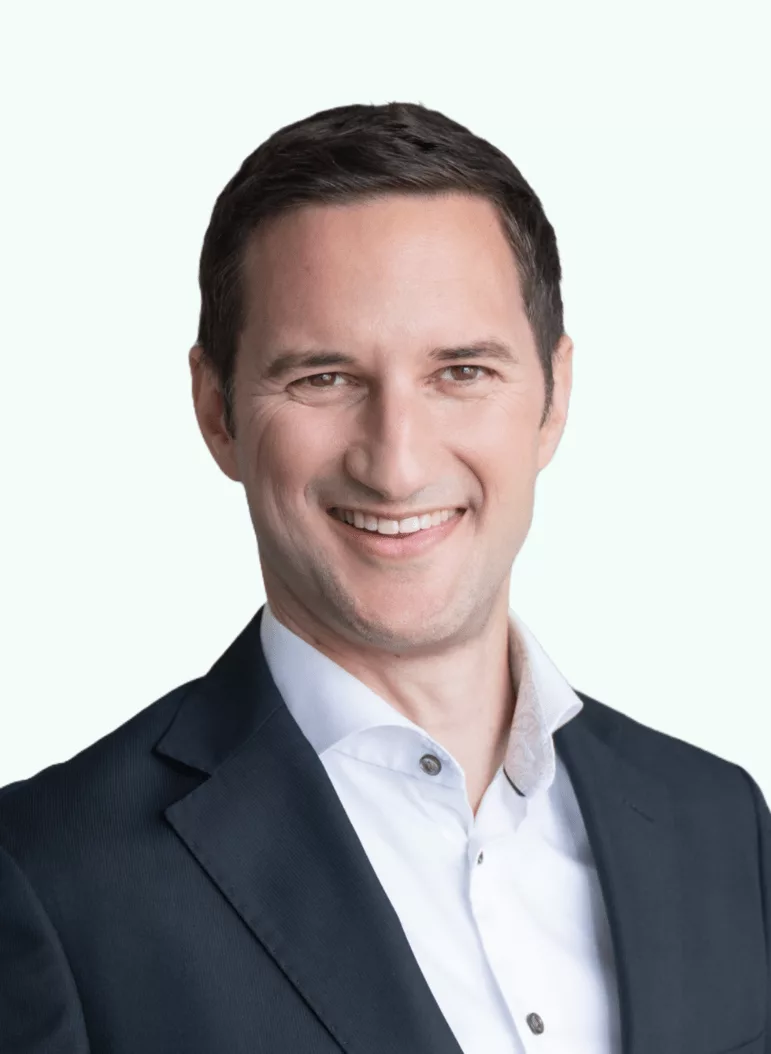
Pascal Stämpfli leverages over a decade of expertise in corporate finance and venture capital to scale and optimize businesses. A CFA charterholder with a Master's in Economics from the University of St. Gallen, Pascal specializes in market & company assessments, strategy, and business value creation. Having assessed more than 1,000 companies for financial and strategic investors provides him with a sophisticated understanding of investor rationale and capital allocation. As the Managing Director of Scalemetrics and Managing Partner at COREangels Big Data & AI Europe, Pascal operates at the intersection of financial discipline and technological innovation.