
Debt vs Equity Financing for Swiss SMEs in 2026: Choosing the Right Capital
When a Swiss SME needs capital to grow, the first question is not where to get it but what kind to get. Debt and equity are fundamentally different tools with different costs, risks, and consequences for control of the business. In 2026, with borrowing historically cheap and equity harder and more dilutive to raise, the balance has shifted in a way many owners have not fully absorbed. This guide sets out how to choose between debt and equity for a Swiss SME today.
The core trade-off
Debt is money you repay with interest but keep control of; equity is money you never repay but pay for by giving away ownership and a share of all future profits.
A loan has a defined cost and an end date: you service it, you repay it, and the lender walks away. Equity has no repayment date, but the investor stays, shares in every future franc of profit, and holds rights over how the company is run. Debt is cheaper when you are confident in your cash flows; equity is safer when the future is uncertain and you cannot promise fixed repayments. The right answer depends less on what is available and more on how predictable your business is and how much control you are willing to share.
The case for debt in 2026
With the SNB policy rate at 0% and SME loans priced low, debt is unusually cheap in 2026, and its interest is tax-deductible.
Swiss SMEs can currently borrow floating on SARON-linked terms at roughly 0.8 to 1.5%, or fix for three to seven years at around 1.8 to 3.0%. Because most SME lending is SARON-linked and resets quarterly, a change in the SNB rate flows through to borrowing costs within about 90 days, which cuts both ways. Crucially, interest on business debt is deductible against taxable profit, lowering the effective cost further, while dividends paid to equity investors are not. For a profitable, cash-generative SME with predictable revenue, debt in 2026 is a low-cost way to fund growth without giving up a single share.
The case for equity
Equity suits businesses whose cash flows are too uncertain or too far off to service fixed debt, but in 2026 it is more expensive and more dilutive than in recent years.
Equity never has to be repaid, survives a bad year without triggering a default, and brings investors who often add expertise and networks. That makes it the right tool for early-stage or fast-scaling companies that cannot yet promise steady repayments. The catch in 2026 is price: the Swiss funding market has seen a valuation reset, with down rounds more common, so founders raising equity now give away more ownership for the same money than they would have in 2022. Equity is patient capital, but today it is dear capital, and every share sold is a permanent claim on future profits.
The Swiss tax angle: deductibility and thin capitalisation
Interest deductibility makes debt attractive, but Swiss thin-capitalisation rules cap how much related-party debt the tax authorities will recognise.
Interest on genuine third-party debt is deductible, which is a real advantage over dividends. However, for debt from shareholders or related parties, the Federal Tax Administration applies thin-capitalisation rules: it publishes maximum debt ratios by asset class and annual safe-harbour interest rates, and debt exceeding those limits can be reclassified as hidden equity. The consequence is that the excess interest becomes non-deductible and may be treated as a hidden profit distribution subject to withholding tax. Note: these rules and rates are specific and updated annually, so the exact limits for your balance sheet should be confirmed with a Swiss tax adviser before structuring shareholder loans. For most SMEs borrowing from a bank on arm’s-length terms, deductibility is straightforward.
Matching capital to purpose
The soundest rule is to match the life of the financing to the life of what it funds: short-term needs to short-term facilities, long-term assets to long-term capital.
Funding a temporary working-capital gap with a multi-year equity round is expensive overkill; financing a decade-long investment with a short overdraft is dangerous. Predictable, asset-backed investments such as equipment or premises are natural fits for debt, whose fixed cost you can plan around. Bets with uncertain, back-loaded returns such as entering a new market or building a product are better matched to equity, which absorbs the risk. Getting this match right, explored further in our guide to Swiss SME financing beyond the bank, matters more than squeezing the last basis point off the headline rate.
How Swiss SMEs actually decide
In practice most Swiss SMEs use a blend, staging debt and equity to the company’s maturity and keeping enough borrowing capacity in reserve.
A typical path is founder and early equity to get started, then a shift toward debt as cash flows become predictable enough to service it. The discipline is to avoid extremes: an all-equity company gives away value it did not need to, while an all-debt company has no cushion when revenue dips, a real risk given Swiss SME optimism has fallen from 68% in 2024 to around 52%. A sound capital structure keeps some unused debt capacity for opportunities and shocks. Choosing the mix is a core financing decision where a fractional CFO earns its keep, modelling the cost of capital and the downside of each route before you commit.
One practical caveat with SME debt: Swiss banks often require personal guarantees from the owners, which reintroduces the personal risk that pure equity avoids. Factor the guarantee, and any covenants, into the true cost of borrowing, not just the headline interest rate.
Conclusion
Debt and equity are not interchangeable. In 2026, cheap, tax-deductible debt favours profitable SMEs with predictable cash flows, while pricier, more dilutive equity remains the right tool for genuinely uncertain bets. Match the capital to the purpose, respect the Swiss tax rules on related-party debt, and keep some borrowing capacity in reserve. The best structure is the one that funds growth without putting control or survival at risk.
Frequently Asked Questions
Is debt or equity cheaper for a Swiss SME in 2026?
Debt is cheaper for most profitable SMEs in 2026: SARON-linked loans run at roughly 0.8 to 1.5% and interest is tax-deductible, whereas equity is more expensive and dilutive following the valuation reset and more frequent down rounds in the Swiss funding market.
What is the main disadvantage of equity financing?
Equity is never repaid, but you permanently give away ownership and a share of all future profits, plus rights over how the company is run. In 2026 you also give away more equity for the same money because valuations have fallen from recent peaks.
Is interest on business loans tax-deductible in Switzerland?
Interest on genuine arm's-length debt is deductible against taxable profit, unlike dividends. For shareholder or related-party loans, thin-capitalisation rules limit recognised debt, and excess interest can be reclassified as a hidden profit distribution subject to withholding tax.
What are Swiss thin-capitalisation rules?
They cap how much related-party debt the tax authorities recognise relative to assets. The Federal Tax Administration publishes maximum debt ratios by asset class and annual safe-harbour interest rates; debt above the limit can be treated as hidden equity, with interest becoming non-deductible.
Should a Swiss SME use debt or equity to fund growth?
Match the financing to the purpose: predictable, asset-backed investments suit debt, while uncertain, back-loaded bets suit equity. Most SMEs blend the two over time and keep some unused borrowing capacity in reserve for opportunities and downturns.
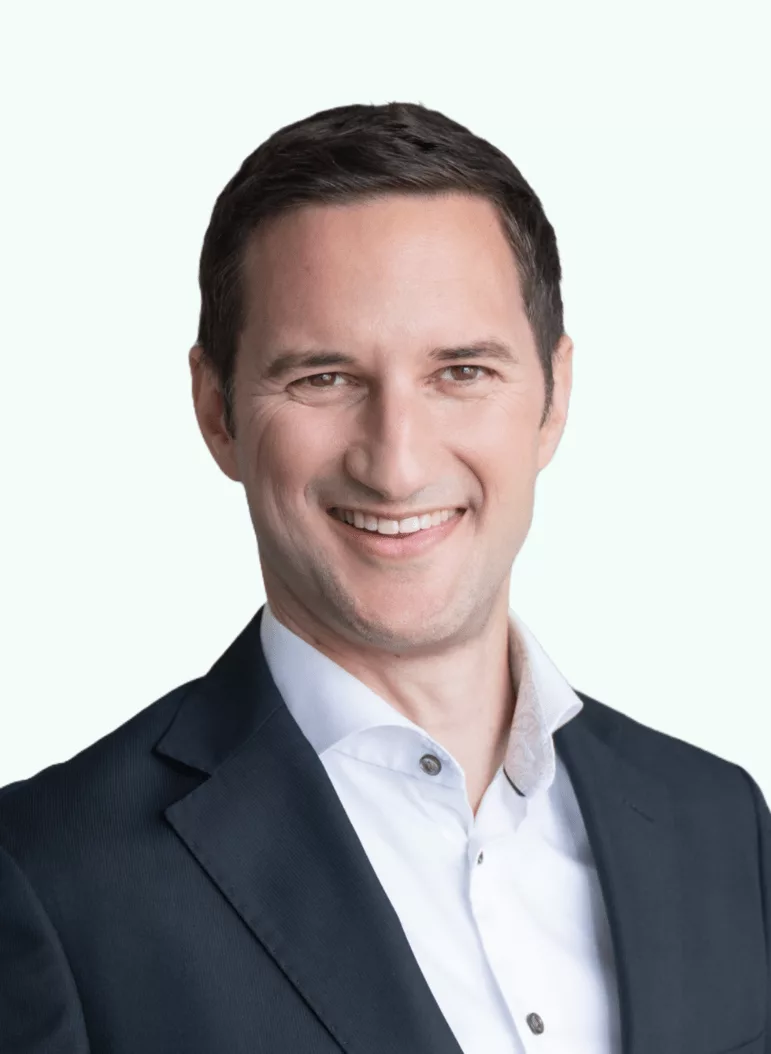
Pascal Stämpfli leverages over a decade of expertise in corporate finance and venture capital to scale and optimize businesses. A CFA charterholder with a Master's in Economics from the University of St. Gallen, Pascal specializes in market & company assessments, strategy, and business value creation. Having assessed more than 1,000 companies for financial and strategic investors provides him with a sophisticated understanding of investor rationale and capital allocation. As the Managing Director of Scalemetrics and Managing Partner at COREangels Big Data & AI Europe, Pascal operates at the intersection of financial discipline and technological innovation.