
NZZ KMU Barometer 2026: Swiss SMEs at an All-Time Low and What Resilient Businesses Do Differently
Quick Answer
NZZ KMU Barometer 2026: Swiss SME index at -7.3 all-time low. Only 1 in 3 can adapt in 6 months. What financially resilient Swiss SMEs do differently.
Swiss SMEs have never been this pessimistic. The NZZ KMU Barometer 2026 – Switzerland’s annual SME sentiment index, conducted by NZZ in collaboration with Kalaidos University of Applied Sciences – recorded its lowest reading since the survey began. The overall index fell to -7.3 index points, down across almost every sub-sector. In April 2026, 495 managers at Swiss SMEs took part. What they revealed is not just a mood – it is a structural warning signal that every Swiss business owner needs to understand.
The Numbers: What the NZZ KMU Barometer 2026 Found
The headline figure – -7.3 index points – is an all-time low. But the more significant finding is the split between operational and strategic resilience:
- 55% of SMEs rate themselves as resilient at the operational level – they can handle day-to-day disruption.
- Only 31% (fewer than 1 in 3) believe they can fundamentally adapt their business model within six months if market conditions demand it.
- Nearly 1 in 5 (19%) would face existential risk from an unexpected drop in turnover.
This is the critical insight: Swiss SMEs are tactically strong but strategically fragile. They execute well today. But they are not built to pivot when the economic landscape shifts – and in 2026, the landscape is shifting on multiple fronts simultaneously.
Why Swiss SMEs Are So Pessimistic in 2026
US Trade Policy and the Tariff Shock
The largest single drag on sentiment is foreign business exposure. US tariff policy has created direct cost increases for Swiss exporters – particularly in precision instruments, machinery, and specialty chemicals. The EUR/CHF rate below 0.93 compounds this: every 1% of CHF strength against the euro erodes Swiss exporter margins by approximately 0.6–1.0 percentage points.
Supply Chain Fragility
Geopolitical uncertainty – from the ongoing Ukraine conflict to Red Sea shipping disruptions – has made supply chain reliability a persistent concern. Swiss SMEs that source materials from Asia or sell into European markets are caught in a two-sided squeeze: input cost uncertainty on one side, demand fragility on the other.
Regulatory Burden
Swiss SMEs continue to flag regulatory complexity as a structural headwind. The 2026 regulatory pipeline includes new AML compliance obligations, the TLEA transparency register, and CSRD data requests cascading from large EU customers to Swiss suppliers – all requiring management time and compliance investment that most SMEs are not staffed to absorb easily.
AI: Opportunity or Threat?
For the first time in the survey’s history, artificial intelligence was named by 49% of respondents as their most pressing strategic challenge – more than digitalization (19%), the general economy (18%), or innovation (17%). The question is no longer whether AI will affect Swiss SMEs, but how fast and how deeply.
The Strategic Resilience Gap: Why It Matters Now
The NZZ Barometer’s subtitle for 2026 is “Unbreakable? Operationally strong, strategically stagnant.” That framing is precise. Swiss SMEs excel at maintaining operational continuity – their quality standards, workforce retention rates, and operational KPIs remain high. But strategic adaptability – the ability to reposition, restructure costs, or pivot revenue streams under pressure – is underdeveloped.
Three factors drive this strategic fragility in Swiss KMU:
1. Informal Financial Planning
Many Swiss SMEs manage finances reactively – tracking bank balances and monthly P&L, but lacking rolling forecasts, scenario models, or working capital dashboards. When conditions change, they have no pre-built analytical framework to support rapid decisions. A structured Business Monitoring and Controlling system directly addresses this gap.
2. Single-Point Concentration Risks
The barometer finds that SMEs most at risk tend to have high customer concentration (one or two clients representing 40%+ of revenue), single-supplier dependencies, or geographic exposure concentrated in one export market. These concentrations are not always visible without systematic financial monitoring.
3. No Rapid Cost-Base Visibility
Adapting a business model within six months requires knowing exactly where costs can be cut, which product lines are margin-positive, and how fast working capital can be released. Most SMEs do not have this visibility at speed. A fractional CFO or outsourced CFO structure provides it without the cost of a full-time hire – which is precisely why demand for outsourced CFO services grows in periods of elevated uncertainty.
What the Barometer Means for Your Financial Planning in 2026
The barometer is not just a sentiment survey. It is a diagnostic. If your SME shares the characteristics of the most vulnerable segment – high turnover concentration, no rolling forecast, limited scenario planning, no dedicated financial function – then the right response is not to wait for the shock but to build resilience before it arrives.
Concretely:
- Scenario planning: Model a 15% and 30% revenue drop. What happens to your cash runway? Your break-even? Your covenant headroom? Most Swiss SMEs have never run this exercise.
- Working capital review: Tighten debtor days, negotiate supplier terms, identify inventory that can be converted to cash faster.
- Cost-base analysis: Classify every cost line as fixed, semi-fixed, or variable. Understand the time lag to reduce each category – this becomes your restructuring playbook if needed.
- Funding pre-qualification: With cantonal banks tightening credit criteria and Kredo expanding as an alternative SME lender, understanding your financing options before a crisis is far more effective than discovering them during one.
The AI Challenge: A CFO Problem, Not Just an IT Problem
The finding that 49% of Swiss SME managers see AI as their top strategic challenge deserves special attention. Most SMEs frame AI as an IT project – which vendor to choose, which process to automate first. But the deeper issue is financial: AI adoption requires capital investment, transition costs, change management, and productivity accounting before the ROI becomes visible.
A CFO function – even an outsourced one – brings the financial discipline that separates successful AI adoption from expensive pilots that never scale. It answers the business-critical questions: What does this cost over 24 months, all-in? What is the payback period? Which processes have enough volume to justify automation?
Switzerland’s Macro Backdrop: Not Improving Fast
The KPMG European Economic Outlook (May 2026) expects Swiss GDP growth of 1.1% in 2026 – below potential and significantly below the Swiss SME economy’s requirement to absorb cost increases and investment needs simultaneously. PwC’s restructuring tracker notes corporate insolvencies rose 76% in January–February 2026 year-on-year. The Deloitte Swiss M&A report confirms that 168’000 Swiss SMEs face ownership transfers by 2030.
This macro context is not a reason for paralysis. It is a reason for precision. Swiss SMEs that build financial visibility, scenario flexibility, and strategic adaptability now will be better positioned than those that continue to operate on reactive instinct alone.
What Strong Swiss SMEs Do Differently
The barometer also reveals the outliers – the 31% that can adapt their business model rapidly. What distinguishes them? The data points to three common characteristics:
- They have financial infrastructure: Rolling forecasts, monthly controlling reviews, and real-time cash visibility. Not annual budgets reviewed quarterly.
- They have external advisory support: Access to senior financial or strategic advisors who bring perspective beyond the day-to-day. This is the fractional CFO model in practice.
- They have diversified revenue: No single client, market, or product representing more than 25–30% of total revenue.
None of these require a large balance sheet. A Swiss SME with CHF 5M in revenue can build this capability at a fraction of the cost of a full-time CFO hire – which is exactly the model Scalemetrics provides.
Taking Action: From Barometer Data to Your Business
The NZZ KMU Barometer 2026 is a mirror. It shows where the Swiss SME economy stands collectively. But what matters is where your business stands specifically – your resilience profile, your scenario exposure, your financial visibility.
If you want to assess your business against the dimensions the barometer identifies – strategic flexibility, cost-base visibility, revenue concentration, and financial adaptability – contact Scalemetrics for a focused financial resilience review. No long engagement required – a single strategic session often surfaces the most critical gaps.
Sources & References
Frequently Asked Questions
What does the NZZ KMU Barometer 2026 measure?
The NZZ KMU Barometer is Switzerland’s annual SME sentiment index, conducted by NZZ in collaboration with Kalaidos University of Applied Sciences. In 2026 it surveyed 495 Swiss SME managers (April 2026) and covers economic outlook, resilience, strategic adaptability, and key challenges. The 2026 index reached -7.3, an all-time low since the survey began.
Why are Swiss SMEs more pessimistic than ever in 2026?
The main drivers are: US tariff policy and its direct impact on Swiss exports, CHF strength against the EUR below 0.93, supply chain unreliability from geopolitical uncertainty, and growing regulatory burden (AML, TLEA transparency register, CSRD data requests). 49% of managers also name artificial intelligence as their single biggest strategic challenge.
What is the strategic resilience gap the NZZ Barometer identifies?
Only 31% of Swiss SMEs believe they can fundamentally adapt their business model within six months if conditions demand it. Nearly 1 in 5 would face existential risk from an unexpected revenue drop. Swiss SMEs are operationally strong but strategically stagnant, they lack the rolling forecasts, scenario models, and cost-base visibility needed to respond rapidly to structural shifts.
What should Swiss SMEs do to improve their financial resilience?
Four concrete steps: (1) Run a 15% and 30% revenue drop scenario model, most Swiss SMEs have never done this; (2) Review working capital, tighten debtor days, negotiate supplier terms, free up inventory; (3) Classify your entire cost base as fixed, semi-fixed, or variable, this becomes your restructuring playbook; (4) Pre-qualify for financing options before a crisis forces you to act under pressure.
How does an outsourced CFO help Swiss SMEs build resilience?
An outsourced or fractional CFO provides the financial infrastructure that the most resilient SMEs have, rolling forecasts, monthly controlling reviews, scenario planning, and real-time cash visibility. Without a full-time hire (which costs CHF 200,000–280,000/year all-in), Swiss SMEs can access CFO-level analytical capacity from CHF 15,000–25,000/year on a mandate basis.
What does a fractional CFO do for a Swiss SME?
A fractional CFO manages the full financial infrastructure of a Swiss SME: OR-compliant bookkeeping, quarterly MWST filings, AHV payroll, budgeting, financial modelling, and board-level reporting. The engagement is part-time and flexible, delivering CFO-level expertise at a fraction of the cost of a full-time hire (CHF 3,000–12,000/month vs CHF 216,000–350,000/year).
When should a Swiss SME engage CFO-as-a-Service?
A Swiss SME typically needs CFO-as-a-Service once annual revenue exceeds CHF 1M, headcount grows beyond 10 employees, or fundraising or M&A activity begins. The fractional model is optimal between CHF 1M and CHF 20M revenue. Above CHF 20M with active deal flow, a full-time CFO hire becomes justified.
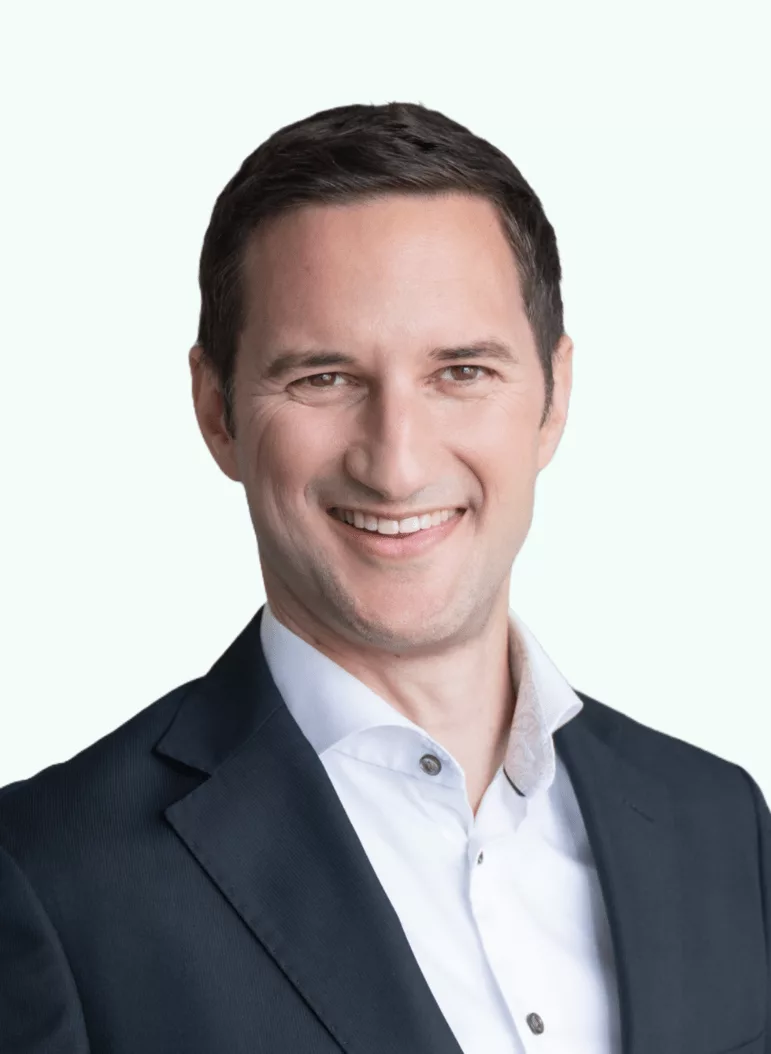
Pascal Stämpfli leverages over a decade of expertise in corporate finance and venture capital to scale and optimize businesses. A CFA charterholder with a Master's in Economics from the University of St. Gallen, Pascal specializes in market & company assessments, strategy, and business value creation. Having assessed more than 1,000 companies for financial and strategic investors provides him with a sophisticated understanding of investor rationale and capital allocation. As the Managing Director of Scalemetrics and Managing Partner at COREangels Big Data & AI Europe, Pascal operates at the intersection of financial discipline and technological innovation.