
SECO’s Adjusted Swiss GDP Forecast: Strategic Insights for Businesses in 2026
Quick Answer
Discover SECO's adjusted Swiss GDP forecast and learn how businesses can prepare for 2026 with key insights on GDP growth, investment, & international trade.
Switzerland’s economic landscape is evolving, and businesses need to be prepared for the changes ahead. SECO’s revised GDP forecast offers valuable insights into how the economy will shift in the coming years. Here’s what you need to know:
GDP Growth
- 2022: Real GDP growth stood at 2.4%.
- 2023: Growth slowed down to 1.3%.
- 2024: GDP is expected to decline further to 1.2%.
- 2025: A recovery is anticipated, with growth reaching 1.7%.
Consumption
- Private Consumption: Slowed down in 2023 but is expected to recover slightly by 2025.
- Government Consumption: Declined in 2023, with a gradual recovery forecasted in the years ahead.
Investment
- Physical Assets and Software: Investments in gross fixed capital formation (GFCF) dropped in 2023 and 2024 but are expected to rebound significantly by 2025. This is driven by increased spending on fixed assets, particularly benefiting Swiss tech companies, potentially fostering innovation, increased productivity, and growth in the sector.
Exports and Imports
- Both exports and imports are forecast to see significant growth by 2025. This signals the increasing importance of global markets for Swiss businesses. Companies should focus on international expansion and optimizing sourcing strategies to capture the benefits of trade growth.
Impacts on Businesses
Economic Recovery by 2025
With a growth recovery expected by 2025, businesses should consider strategic investments during the slower years. Positioning now for growth can yield strong returns as the economy rebounds.Investment in Fixed Assets and Software
The expected recovery in GFCF by 2025 highlights promising prospects for tech companies and businesses that rely heavily on capital investments. Firms investing in infrastructure, equipment, and technology will likely experience greater productivity and new opportunities.International Focus
The anticipated rise in exports and imports reinforces the need for businesses to adopt a global perspective. Expanding into international markets and diversifying sourcing strategies will be essential to capitalize on global trade growth.Strategic Planning
Businesses should prioritize investment in technology, explore new markets, and optimize supply chains to prepare for the expected recovery in 2026. Companies that focus on these key areas will be well-positioned to take advantage of future economic growth. For more detailed data, SECORelated Resources
Scalemetrics helps Swiss SMEs act on decisions like this before market conditions shift. Our budgeting and financial forecasting services and outsourced CFO team give finance directors the senior expertise to move first.
Sources & References
Frequently Asked Questions
What financial services does Scalemetrics provide for Swiss SMEs?
Scalemetrics provides Swiss SME owners and CFOs with practical financial expertise: from accounting and tax compliance to financial planning, KPI monitoring, and on-demand CFO services. The goal is to give growing businesses access to senior financial leadership without the cost of a full-time hire.
When does a Swiss SME need a fractional CFO?
A fractional CFO becomes valuable from around CHF 1–2M in annual revenue, or ahead of specific events: bank financing applications, investor rounds, M&A, or rapid growth phases. The cost is a fraction of a full-time CFO salary, with expertise available immediately.
How does Scalemetrics differ from a traditional Swiss fiduciary firm?
Traditional fiduciary firms focus on tax compliance and year-end accounts. Scalemetrics adds strategic financial leadership: rolling forecasts, cash flow modelling, KPI dashboards, and financing advisory, delivered as an ongoing mandate or for a specific project.
Which Swiss cantons does Scalemetrics cover?
Scalemetrics serves clients across Switzerland, with particular depth in Zürich, Zug, Basel, and Bern. Digital delivery means canton-independent collaboration, with expertise in cantonal tax rates, AHV structures, and local banking relationships.
What financial infrastructure do Swiss SMEs need to operate compliantly?
Swiss SMEs need: OR-compliant accrual-basis bookkeeping, quarterly MWST filings with the ESTV, monthly AHV/IV/EO payroll contributions to the cantonal SVA, BVG occupational pension administration, UVG accident insurance, annual corporate tax returns, and management reporting. A fractional CFO covers this entire compliance stack.
How much does outsourced CFO services cost in Switzerland?
Outsourced CFO services in Switzerland cost CHF 3,000–12,000 per month depending on scope and company complexity. This covers the full finance function: bookkeeping, payroll, MWST, budgeting, financial modelling, and reporting. Compared to a full-time CFO at CHF 216,000–350,000 annually including social costs, the outsourced model saves CHF 100,000–200,000+ per year.
What SECO's GDP Revision Means for Swiss SME Financial Planning
When the State Secretariat for Economic Affairs (SECO) revises Switzerland's GDP forecast, the ripple effects reach far beyond the Swiss National Bank and export conglomerates. For Swiss SMEs, a downward or upward adjustment in projected economic output signals shifts in consumer demand, credit availability, and the broader operating environment. Understanding how to translate macro-level forecasts into actionable financial decisions is precisely where strategic CFO thinking adds value.
Switzerland's GDP growth trajectory has historically been shaped by three pillars: export performance (primarily pharma, medtech, and financial services), domestic consumption, and public investment. When SECO trims its growth projection — even modestly, from 1.4% to 1.1% — SMEs in supply chains connected to large exporters often feel the squeeze within two to three quarters. Slower growth means procurement teams at major corporates extend payment terms, reduce order volumes, or defer capital investment decisions that benefit supplier SMEs.
For CFOs and founders managing Swiss businesses, the response should be analytical rather than reactive. A GDP revision is a leading indicator, not a verdict. The key question is: which specific channels affect your revenue model, and on what lag?
Translating Macro Signals into SME-Level Action
Practical CFO responses to a revised GDP outlook fall into three categories: liquidity buffer adjustment, scenario-based forecasting, and pricing strategy review.
Liquidity buffers: In a slowing growth environment, Swiss SMEs should target a minimum liquidity runway of 90 days of operating expenses held in accessible CHF-denominated instruments. Swiss banking relationships — particularly with cantonal banks and PostFinance — typically allow overdraft facilities to be renegotiated ahead of a credit tightening cycle. Proactive communication with your Hausbank during positive periods protects access to lines during leaner quarters.
Scenario forecasting: A SECO revision is an ideal trigger to run three-scenario models: base (aligned with revised SECO figures), bear (GDP contraction of 0.3–0.5%), and bull (recovery to prior forecast). Each scenario should map to specific revenue, headcount, and capital expenditure decisions. This is not speculative — it is responsible financial governance under the Obligationenrecht (OR) duty of care that applies to Swiss management boards.
Pricing strategy: CHF appreciation, which often accompanies slower Swiss growth as a safe-haven effect, compresses margins for export-oriented SMEs. If your revenues are EUR- or USD-denominated while costs are CHF-denominated, a 5% currency move can eliminate quarterly profit. Hedging instruments through Swiss banks or pricing clauses in contracts with foreign clients should be reviewed at every macro inflection point.
| GDP Scenario | SECO Projection Range | SME CFO Priority | Key Risk |
|---|---|---|---|
| Moderate Growth | 1.0%–1.5% | Maintain liquidity, selective hiring | Delayed client payments |
| Stagnation | 0%–0.9% | Freeze discretionary spend, extend credit lines | Margin compression, CHF strength |
| Contraction | Below 0% | Scenario planning, cost restructuring | Revenue shortfall, covenant breach |
If your business lacks the internal finance capacity to run robust scenario models linked to macroeconomic signals, partnering with a strategic CFO provides access to that capability without the cost of a full-time executive hire. In a year where SECO is recalibrating expectations, Swiss SMEs that act on leading indicators rather than lagging financial statements will be better positioned entering 2027.
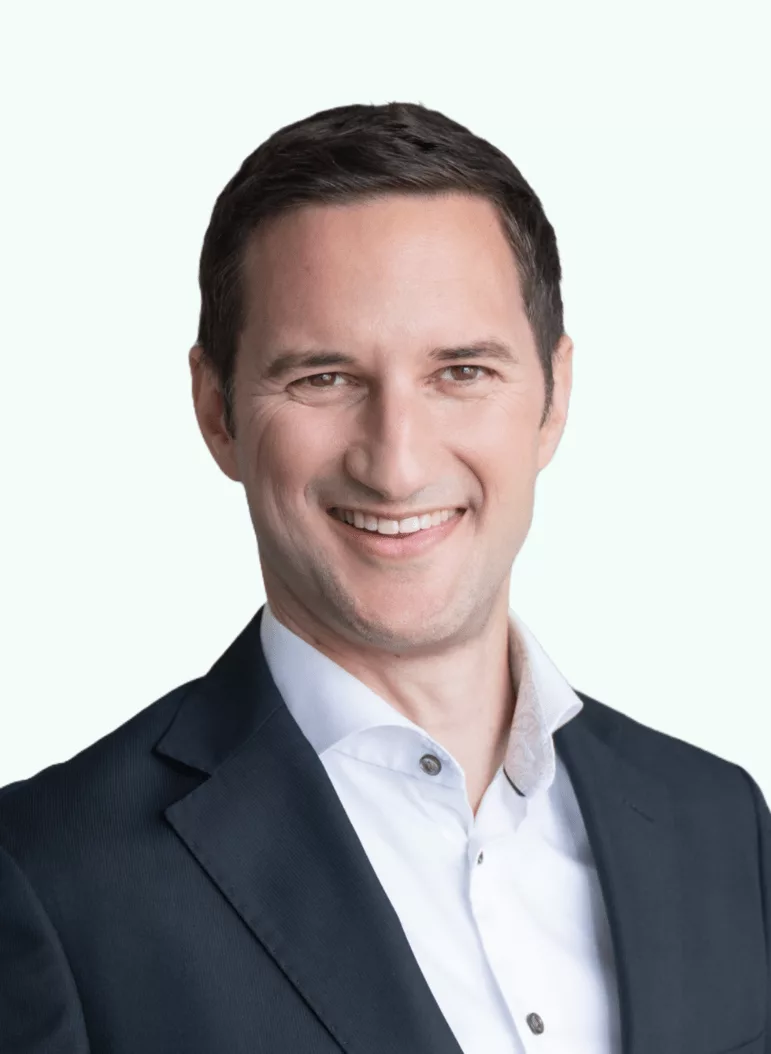
Pascal Stämpfli leverages over a decade of expertise in corporate finance and venture capital to scale and optimize businesses. A CFA charterholder with a Master's in Economics from the University of St. Gallen, Pascal specializes in market & company assessments, strategy, and business value creation. Having assessed more than 1,000 companies for financial and strategic investors provides him with a sophisticated understanding of investor rationale and capital allocation. As the Managing Director of Scalemetrics and Managing Partner at COREangels Big Data & AI Europe, Pascal operates at the intersection of financial discipline and technological innovation.