
Swiss SME M&A 2026: Record Acquisition Activity and What It Means for Your Business
If you own a Swiss SME, 2026 may be the best year in over a decade to sell or attract investment. A new Deloitte report shows 208 Swiss SME M&A transactions were completed in 2025 – a 16% increase from the year before – with foreign acquirers hitting an all-time record of 104 inbound deals. Private equity firms were involved in 56% of all transactions.
Behind these numbers lies a structural shift: international investors are systematically targeting Swiss SMEs as safe-haven assets in a volatile global economy. For business owners thinking about succession, partial exits, or growth capital, understanding what buyers are looking for – and how to position accordingly – is now an urgent priority.
The 2026 Acquisition Landscape: What the Data Shows
The Swiss SME M&A market has staged a significant recovery after two slow years, driven by private equity inflows and record-breaking foreign buyer interest.
The 2025 figures from Deloitte Switzerland’s annual M&A Activity of Swiss SME report mark a clear turning point. After a period of subdued deal-making driven by rising interest rates and geopolitical uncertainty, deal volumes rebounded sharply:
- 208 completed transactions in 2025, up 16% from 2024
- 104 inbound deals from foreign buyers – the highest figure since Deloitte began tracking this data in 2013
- 116 transactions involved financial investors (private equity, family offices) – up 45% year-on-year
- 56% of all deals were private equity-driven
The driver is not just opportunity. It is Switzerland’s structural appeal: political stability, a transparent legal framework, a strong franc, and SMEs with deep niche market positions that are difficult to replicate elsewhere. A 65% surge in foreign inbound deals in a single year is not a cyclical blip – it signals that Switzerland has moved up the priority list for international acquirers.
Which Sectors Are Attracting Buyers in 2026?
Precision manufacturing, industrial technology, and specialised professional services are attracting the most attention from both strategic and financial buyers.
Not every Swiss SME is equally attractive. Based on acquisition patterns visible in 2025 and early 2026, buyers are concentrating on:
Precision manufacturing and industrial technology. Switzerland’s hidden champions – companies with 50-300 employees that hold dominant positions in specialised components or machinery – remain highly sought after. Margins are predictable, customer relationships are long-term, and barriers to entry are high. These are exactly the characteristics private equity firms prioritise.
Business services and software. SaaS companies serving regulated industries (finance, pharma, legal) are generating strong interest, though valuations have compressed significantly since 2022. Buyers are demanding EBITDA-positive businesses with clear retention metrics.
Healthcare and medtech. Demand from European and North American strategic acquirers remains robust, driven by Switzerland’s global reputation in this sector.
Professional services. Accounting, audit, legal, and advisory firms with recurring revenue bases are increasingly targets for roll-up strategies by mid-market private equity firms operating across the DACH region.
How Valuations Are Being Set in 2026
EBITDA multiples remain the primary valuation metric. Swiss SME transactions in 2025 closed at 5-8x EBITDA on average, with premium multiples of 10-14x for businesses with strong recurring revenue and low customer concentration.
Valuation methodology in SME transactions follows an earnings-based approach, with EBITDA (earnings before interest, taxes, depreciation, and amortisation) as the base metric. Buyers apply a multiple based on:
- Size and revenue stability: Larger, more predictable businesses attract higher multiples
- Customer concentration: If 30% or more of revenue comes from a single customer, expect a valuation discount of 10-20%
- Management dependency: Owner-operator businesses where the founder is the business attract lower multiples until management depth is demonstrated
- Recurring vs. project revenue: Subscription, retainer, or long-term contract revenue is valued significantly higher than project-based revenue
Illustrative example: A Swiss precision supplier with CHF 8 million in revenue and CHF 1.4 million EBITDA (17.5% margin) could attract offers in the CHF 7-11 million range (5-8x EBITDA). The same business with CHF 1.8 million EBITDA and a diversified customer base might close at CHF 14-16 million (8-9x) if the management team operates independently.
Understanding your current EBITDA multiple is a precondition for any exit or partial-sale conversation. Our company valuation service provides exactly this baseline.
What Private Equity Firms Are Actually Looking For
Private equity firms target businesses with CHF 2-20M EBITDA, clean financial records, professional management, and a clear path to operational improvement or add-on acquisition.
Private equity involvement in Swiss SME deals jumped 45% in 2025. Understanding what PE firms prioritise helps owners assess their readiness:
Clean, audited financials. PE firms conduct thorough financial due diligence. Businesses with informal accounting practices, undocumented owner expenses passed through the P&L, or inconsistent revenue recognition create complexity that drives buyers away or forces price reductions.
Sustainable margins. A one-time revenue spike will not hold in a PE valuation. Buyers look at 3-5 year normalised EBITDA and stress-test margins under downside scenarios.
Management team depth. Founders willing to stay through a transition period (typically 18-36 months) and who have built teams that can operate without them day-to-day command significantly higher valuations.
A thesis for growth. PE firms need a credible story for how they will create value in 3-5 years before their exit: operational efficiency gains, geographic expansion, or add-on acquisitions in adjacent markets.
If a PE firm is approaching your business – or if you are considering initiating that conversation – our financial due diligence preparation service helps you identify and close the gaps before the process begins.
How to Position Your SME for a 2026 Transaction
Start preparing 18-24 months before any transaction. Key actions: clean up your financial records, reduce customer concentration, build management depth, and obtain an independent valuation.
Preparation is the single biggest determinant of transaction success. Here is the standard sequence for Swiss SME owners preparing for a sale or partial exit:
Step 1: Get an independent business valuation. Before any buyer conversation, you need to know what your business is worth and why. A professional valuation benchmarks your EBITDA multiple against comparable transactions, identifies value gaps, and gives you a credible anchor for negotiations.
Step 2: Clean up your financial statements. Separate owner personal expenses from business costs. Normalise the P&L for one-time items. Ensure your accounting is on an accrual basis and audited or reviewed by a certified auditor. This process typically takes 1-2 financial reporting cycles.
Step 3: Reduce revenue concentration. If one or two customers represent more than 25% of revenue, develop a plan to diversify before any transaction. This is one of the most common value destroyers in Swiss SME deals.
Step 4: Document your processes. Buyers pay for a business, not a person. Documented standard operating procedures, CRM records with customer history, and HR policies all signal that the business can run without the founder.
Step 5: Engage professional advisors early. An M&A advisor, a legal advisor experienced in Swiss transaction law, and a financial due diligence specialist are not optional. Their combined fee – typically 3-5% of transaction value – is recovered many times over in better deal terms.
The Role of a CFO in M&A Preparation
A fractional CFO bridges the gap between informal SME accounting and the financial discipline buyers expect, often making the difference between a smooth process and a failed transaction.
Many Swiss SMEs operate without a full-time CFO. In the context of M&A preparation, this is the single most common point of failure. Buyers and their advisors will scrutinise monthly management accounts, cash flow projections, working capital structure, and EBITDA bridges. Without someone who understands these requests and can respond with precision, deals stall or collapse.
A fractional CFO service provides:
- EBITDA normalisation and bridge analysis: showing sustainable earnings stripped of one-time items
- Data room preparation: organising the financial, tax, and corporate documents buyers require
- Financial due diligence support: responding to buyer queries quickly and accurately
- Valuation modelling: building a defensible case for your business value
For SMEs that are 18-24 months from a transaction, engaging a fractional CFO now is one of the highest-return investments available. The work done today directly impacts the price achieved at close.
What Comes Next in Swiss M&A
Deal activity is expected to remain strong through 2026 and into 2027, supported by stable interest rates, continued PE fundraising, and structural undersupply of quality Swiss acquisition targets.
The SNB held its policy rate at 0% in June 2026, maintaining a low-cost financing environment for leveraged acquisitions. ECB easing has reduced the hurdle rate for cross-border European transactions. Combined with record PE dry powder and increasing strategic interest from North American and Asian buyers in European precision manufacturing, conditions currently favour sellers.
That window has a horizon. As rate expectations normalise and PE funds reach the end of their investment periods, competition for quality assets will intensify. Swiss SME owners who begin preparation now – not when the first buyer appears – will close at better multiples and on better terms.
Conclusion
Swiss SME M&A is at a historic high, and the drivers are structural rather than cyclical. Whether you are preparing for a full exit, exploring partial liquidity, or simply want to understand what your business is worth in today’s market, the time to start the process is now.
Scalemetrics works with Swiss SMEs on business valuation, financial due diligence preparation, and fractional CFO services that make M&A transactions possible. Contact us to discuss your situation.
How many Swiss SME M&A transactions were completed in 2025?
208 transactions were completed in 2025, a 16% increase from 2024, according to Deloitte Switzerland’s annual M&A Activity of Swiss SME report. Foreign buyer transactions reached a record 104 – the highest since Deloitte began tracking this data in 2013.
What EBITDA multiple should I expect for my Swiss SME in 2026?
Swiss SME transactions in 2025 typically closed at 5-8x EBITDA. Premium businesses with strong recurring revenue, diversified customer bases, and independent management teams achieved 9-14x. Customer concentration, management dependency, and margin consistency are the primary factors that move the multiple up or down.
What do private equity firms look for in a Swiss SME acquisition?
PE firms prioritise clean audited financial records, CHF 2-20M EBITDA, sustainable margins that hold under downside scenarios, management depth beyond the founder, and a credible thesis for value creation over 3-5 years before their exit.
How long does it take to prepare a Swiss SME for sale?
Typically 18-24 months for a business starting from informal accounting and owner-managed operations. Key steps include: independent valuation, P&L normalisation, customer diversification, management team development, and data room preparation.
Do I need a CFO to prepare for a Swiss SME acquisition?
Professional financial oversight is essential. A fractional CFO handles EBITDA normalisation, data room preparation, financial due diligence support, and valuation modelling at a fraction of the cost of a full-time hire – and typically delivers results that directly improve the final transaction price.
Is 2026 a good time to sell a Swiss SME?
Current conditions are favourable: the SNB holds its policy rate at 0%, PE dry powder is at record levels, and foreign buyer interest hit a 12-year high in 2025. This window may not persist through 2027 as interest rate expectations normalise and PE investment periods end.
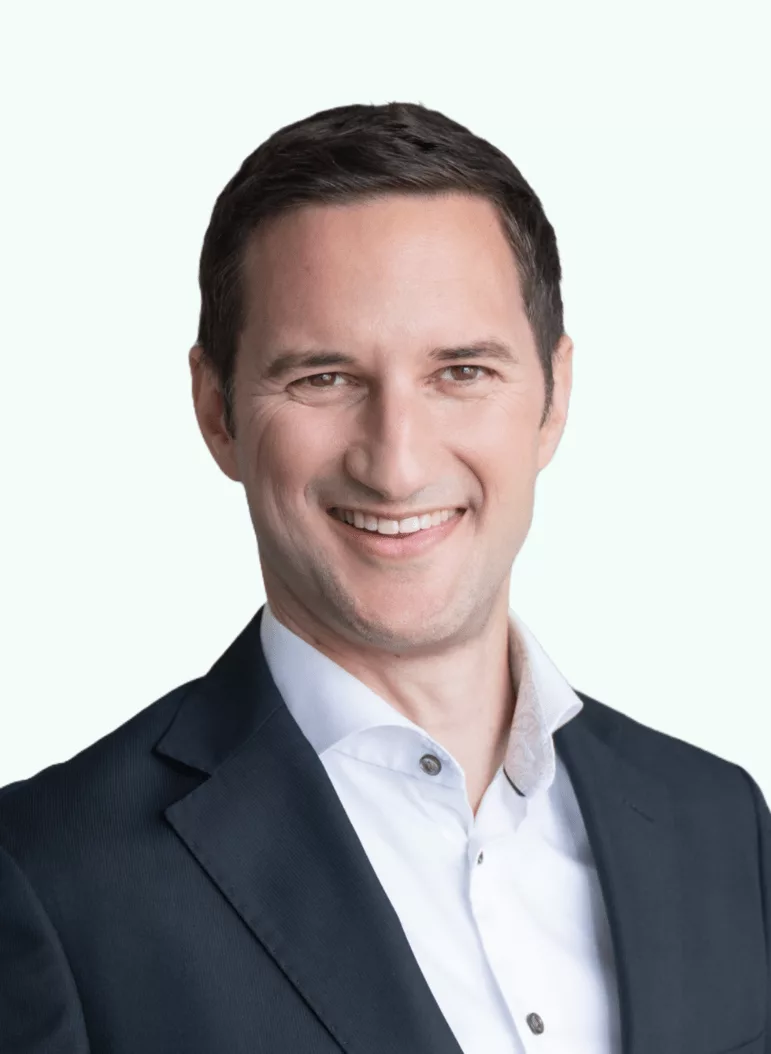
Pascal Stämpfli leverages over a decade of expertise in corporate finance and venture capital to scale and optimize businesses. A CFA charterholder with a Master's in Economics from the University of St. Gallen, Pascal specializes in market & company assessments, strategy, and business value creation. Having assessed more than 1,000 companies for financial and strategic investors provides him with a sophisticated understanding of investor rationale and capital allocation. As the Managing Director of Scalemetrics and Managing Partner at COREangels Big Data & AI Europe, Pascal operates at the intersection of financial discipline and technological innovation.