
Swiss Startup Funding Rebound 2026: What CHF 1.47 Billion in H1 Means for Swiss & European Founders
Quick Answer
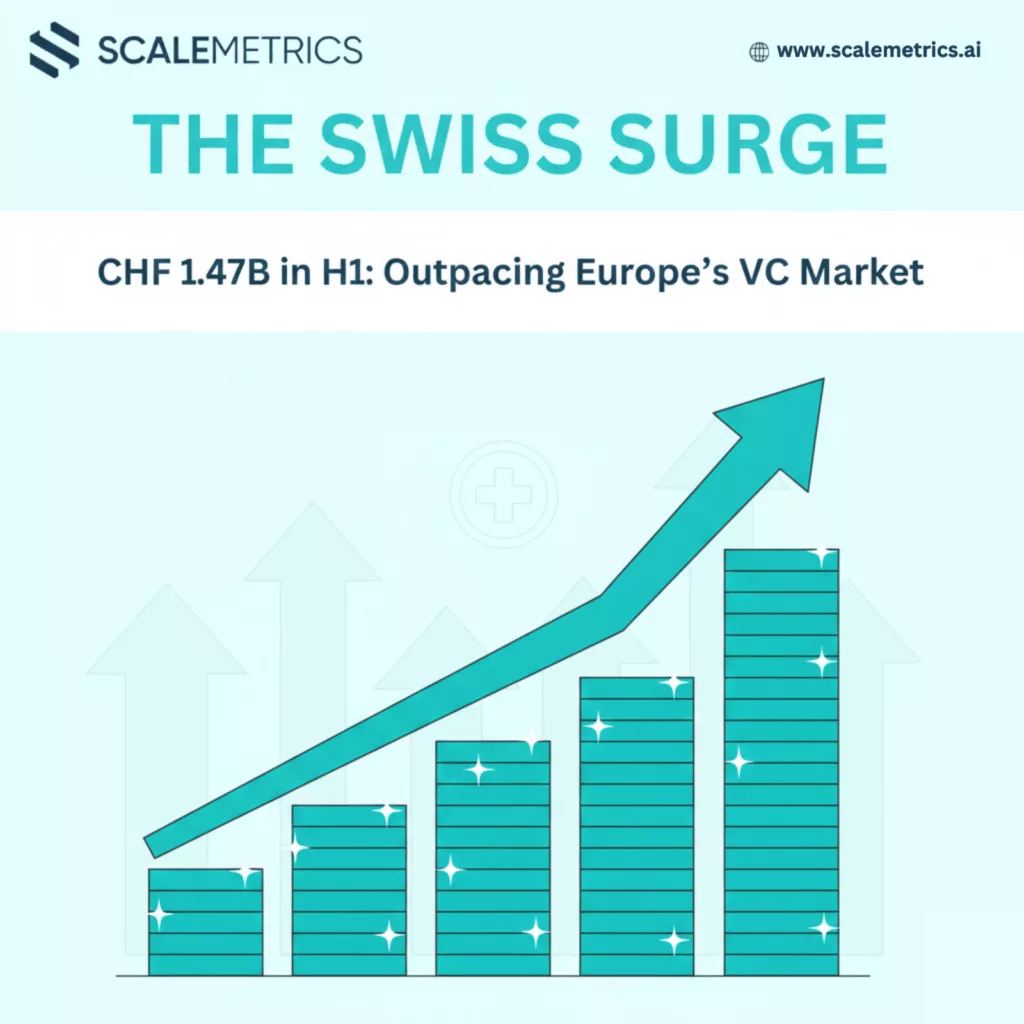
Swiss startups raised CHF 1.47B in H1 2026 (36% YoY surge) across 124 rounds-stronger than European averages. Basel/Zurich founders: benchmarks, EU comparisons, and your 90-day plan.
Swiss startups raised CHF 1,473.7 million across 124 rounds in H1 2026-a 36% capital surge from CHF 1.08B in H1 2024, despite 10% fewer deals (138 to 124), marking the strongest half-year since 2021. Outpacing Europe’s softer VC rebound (€5.2B H1, pacing for 53% annual decline), Switzerland’s edge lies in biotech (48% share, CHF 705M record), deep tech (60% of VC, #1 Europe per capita), and US inflows (CHF 520M, 1/3 total). For Basel, Zurich, and Zug founders, this means bigger tickets (median CHF 3M, +40% YoY) but fiercer competition-here’s your data-backed playbook.
H1 2026 Swiss Breakdown vs. European Benchmarks
Regional Leaders: Basel-Stadt (CHF 420.5M, 29% national share, biotech-driven), Zurich (+80% YoY, 30.5% share), Zug (doubled to CHF 160M, crypto/fintech).
Sectors: Biotech 74% YoY (7/10 top rounds), ICT 86% (CHF 247M, software/analytics 17%), fintech 93% (CHF 153M, Sygnum unicorn). Energy +362%, but cleantech halved.
Swiss vs. Europe Table (H1 2026):
Switzerland ranks #9 globally (#1 Europe density), with 2,273 startups (+31.8% growth).
Investor Outlook: Swiss Resilience Amid EU Caution
SECA: 61% VCs rate deals “good” (vs. 70% prior), 88% see opportunities but exits/fundraising subdued. Europe: Early-stage resilient, but late-stage soft; DACH overtakes UK/Ireland (32% share). Swiss winners show 24-36mo runway, IP traction.
90-Day Action Plan for Swiss/European Founders
Phase 1 (Days 1-30): Benchmark Locally
- Runway formula: Cash / (Net Burn +20% CHF buffer) ≥24mo (vs. EU 18mo).
- Sector check: Biotech milestones >85%, SaaS NRR >115% (Swiss median 105%). Download Scalemetrics’ H1 template (Google Sheets: P&L → 3 scenarios).
Phase 2 (Days 31-60): EU-Competitive Narrative
- Data room: Cap table (Carta), concentration <20%, GDPR/Swiss DSG compliance.
- Pitch: “Basel biotech: CHF 5M ARR path vs. EU CHF 3M median.” Target Redalpine, b2venture (20% H1 active).
- Cross-border: Highlight US appeal (e.g., Zug for crypto).
Phase 3 (Days 61-90): Diligence Drill
- Stress-test: “Trial delay + CHF rate +2%?” (Impacts PE/debt).
- Weekly dashboard: Xero → Power BI (Scalemetrics setup).
Swiss Founder Checklist:
- Runway 24+mo?
- Metrics > Basel/Zurich medians?
- SECA/VC intros (5+)?
- EU GDPR data room ready?
Scalemetrics delivers modular CFO support for Swiss founders targeting H1-style rounds. Contact us to benchmark your metrics against 2026 winners.
Related Resources
👉 Understanding what your business is worth matters before any deal. Our company valuation Switzerland service uses DCF and EBITDA multiples to give you a defensible number.
Need senior financial guidance for your Swiss SME? Learn how our outsourced CFO services can help your business respond to change faster.
Sources & References
Frequently Asked Questions
Which Swiss cantons and sectors led H1 2026 funding, and what were the key figures by region?
Regional Leaders: Basel-Stadt (CHF 420.5M, 29% national share, biotech-driven), Zurich (+80% YoY, 30.5% share), Zug (doubled to CHF 160M, crypto/fintech).Sectors: Biotech 74% YoY (7/10 top rounds), ICT 86% (CHF 247M, software/analytics 17%), fintech 93% (CHF 153M, Sygnum unicorn). Energy +362%, but cleantech halved.
What financial services does Scalemetrics provide for Swiss SMEs?
Scalemetrics provides Swiss SME owners and CFOs with practical financial expertise: from accounting and tax compliance to financial planning, KPI monitoring, and on-demand CFO services. The goal is to give growing businesses access to senior financial leadership without the cost of a full-time hire.
When does a Swiss SME need a fractional CFO?
A fractional CFO becomes valuable from around CHF 1–2M in annual revenue, or ahead of specific events: bank financing applications, investor rounds, M&A, or rapid growth phases. The cost is a fraction of a full-time CFO salary, with expertise available immediately.
How does Scalemetrics differ from a traditional Swiss fiduciary firm?
Traditional fiduciary firms focus on tax compliance and year-end accounts. Scalemetrics adds strategic financial leadership: rolling forecasts, cash flow modelling, KPI dashboards, and financing advisory, delivered as an ongoing mandate or for a specific project.
Which Swiss cantons does Scalemetrics cover?
Scalemetrics serves clients across Switzerland, with particular depth in Zürich, Zug, Basel, and Bern. Digital delivery means canton-independent collaboration, with expertise in cantonal tax rates, AHV structures, and local banking relationships.
What financial documents do Swiss investors and banks require?
Swiss investors and banks typically require three years of OR-compliant financial statements, a 3–5 year financial model, a 13-week cash flow forecast, a cap table, and KPI dashboards. Series A investors additionally expect audited accounts and unit economics. Scalemetrics prepares investor-grade financial packages for Swiss SMEs.
How does a fractional CFO help Swiss SMEs raise financing?
A fractional CFO improves Swiss SME financing outcomes by building the financial model, preparing OR-compliant statements, structuring the data room, and presenting financials credibly to banks or investors. SMEs with a proper finance function secure better terms and faster credit decisions. Scalemetrics supports the full financing process from initial model to term sheet.
What CHF 1.47 Billion in H1 2026 Means for the Swiss Funding Landscape
The Swiss startup funding rebound registered in H1 2026 — with total venture investment reaching CHF 1.47 billion across the first half of the year — represents a meaningful signal about the recovery of investor confidence in Swiss technology and life science companies following the more cautious deployment environment of 2023–2024. For Swiss SMEs at various stages of the funding journey, this rebound has specific implications for how to position, when to approach investors, and what financial preparation is required to compete effectively for capital in a market that is reopening after a period of constrained activity.
The sectoral distribution of H1 2026 Swiss funding tells an important story about where investor conviction is strongest. Life sciences, deep tech (AI, quantum, photonics), and climate technology continue to attract the lion's share of CHF-denominated investment — sectors where Switzerland's research infrastructure, technical talent pool, and regulatory environment create genuine competitive advantages. SaaS and marketplace businesses — the more conventional venture categories — are attracting capital, but at more selective terms than the 2021 peak, with investors applying significantly more rigorous unit economics scrutiny before committing.
For Swiss SMEs in non-venture sectors — services, manufacturing, trade, hospitality — the H1 2026 rebound is less directly relevant to fundraising prospects, but it signals something important about the general direction of the Swiss economy and the risk appetite of Swiss capital providers. Swiss cantonal banks, private debt providers, and family offices — the primary sources of growth capital for non-venture SMEs — tend to follow the same confidence cycle as venture capital, with a lag. A strengthening venture environment is typically followed within six to twelve months by improved terms and availability from these more traditional Swiss capital sources.
Positioning for Capital in the Swiss Funding Rebound
A funding rebound creates opportunity for prepared businesses and frustration for unprepared ones. The Swiss SMEs that successfully raise growth capital during a rebound period are not necessarily the ones with the strongest products or the best market positions — they are the ones that had their financial preparation complete before the window opened. In the 2021 Swiss funding boom, businesses that raised successfully were disproportionately those that had invested in investor-ready financial models, clean compliance records, and professional CFO support in the preceding 12–18 months. The same dynamic will apply in 2026.
Three dimensions of financial preparation determine funding success in a rebound environment. First, the quality of the financial model: investors comparing multiple opportunities will allocate their time and capital to the companies whose financial models most clearly demonstrate an understanding of the business's unit economics, its cash deployment discipline, and its path to the milestones that will support the next raise. Second, the completeness of the data room: Swiss investors in growth equity and late angel rounds expect to find OR-compliant accounts, a clean cap table, current compliance documentation (AHV, BVG, MWST), and a well-organised data room within one week of expressing interest. Companies that can deliver this immediately are treated differently from those that promise to have it ready in three weeks. Third, the CFO function: the presence of a credible CFO — whether in-house, fractional, or advisory — in the leadership team materially increases investor confidence in the deployment and management of capital.
Swiss Funding Rebound 2026: Investor Expectations by Stage
| Stage | Typical Round Size | Key Financial Expectation |
|---|---|---|
| Pre-Seed | CHF 500K–3M | Credible cost model, clear use of funds |
| Seed | CHF 2M–8M | Unit economics evidence, 18-month runway model |
| Series A | CHF 8M–25M | Integrated financial model, full data room |
| Growth Equity | CHF 20M+ | Audited accounts, CFO function, clean compliance |
| SME Debt/Credit | CHF 500K–5M | OR-compliant accounts, 2+ years track record |
The Swiss funding rebound of 2026 creates a genuine opportunity for well-prepared Swiss companies. Our investor readiness service ensures that when the investor conversation opens, the financial preparation is already complete — so Swiss SMEs can compete for capital on the basis of their potential, not their administrative readiness.
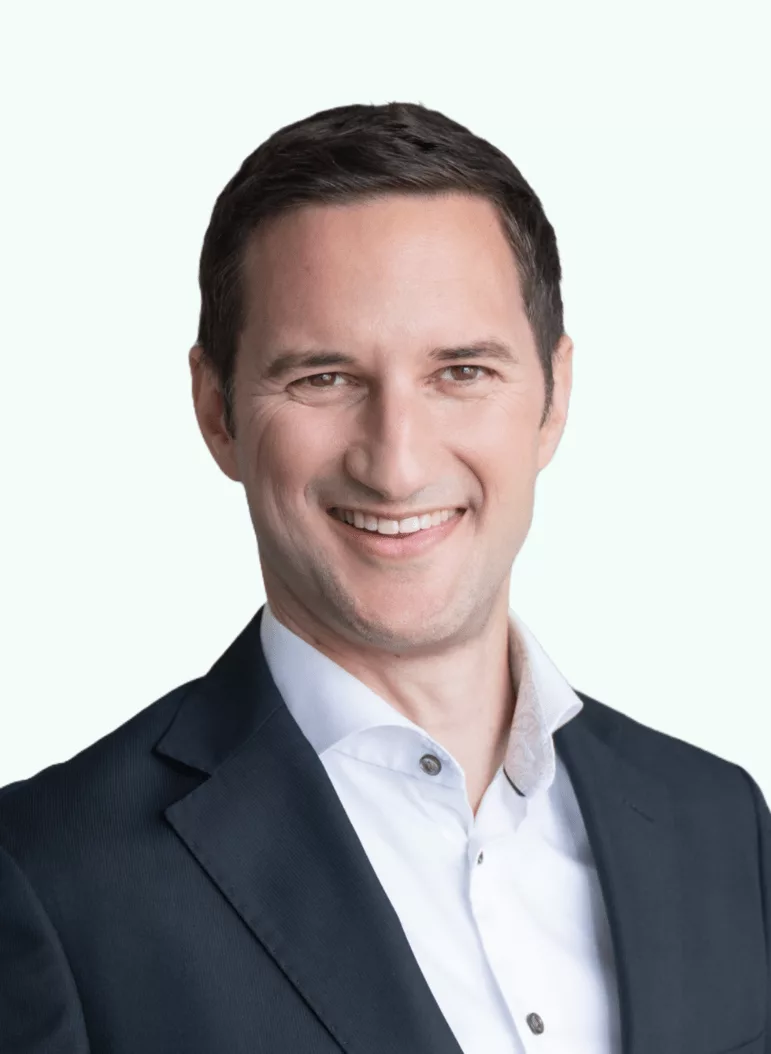
Pascal Stämpfli leverages over a decade of expertise in corporate finance and venture capital to scale and optimize businesses. A CFA charterholder with a Master's in Economics from the University of St. Gallen, Pascal specializes in market & company assessments, strategy, and business value creation. Having assessed more than 1,000 companies for financial and strategic investors provides him with a sophisticated understanding of investor rationale and capital allocation. As the Managing Director of Scalemetrics and Managing Partner at COREangels Big Data & AI Europe, Pascal operates at the intersection of financial discipline and technological innovation.