
Swiss Startup Funding Guide 2026: All Financing Options Explained
Quick Answer
Complete guide to SME financing Switzerland: ZKB/Raiffeisen/UBS bank loans, Bürgschaft guarantee schemes, private equity, and venture capital. Eligibility, costs, and what Swiss banks actually want to see.
Swiss startups secure financing through non-dilutive grants, CHF-denominated loans, and equity under local law. Leveraging SME-specific tax incentives is essential to capture climate tech funding 2026. Founders should prioritize Innosuisse partnerships and Cantonal support to maximize non-repayable capital and ensure sustainable growth within Switzerland’s evolving 2026 investment ecosystem.
Switzerland is one of Europe’s strongest startup ecosystems, with CHF 3.2 billion invested in Swiss startups in 2024 alone. Yet for many founders, navigating the range of available funding options – from venture capital to Innosuisse grants to convertible loans – feels overwhelming, particularly when each instrument has different eligibility criteria, timelines, and implications for your cap table.
SME Financing Switzerland: How Swiss Banks Make Credit Decisions
SME financing Switzerland through ZKB, UBS, Raiffeisen, or regional Kantonalbanken is evaluated against a consistent internal credit framework: two to three years of audited or reviewed financial statements; a rolling 12–18 month cash flow forecast demonstrating debt service capacity with headroom; a coherent business plan with revenue assumptions the relationship manager can defend to the credit committee; net debt/EBITDA below 3–4x (sector-dependent); and sufficient collateral or third-party Bürgschaft guarantee coverage. Applications that are weak on any single criterion are either rejected outright or offered materially worse pricing – typically 60–120 basis points higher on margin.
Professional SME financing Switzerland advisory from Scalemetrics prepares the complete bank dossier – integrated financial model, information memorandum, debt capacity analysis, and covenant proposal – before the first bank meeting. SMEs with professionally prepared financing dossiers consistently achieve higher approval rates and save an average of 40–60 basis points on margin compared to self-prepared applications, because the credit committee receives answers to their standard questions before they need to ask them.
Key Takeaways
- CHF 4.2 billion – Projected total venture capital volume for Swiss SMEs in 2026.
- 75% – Swiss SMEs that prefer bank loans over equity to maintain ownership control.
- 50% – Maximum innovation project costs covered by non-dilutive Innosuisse funding grants.
- CHF 100,000 – Minimum equity capital needed for SME conversion to an Aktiengesellschaft (AG).
- 9.7% – Annual growth rate of private debt as a financing tool for Swiss SMEs.
This guide covers every major Swiss startup funding option available in 2026: how each works, how much you can raise, what investors and grant bodies expect, and which option is best suited to your stage and sector.
The Swiss Startup Funding Landscape in 2026
Switzerland’s startup ecosystem is concentrated in four primary hubs, each with distinct sector strengths:
- Zürich: Fintech, SaaS, medtech, deep tech – home to the ETH Zürich spinoff ecosystem and Switzerland’s largest VC concentration
- Basel: Life sciences, biotech, pharmaceutical spinoffs – proximity to Novartis, Roche, and a deep network of corporate venture arms
- Zug (Crypto Valley): Blockchain, Web3, crypto infrastructure – globally recognised cluster with a regulatory framework favourable to token-based business models
- Lausanne / Geneva: EPFL spinoffs, healthtech, sustainable technology, international organisation-adjacent startups
Swiss VC investment reached CHF 3.2 billion in 2024, with medtech and deeptech accounting for the largest share. The ecosystem benefits from world-class research institutions (ETH Zürich ranked #7 globally, EPFL #11), a stable regulatory environment, low corporate tax rates (particularly in Zug and Schwyz), and strong international connectivity.
For founders, the challenge is not a shortage of capital – it is understanding which type of capital is appropriate for your stage, and building the financial infrastructure to access it credibly.
Swiss Startup Funding Stages Overview
| Stage | Typical Raise (CHF) | Typical Instruments | Investor Profile |
|---|---|---|---|
| Pre-seed | CHF 50K–500K | Convertible loans, friends & family, grants | Angels, accelerators, Innosuisse |
| Seed | CHF 500K–2M | Equity (AG shares), convertible loans, angel syndicates | Angel networks, seed VCs, SICTIC |
| Series A | CHF 2M–10M | Equity (AG shares, preferred shares) | Swiss/European VCs |
| Series B+ | CHF 10M+ | Equity, venture debt | International VCs, growth funds |
Venture Capital in Switzerland
Swiss venture capital has matured significantly over the past decade. Institutional VC firms now operate across the full spectrum from seed to growth, and international funds increasingly participate in Swiss rounds at Series A and beyond.
Key Swiss VC Firms in 2026:
- Swisscom Ventures: Corporate VC arm of Swisscom; focuses on Swiss and European deep tech, connectivity, and enterprise software. Tickets from CHF 1M–10M+
- VI Partners: Swiss life science and tech VC; particularly active in EPFL and ETH spinoffs. Seed to Series B
- BV4: Zürich-based VC firm with a focus on Swiss tech and digital health. Seed to Series A
- Earlybird Venture Capital: Berlin-based but highly active in Switzerland; focuses on technology and digital health startups across DACH region
- btov Partners: Swiss-German VC with a strong track record in B2B software, industrial tech, and climate tech
- Redalpine: Zürich-based, one of Switzerland’s most active seed and Series A VCs in software and digital health
What Swiss VCs Look For:
- Strong technical founding team – ideally ETH/EPFL/university research background for deeptech
- Large addressable market (CHF 1B+ TAM) – Swiss VCs increasingly think globally from day one
- Early commercial traction or credible path to it – LOIs, pilot customers, or meaningful revenue
- Clear defensibility: IP, network effects, switching costs, or regulatory advantage
- Investor-ready financial model: 3-5 year projections, unit economics, clear use of proceeds
Typical Process and Timeline: Initial contact to term sheet: 2–4 months. Term sheet to close: 4–8 additional weeks. Total fundraising timeline including due diligence and legal: 4–8 months for a Swiss Series A. Build your financial model and data room before your first VC meeting – Swiss investors move faster when founders are clearly prepared.
Angel Investors and Angel Networks in Switzerland
Swiss angel investors are the primary source of pre-seed and seed capital for startups that are too early for institutional VC. Angels invest their own capital, often bring operational expertise alongside money, and can move significantly faster than VCs.
Key Swiss Angel Networks:
- Business Angels Switzerland (BAS): The largest Swiss angel network, with members across all cantons. Investment range: CHF 25K–250K per angel; syndicated rounds can reach CHF 500K–1M
- SICTIC (Swiss ICT Investor Club): Focused on digital and tech startups; hosts regular pitch events and provides structured angel syndication. Typical first check: CHF 50K–200K
- StartAngels Network: EPFL and ETH-linked angel network; strong in deeptech and medtech startups from Swiss universities
- GoBeyond: Impact-focused angel network and accelerator; relevant for social enterprise and sustainability startups
Individual Swiss angel investments typically range from CHF 25K–500K. For larger raises (CHF 500K–2M) at seed stage, angels co-invest through syndicates – platforms like SICTIC and angel networks facilitate this. Angel valuations in Switzerland for seed-stage tech companies typically range from CHF 1M–5M pre-money, though highly technical or ETH/EPFL-backed startups can command higher valuations.
Innosuisse: Switzerland’s Innovation Agency
Innosuisse (Swiss Innovation Agency) is one of the most valuable – and underutilised – funding resources available to Swiss startups. Unlike VC or angel investment, Innosuisse funding is non-dilutive: you receive grant money without giving up equity. For early-stage companies with a research and development component, Innosuisse should be the first funding source you explore.
Main Innosuisse Programs:
1. Innosuisse Innovation Projects
The flagship program funds collaborative R&D projects between a Swiss company (the “implementation partner”) and a Swiss higher education institution – ETH, EPFL, a university of applied sciences (FH), or a research institute. Innosuisse covers up to 100% of the research partner’s direct costs, which typically totals CHF 150K–3M per project depending on scope and duration. The company funds its own internal costs but receives the research output and IP rights.
- Eligible sectors: All sectors – from software and digital health to manufacturing and cleantech
- Requirement: You must have an existing relationship with or approach a Swiss research institution willing to co-apply
- Application timeline: Applications reviewed quarterly; evaluation period 3–5 months after submission
- Success factors: Clear innovation beyond state of the art, commercial exploitation plan, strong research partner commitment, and a realistic project timeline
2. Innosuisse Startup Training
Free business coaching and training for Swiss startups at validation stage. No equity taken. Includes startup validation programs, coaching sessions, and access to the Innosuisse network of mentors and investors.
3. Innosuisse Startup Coaching
Structured coaching program for startups with a validated business model, preparing them for market entry and investor readiness. Free of charge, subsidised by Innosuisse.
Eligibility: Swiss legal entity (AG or GmbH) and Swiss bank account are required for all Innosuisse programs. The company must conduct its innovation activities in Switzerland.
Convertible Loans (Wandeldarlehen) in Switzerland
Convertible loans (Wandeldarlehen) are the most common bridge financing instrument in Swiss startup finance. They allow investors to lend money today that converts into equity at a future financing round – deferring the valuation question until the company has more traction and a formal priced round establishes a market-set valuation.
How Swiss Convertible Loans Work:
- Interest rate: Typically 5–8% per year (often accruing but not paid in cash until conversion)
- Conversion discount: 15–30% discount on the price per share at the next equity round (rewards early investors for their risk)
- Conversion cap: Maximum valuation at which conversion occurs – protects investors if the company raises at a very high valuation
- Maturity: Typically 18–36 months; if no equity round occurs, the loan is repayable in cash (which effectively acts as a deadline pressure for the company)
Swiss Legal Considerations:
Switzerland does not have a SAFE (Simple Agreement for Future Equity) instrument as used in the US. Swiss convertible instruments are structured as convertible loans under the Swiss Code of Obligations (OR). This means they have formal loan characteristics – interest accrual, a maturity date, and creditor protections that a US SAFE does not. Work with a Swiss lawyer experienced in startup transactions when drafting a convertible loan agreement; using a template without legal review creates risk for both parties.
Convertible loans are particularly useful for bridging between angel rounds and a formal Series A, or for raising CHF 200K–1M quickly from a group of angels without incurring the legal costs of a full equity round.
Swiss Bank Financing for Startups
Swiss banks are traditionally conservative lenders – they prefer established businesses with 3 years of profitable financials over loss-making startups. However, structured bank financing is available to startups under specific conditions, particularly through guarantee schemes.
Bürgschaftsgenossenschaft (Guarantee Cooperatives):
Switzerland has four regional Bürgschaftsgenossenschaften that provide state-backed loan guarantees to SMEs that might not otherwise qualify for bank financing. The guarantee covers up to 80% of the loan value, with a maximum guaranteed loan of CHF 1,000,000. The company pays a guarantee fee (typically 1.25% per year of the guaranteed amount) and must meet standard creditworthiness criteria. This scheme is most relevant for startups that have reached revenue and profitability but lack the collateral Swiss banks typically require.
Cantonal Bank Programs:
Several cantonal banks (Kantonalbanken) have dedicated SME and startup financing programs. ZKB (Zürcher Kantonalbank) has a startup banking offering including business accounts, financing products, and connections to the Zürich startup ecosystem. Basellandschaftliche and Berner Kantonalbank have similar programs. These are worth exploring as a first meeting even if formal bank financing is premature.
What Swiss Banks Require:
For traditional debt financing without a guarantee scheme: 2–3 years of audited financial statements, current profitability (or a very clear path to it), collateral (real estate, equipment, or accounts receivable), and a detailed business plan with financial projections. Most pre-revenue startups will not qualify – which is why grants, convertible loans, and VC are more relevant at early stages.
Revenue-Based Financing (RBF) in Switzerland
Revenue-based financing is a non-dilutive alternative to VC for revenue-generating companies – particularly SaaS businesses. RBF providers advance capital in exchange for a percentage of future monthly revenue until the advance is repaid (typically at 1.5x–2x the original amount).
How RBF Works in Practice:
- Provider advances CHF 100K–2M based on your ARR (typically 3–6x MRR)
- You repay a fixed percentage of monthly revenue (typically 3–8%) until the cap is reached
- No equity dilution, no board seats, no warrants
- Repayment is flexible – slower revenue months mean slower repayment
RBF Providers Active in Switzerland (2026): Capchase (active in DACH), Viceversa (European RBF), Arc (international SaaS financing), and several European fintech lenders that have extended coverage to Swiss SaaS companies. Traditional Swiss banks do not typically offer RBF products.
Good Fit for RBF: SaaS companies with CHF 30K+ MRR, strong revenue retention (net revenue retention >100% ideal), predictable monthly recurring revenue, and a need for growth capital without dilution. RBF is often used alongside VC – raising a smaller RBF facility to fund sales and marketing while preserving equity for product development.
Cantonal and Municipal Funding Programs
Beyond federal programs, Swiss cantons and municipalities offer a range of startup support initiatives – some financial, some in-kind, all worth exploring depending on your location.
Notable cantonal programs:
- Kanton Zürich: Zürich offers subsidised office space through Technopark and ETH Zürich’s Innovation and Entrepreneurship Lab, connections to the Greater Zurich Area investment promotion office, and the Venture Kick program (up to CHF 150K non-dilutive prize funding across three stages)
- Kanton Zug: The most tax-efficient Swiss canton for startup incorporation; the Zug Economic Development agency offers dedicated startup support including international market access programs
- Canton Geneva: Geneva Enterprize provides financial contributions, expertise access, and networking for early-stage startups in the Geneva region; strong support for international organizations-adjacent businesses
Key Swiss Accelerators and Programs:
- Venture Kick: Non-dilutive prize funding up to CHF 150K for Swiss startups with commercial potential – one of the most prestigious and practically useful early-stage programs in Switzerland
- Kickstart Innovation: Corporate-backed accelerator connecting Swiss startups with large corporates (Migros, Swiss Re, Swiss Post, etc.) for pilots and partnerships – non-dilutive, strong corporate access
- MassChallenge Switzerland: International accelerator with a strong Lausanne hub; no equity taken, mentorship and networking focus
- CTI Invest (now part of Innosuisse network): Investor days and matchmaking events connecting Innosuisse-supported startups with Swiss angels and VCs
What Investors Expect in Your Financial Documents
Regardless of which funding route you pursue, your financial documentation quality is a direct signal of your credibility as a founder. Swiss investors – whether angels, VCs, or grant bodies – form strong views about founders based on the quality of financial materials.
Minimum financial package for a Swiss seed raise:
- Financial model: 3-year integrated P&L, balance sheet, and cash flow model with monthly granularity for Year 1 and quarterly for Years 2–3. Include clearly labelled assumptions that can be stress-tested
- Unit economics: Customer Acquisition Cost (CAC), Lifetime Value (LTV), LTV:CAC ratio, payback period, and gross margin by product/segment
- Use of proceeds: Specific, credible breakdown of how you will deploy the capital being raised – headcount, product, marketing, operations – tied to milestones
- Cap table: Clean cap table showing current ownership, any existing convertible instruments (with their conversion terms), option pool size, and post-money ownership after this round
- KPI dashboard: Monthly historical metrics – MRR/ARR, churn, NRR, user growth, burn rate, runway – that investors can use to understand trajectory
- Current financials: Most recent management accounts (P&L and balance sheet), ideally month-by-month for the last 12 months
A common mistake in Swiss fundraising is presenting a financial model built in a single weekend for the purpose of the raise. Sophisticated investors can tell. The most credible founders have been maintaining a financial model as a live management tool – the pitch deck version is a simplified snapshot of an ongoing process.
How Scalemetrics Helps With Fundraising
Scalemetrics works with Swiss startups at every stage of the fundraising journey – from building the initial financial model to supporting due diligence processes for Series A and beyond.
Our fundraising support services include:
- Financial model development: We build investor-grade 3-5 year models with the assumptions, scenarios, and unit economics detail that Swiss and European VCs expect
- Innosuisse application support: From identifying the right program to preparing the financial section of your application and connecting you with suitable Swiss research partners
- Data room preparation: Organising and preparing your complete financial due diligence package – historical accounts, management accounts, cap table, KPI history, and financial model
- Investor reporting: Setting up monthly investor reporting systems that demonstrate financial discipline and build investor confidence between rounds
- Accounting infrastructure: Ensuring your Swiss accounting is clean, properly structured under Swiss GAAP, and audit-ready before you enter a due diligence process
- Post-raise financial planning: Translating your use-of-proceeds commitment into an operational budget and hiring plan with clear milestone linkages
Founders who raise with clean financials close faster, at better terms, and with more investor confidence. Scalemetrics provides the financial expertise so you can focus on the fundraise itself.
What do Swiss investors expect in your financials before a raise?
Before a term sheet, Swiss investors expect a three statement model, clear unit economics, a cash runway view, and a cap table that ties out. Grants such as Innosuisse and convertible loans each need their own documentation. Weak numbers slow or sink a raise. Scalemetrics prepares the financial package and data room through financing advisory so Swiss SMEs raise on credible figures.
Frequently Asked Questions
How much equity should I give up in a Swiss seed round?
Swiss seed rounds typically involve 10–20% dilution for CHF 200K–1.5M raised. Pre-money valuations for Swiss tech seed rounds in 2025–2026 range from CHF 1.5M to CHF 8M depending on team strength, market size, and early traction. SAFE notes are increasingly used to delay valuation discussions, though in Switzerland these are typically structured as convertible loan agreements (Wandeldarlehen) under Swiss OR with SAFE-like economic terms. Minimise dilution at seed by raising only what you need to reach your Series A milestones.
What is a SAFE note and is it used in Switzerland?
A SAFE (Simple Agreement for Future Equity) is a convertible instrument that invests today and converts to equity at a future round. While common in the US, Swiss law doesn’t recognize SAFE natively – Swiss SAFEs are typically structured as convertible loan agreements (Wandeldarlehen) under Swiss OR with SAFE-like economic terms. Key differences from US SAFEs: Swiss instruments carry formal loan characteristics including interest accrual and a maturity date. Work with a Swiss startup lawyer to ensure your instrument is correctly structured under Swiss law.
How long does a Swiss Series A fundraise take?
Expect 4–8 months from first investor contact to money in the bank. Swiss investors typically require 2–3 meetings, a data room review period (4–6 weeks), legal due diligence (2–4 weeks), and term sheet negotiation (2–4 weeks) before signing. Having investor-ready financials prepared in advance significantly compresses this timeline. Start your fundraise process earlier than you think you need to – running out of runway mid-process dramatically weakens your negotiating position.
What Innosuisse grants are available for Swiss startups?
Innosuisse Innovation Projects fund collaborative R&D between startups/companies and Swiss universities, with grants covering up to 100% of the research partner’s costs (typically CHF 150K–3M). The Innosuisse Startup Training and Coaching programs are free. Applications are reviewed quarterly with a 3–5 month evaluation period. The Venture Kick program (separate from Innosuisse but complementary) offers up to CHF 150K in non-dilutive prize funding across three stages. Combining Innosuisse and Venture Kick is a common strategy for ETH/EPFL spinoffs.
Do Swiss startups need a Swiss bank account to raise funding?
Not for fundraising itself, but yes for operating in Switzerland. Swiss VCs and angels typically require funds to go into a Swiss bank account (usually a Swiss AG or GmbH entity). For Innosuisse grants, a Swiss legal entity and Swiss bank account are mandatory. ZKB, Raiffeisen, and neon are popular choices for startups – neon offers fast account opening with no minimum balance, while ZKB offers stronger startup ecosystem connections and more comprehensive banking services for growing companies.
Related Resources
👉 Raising a round or making an acquisition? Our financial due diligence Switzerland team reviews financials, models, and risks so you close with full confidence.
Need senior financial guidance for your Swiss SME? Learn how our outsourced CFO services can help your business respond to change faster.
Sources & References
The Swiss Startup Funding Ecosystem: A Complete Map
Switzerland has one of the most sophisticated startup funding ecosystems in Europe, combining strong public sector support structures, a dense network of corporate venture arms (Nestlé, Novartis, ABB, Swiss Re, and the major banks all have active venture units), institutional VC activity, and a family office community with significant appetite for Swiss private market exposure. Understanding the full map of financing options — and the stage-specific logic of each — is the starting point for any Swiss founder building a capital strategy.
The ecosystem is best understood as a series of funding stages, each with distinct capital sources, typical check sizes, and investor expectations. Moving efficiently through these stages requires not just a good business but the financial documentation and governance infrastructure that each stage demands.
All Swiss Startup Financing Options: Stage by Stage
Grants and non-dilutive public funding. The Swiss Confederation, the cantons, and a range of semi-public bodies offer grants totalling several hundred million francs annually for R&D, innovation, and technology transfer. Innosuisse (the Swiss Innovation Agency) is the primary federal body; its Innovation Cheques (up to CHF 15,000) and Innovation Projects (up to CHF 1.2 million for R&D-focused startups in collaboration with a Swiss university) are the most accessible entry points. Cantonal economic development bodies (such as the Zürcher Kantonalbank's promotion activities or the Geneva Economic Development Office) offer additional co-financing instruments.
Convertible loans and angel investment. The dominant instrument for early-stage Swiss startups is the convertible loan — a debt instrument that converts into equity at a future financing round, typically with a discount (10–25%) and a valuation cap. Swiss angel investor networks include Business Angels Switzerland and the Zurich-based Angel Investment Network; typical angel cheques range from CHF 50,000 to CHF 500,000 per investor, with syndicates capable of aggregating CHF 1–3 million for strong opportunities.
Seed and early VC. Switzerland's seed VC landscape includes Verve Ventures, Founderful, Wingman Ventures, and a growing cohort of independent micro-VCs. Typical seed rounds from institutional investors range from CHF 500,000 to CHF 3 million. ETH Zurich's spin-off ecosystem (via ETH transfer) and EPFL Innovation Park provide a structured pipeline of deep-tech seed investments that attract both Swiss and international early-stage investors.
Growth equity and Series A/B. For businesses with demonstrated revenue and growth, the relevant investors include Lakestar, btov Partners, Picus Capital (active in Swiss market), and the Swiss arms of international firms including Atomico, Accel, and Index Ventures. The European Investment Fund's Swiss programme provides co-investment alongside private VCs at growth stage.
Swiss Startup Funding Overview 2026
| Stage | Instrument | Typical Range (CHF) | Key Swiss Sources |
|---|---|---|---|
| Ideation / pre-revenue | Grants, FFF | CHF 15,000–150,000 | Innosuisse, cantonal bodies |
| MVP / early traction | Convertible loan, angels | CHF 200,000–2M | BAS, Verve Ventures, Founderful |
| Seed / early revenue | Priced equity round | CHF 1M–4M | Swiss seed VCs, corporate VCs |
| Series A | Lead VC round | CHF 4M–15M | Lakestar, btov, European VCs |
| Series B+ | Growth equity | CHF 15M–80M+ | International growth VCs, PE |
The Swiss founders who navigate this ecosystem most effectively are those who build investor relationships 12–18 months before they need capital, maintain impeccable financial records, and can present their business in the language of investors rather than operators. An investor readiness engagement prepares your business for each funding stage and helps you identify the right capital sources for your specific situation.
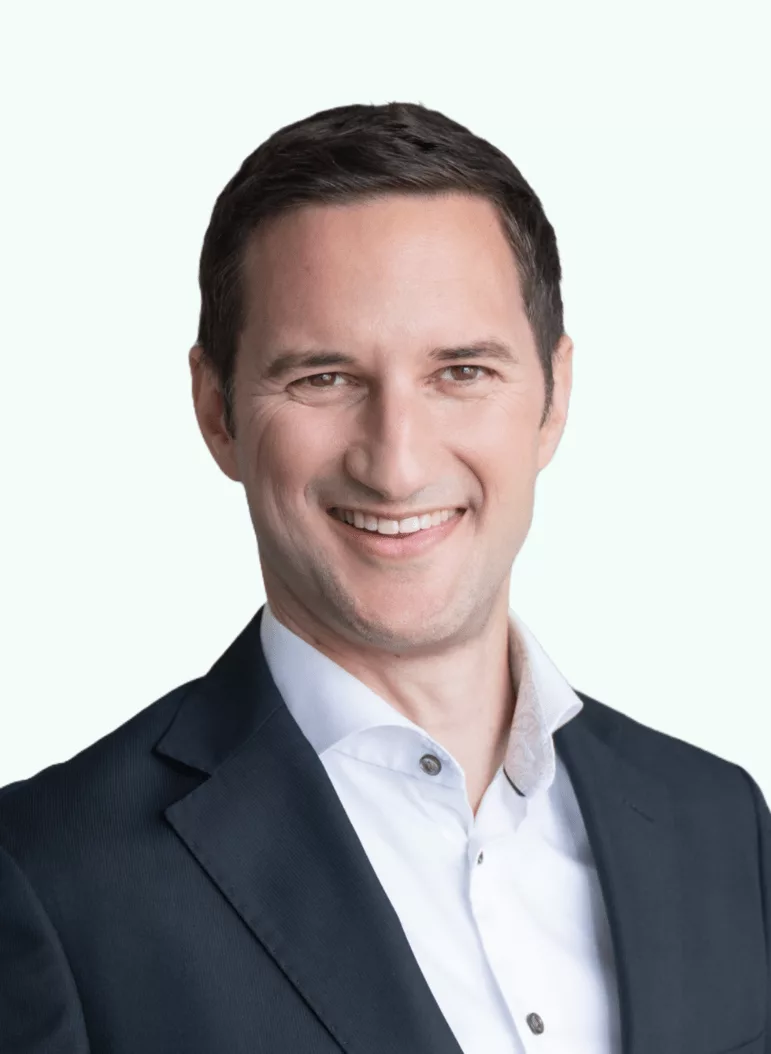
Pascal Stämpfli leverages over a decade of expertise in corporate finance and venture capital to scale and optimize businesses. A CFA charterholder with a Master's in Economics from the University of St. Gallen, Pascal specializes in market & company assessments, strategy, and business value creation. Having assessed more than 1,000 companies for financial and strategic investors provides him with a sophisticated understanding of investor rationale and capital allocation. As the Managing Director of Scalemetrics and Managing Partner at COREangels Big Data & AI Europe, Pascal operates at the intersection of financial discipline and technological innovation.