
Swiss VAT System for Businesses in 2026
Quick Answer
Stay updated on the Switzerland VAT rate 2026. See latest 8.1% standard and 2.6% reduced rates. SME compliance insights by Scalemetrics. See full guide.
Understanding Swiss VAT Rates Effective January 1st, 2024
Switzerland’s VAT system has seen recent changes, with potential adjustments anticipated in the near future. Here’s a breakdown of the VAT rates that will be effective from January 1st, 2024:1. Standard Rate (8.1%)
The standard VAT rate of 8.1% applies to the majority of products and services in Switzerland. This rate is the default for most business transactions and ensures consistent VAT application across various sectors.2. Reduced Rate (2.6%)
The reduced rate of 2.6% is designed to make essential goods and services more affordable for consumers. This rate applies to items such as food, beverages, and books, supporting affordability while still contributing to VAT revenue.3. Special Accommodation Rate (3.8%)
This rate specifically targets services related to accommodation, including hotel stays. The tourism sector benefits from this lower rate, encouraging spending and supporting the hospitality industry.VAT Liability: Who Needs to Charge VAT?
Understanding VAT liability is essential for determining whether your business needs to charge VAT on its goods and services.1. Mandatory VAT Collection
All businesses in Switzerland must charge VAT on goods and services sold unless they fall under specific exemptions. These exemptions typically apply to sectors like healthcare, education, and insurance, where VAT is not applied to keep essential services affordable.2. Exemptions
Certain sectors are exempt from charging VAT. These include healthcare, education, and insurance. These exemptions help ensure that vital services remain accessible without the added cost burden of VAT.3. Small Business Exemption
Businesses with an annual turnover below CHF 100,000 are generally exempt from VAT registration. This exemption reduces the administrative burden on smaller businesses, allowing them to operate without the complexities of VAT compliance.Leveraging Input Tax Deduction for Financial Efficiency
One of the key features of the Swiss VAT system is the input tax deduction. This allows businesses to deduct VAT paid on business-related purchases from the VAT owed on sales, ensuring that VAT is ultimately charged only on the value added at each production or distribution stage. For example, if your company purchases raw materials and pays VAT on these inputs, you can deduct this VAT from the amount you owe on the final product’s sale. This deduction is vital for maintaining accurate tax payments and reducing your overall tax liability.Navigating VAT Registration Requirements
If your business exceeds a certain annual turnover, VAT registration is mandatory. Here are the key points to consider:1. Registration Threshold
Businesses with a taxable turnover of CHF 100,000 or more annually must register for VAT. This threshold ensures that only businesses with significant revenue are subject to VAT obligations, reducing the compliance burden on smaller enterprises.2. VAT Number
Upon registration, your business will receive a unique VAT number. This number must be used on all invoices and official documents, signifying that your business is registered for VAT and is responsible for collecting and remitting VAT to the Swiss tax authorities.VAT Reporting and Payment: Staying Compliant
Once your business is registered for VAT, staying compliant with reporting and payment requirements is crucial.1. Quarterly Reporting
VAT returns are generally filed quarterly, though businesses can choose semi-annual or annual reporting based on their preferences and turnover. Quarterly reporting allows for regular reconciliation of VAT collected and paid, ensuring accurate tax payments.2. Payment Process
VAT is reported and paid based on the difference between VAT collected from customers and VAT paid on inputs. This process, known as the VAT netting method, simplifies the calculation of VAT owed and helps businesses manage their cash flow.Special Rules and Considerations for VAT Compliance
Certain businesses and transactions may fall under special VAT rules. Here’s what you need to know:1. Small Business Simplification
Businesses with a turnover under CHF 5,005,000 and a tax liability below CHF 108,000 can use the simplified balance tax rate (BTR) method for VAT calculation. This method reduces the administrative burden on smaller businesses by simplifying the VAT calculation process.2. Cross-Border Transactions
Special VAT rules apply to imports, exports, and cross-border services. These rules ensure that VAT is correctly applied according to Swiss law, preventing double taxation or unintended tax evasion.3. Invoice Requirements
To ensure transparency and compliance, invoices must clearly display the VAT charged, registration number, and other necessary details. Proper invoicing practices are essential for maintaining accurate records and avoiding penalties.Conclusion: Staying Ahead with VAT Compliance in 2026
As we move into 2024, understanding the Swiss VAT system is more important than ever for businesses operating in Switzerland. By staying informed about the latest VAT rates, registration requirements, and reporting procedures, your company can ensure compliance and optimize its financial strategies. Whether you’re a small business taking advantage of exemptions or a larger enterprise managing cross-border transactions, staying on top of VAT obligations is crucial for maintaining financial health and operational efficiency.Related Resources
Scalemetrics helps Swiss SMEs act on decisions like this before market conditions shift. Our corporate tax and VAT compliance services and outsourced CFO team give finance directors the senior expertise to move first.
When must a Swiss business register for VAT in 2026?
Registration is mandatory once worldwide turnover from taxable supplies reaches CHF 100’000 per year (Art. 10 MWSTG). Below that, registration is voluntary and can pay off when input tax is high. The 2026 rates are 8.1 percent standard, 2.6 percent reduced, and 3.8 percent for accommodation. Scalemetrics manages registration and filing through corporate tax and VAT compliance for Swiss SMEs.
Frequently Asked Questions
What should Swiss SMEs know about understanding Swiss VAT Rates Effective January 1st, 2024 Switzerland's VAT system has seen recent changes, with potential adjustments anticipated in the near future. Here's a breakdown of the VAT rates that will be effective from January 1st, 2024: 1. Standard Rate (8.1%) The standard VAT rate of 8.1% applies to the majority of products and services in Switzerland. This rate is the default for most business transactions and ensures consistent VAT application across various sectors. 2. Reduced Rate (2.6%) The reduced rate of 2.6% is designed to make essential goods and services more affordable for consumers. This rate applies to items such as food, beverages, and books, supporting affordability while still contributing to VAT revenue. 3. Special Accommodation Rate (3.8%) This rate specifically targets services related to accommodation, including hotel stays. The tourism sector benefits from this lower rate, encouraging spending and supporting the hospitality industry. VAT Liability: Who Needs to Charge VAT? Understanding VAT liability is essential for determining whether your business needs to charge VAT on its goods and services. 1. Mandatory VAT Collection All businesses in Switzerland must charge VAT on goods and services sold unless they fall under specific exemptions. These exemptions typically apply to sectors like healthcare, education, and insurance, where VAT is not applied to keep essential services affordable. 2. Exemptions Certain sectors are exempt from charging VAT. These include healthcare, education, and insurance. These exemptions help ensure that vital services remain accessible without the added cost burden of VAT. 3. Small Business Exemption Businesses with an annual turnover below CHF 100,000 are generally exempt from VAT registration. This exemption reduces the administrative burden on smaller businesses, allowing them to operate without the complexities of VAT compliance. Leveraging Input Tax Deduction for Financial Efficiency One of the key features of the Swiss VAT system is the input tax deduction. This allows businesses to deduct VAT paid on business-related purchases from the VAT owed on sales, ensuring that VAT is ultimately charged only on the value added at each production or distribution stage. For example, if your company purchases raw materials and pays VAT on these inputs, you can deduct this VAT from the amount you owe on the final product's sale. This deduction is vital for maintaining accurate tax payments and reducing your overall tax liability. Navigating VAT Registration Requirements If your business exceeds a certain annual turnover, VAT registration is mandatory. Here are the key points to consider: 1. Registration Threshold Businesses with a taxable turnover of CHF 100,000 or more annually must register for VAT. This threshold ensures that only businesses with significant revenue are subject to VAT obligations, reducing the compliance burden on smaller enterprises. 2. VAT Number Upon registration, your business will receive a unique VAT number. This number must be used on all invoices and official documents, signifying that your business is registered for VAT and is responsible for collecting and remitting VAT to the Swiss tax authorities. VAT Reporting and Payment: Staying Compliant?
Scalemetrics helps Swiss SMEs act on decisions like this before market conditions shift. Our corporate tax and VAT compliance services and outsourced CFO team give finance directors the senior expertise to move first.
VAT Compliance Switzerland: The Filings Swiss SMEs Most Often Get Wrong
Switzerland operates its own VAT regime independent of EU rules, and the Swiss Federal Tax Administration (ESTV) enforces it with a precision that catches underprepared SMEs. VAT compliance Switzerland is not simply a matter of applying the 8.1% standard rate (2.6% reduced, 3.8% accommodation) to all revenue – the complexity lies in input tax deductions, exempt vs. excluded supplies, foreign business reclaims, and the quarterly or semi-annual filing cadence. Errors in the effective method calculation result in either underpayment risk or over-declared output tax, both of which attract ESTV interest at 4% per annum and potential penalties.
Swiss SMEs operating in mixed-supply environments – where some revenue is VAT-exempt (e.g., financial services, healthcare, education) – face particularly complex input tax apportionment obligations under Art. 30 MWSTG. Getting VAT compliance Switzerland right requires not just accurate transaction coding but a coherent annual tax planning approach that optimises deductible input tax without triggering audit flags. Scalemetrics handles the full VAT cycle for Swiss SMEs: registration, quarterly MWST returns, input tax reconciliation, and ESTV correspondence – so management can focus on operations rather than navigating a tax code that changes more often than most people realise.
What financial services does Scalemetrics provide for Swiss SMEs?
Scalemetrics provides Swiss SME owners and CFOs with practical financial expertise: from accounting and tax compliance to financial planning, KPI monitoring, and on-demand CFO services. The goal is to give growing businesses access to senior financial leadership without the cost of a full-time hire.
When does a Swiss SME need a fractional CFO?
A fractional CFO becomes valuable from around CHF 1–2M in annual revenue, or ahead of specific events: bank financing applications, investor rounds, M&A, or rapid growth phases. The cost is a fraction of a full-time CFO salary, with expertise available immediately.
How does Scalemetrics differ from a traditional Swiss fiduciary firm?
Traditional fiduciary firms focus on tax compliance and year-end accounts. Scalemetrics adds strategic financial leadership: rolling forecasts, cash flow modelling, KPI dashboards, and financing advisory – delivered as an ongoing mandate or for a specific project.
Which Swiss cantons does Scalemetrics cover?
Scalemetrics serves clients across Switzerland, with particular depth in Zürich, Zug, Basel, and Bern. Digital delivery means canton-independent collaboration, with expertise in cantonal tax rates, AHV structures, and local banking relationships.
Sources & References
What changed for VAT input tax deduction in 2026?
From 1 January 2026 the partial revision of the MWSTG requires a documented, economically justified method to allocate input tax on mixed-use expenditure. Subjective estimates are no longer accepted. An invoice missing a required element under Art. 26 MWSTG can be rejected for input-tax recovery, so keep supplier invoices complete.
Can a Swiss business deduct input tax on costs used for exempt-without-credit supplies?
No. Input tax on inputs used for supplies that are exempt without credit (ausgenommene Leistungen, for example most banking, insurance and health services) cannot be deducted. Only taxable supplies and supplies exempt with credit, for example exports, carry a full input-tax right under the MWSTG.
How the Swiss VAT Return Cycle Actually Works
Once registered, you report on a fixed cycle, and the return is where input tax meets output tax. The cycle depends on the method you use.
- Effective method: quarterly returns, four per year.
- Net tax rate method (Saldosteuersatz): half-yearly returns, two per year.
- Annual reporting: one return per year, available since 2025 to SMEs with taxable turnover up to CHF 5’005’000, with instalments paid during the year (ESTV, 2026).
- Every return is due within 60 days of the end of the reporting period, and payment falls on the same deadline.
- You report output VAT on sales minus input VAT on purchases, and pay the difference to, or reclaim it from, the ESTV.
Retailers and manufacturers with heavy input VAT usually prefer the quarterly effective cycle to recover input tax sooner, while low-input service firms often prefer the half-yearly net tax rate cycle for less admin. Compare the two in our effective vs simplified method guide, and see our corporate tax and VAT compliance service.
What happens if I file my Swiss VAT return late?
If you miss the 60-day deadline the ESTV can issue an estimated assessment based on prior periods and charge default interest on the tax due, and repeated late filing raises your audit risk. You can request a filing extension before the deadline, but it does not defer the payment obligation.
The Swiss MWST System: Structure, Rates, and Obligations in 2026
Switzerland's Value Added Tax (Mehrwertsteuer, MWST) system operates on a multi-rate structure that applies differently across goods, services, and business sectors. Since the rate adjustment that took effect on 1 January 2024 — implemented to partially fund the AHV pension reform — Swiss businesses are operating under three main rates: the standard rate of 8.1%, the special accommodation rate of 3.8%, and the reduced rate of 2.6% for specific goods such as foodstuffs, printed materials, medicines, and agricultural products. Understanding which rate applies to your specific activities is the foundation of MWST compliance.
Mandatory MWST registration applies to Swiss businesses with annual turnover from taxable supplies exceeding CHF 100,000. Below this threshold, registration is voluntary — and for some Swiss SMEs, voluntary registration is strategically advantageous because it enables the recovery of input VAT on business purchases, which for capital-intensive or supplier-heavy businesses can represent a meaningful cost saving. The decision to register voluntarily requires a careful analysis of the VAT position across the full supply chain.
The Federal Tax Administration (ESTV) administers MWST in Switzerland, and the system operates on the principle of periodic self-assessment. Registered businesses declare their output tax (on sales) and input tax (on purchases) in periodic MWST returns, remitting the net difference to the ESTV. The standard filing frequency is quarterly; businesses with very low turnovers may be permitted semi-annual filing, while those with complex structures or large turnovers may be required to file monthly.
MWST Settlement Methods for Swiss SMEs
Swiss registered businesses can choose between two settlement methods, and the choice has practical implications for both administrative burden and cash flow:
- Effective method (Effektive Methode): Full accounting for actual output VAT charged and input VAT incurred on all transactions. This method is mandatory for businesses above the Saldosteuersatz eligibility threshold and is more complex to administer but allows complete input tax recovery. It is the appropriate method for most SMEs with significant business-to-business purchasing activity.
- Net tax rate / flat rate method (Saldosteuersatz): Eligible small businesses apply a fixed net tax rate to their gross turnover, eliminating the need for detailed input VAT tracking. The net rate is sector-specific and pre-calculated by the ESTV to approximate the effective VAT burden for businesses in that sector. The trade-off for administrative simplicity is that actual input VAT recovery is capped at the flat rate, which may be less favourable for input-intensive businesses.
The eligibility conditions for the Saldosteuersatz method include annual turnover below CHF 5.02 million and a MWST liability below CHF 103,000. Businesses that exceed either threshold must transition to the effective method, which requires advance planning to ensure the accounting infrastructure is in place.
Swiss MWST Rates and Application Summary
| Rate | Percentage | Applies To | Example Sectors |
|---|---|---|---|
| Standard rate | 8.1% | Most goods and services | Professional services, technology, retail |
| Accommodation rate | 3.8% | Hotel accommodation | Hotels, holiday accommodation |
| Reduced rate | 2.6% | Specific exempt categories | Food, books, medicine, newspapers |
| Zero rate / exempt | 0% | Specified exempt supplies | Healthcare, education, financial services |
MWST planning and compliance are integral elements of Swiss SME financial management. For businesses navigating multi-rate product or service portfolios, export transactions, or the transition between settlement methods, expert financial management support is essential. Our financial controlling service ensures that Swiss SMEs maintain full MWST compliance while optimising their VAT position.
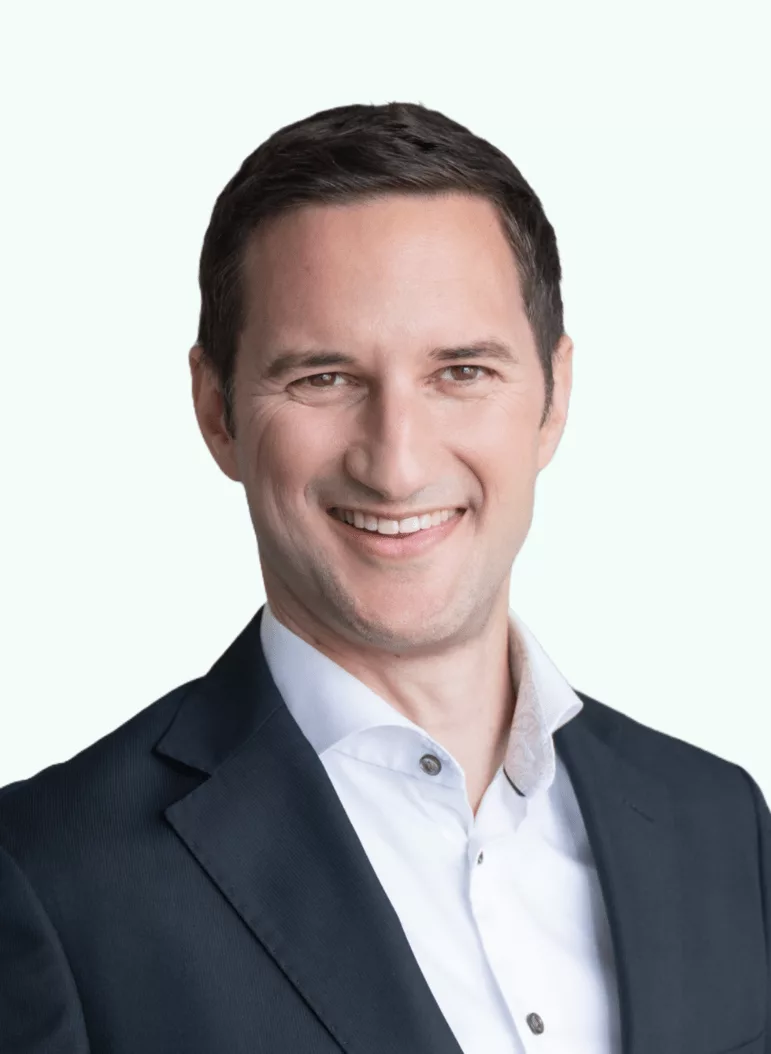
Pascal Stämpfli leverages over a decade of expertise in corporate finance and venture capital to scale and optimize businesses. A CFA charterholder with a Master's in Economics from the University of St. Gallen, Pascal specializes in market & company assessments, strategy, and business value creation. Having assessed more than 1,000 companies for financial and strategic investors provides him with a sophisticated understanding of investor rationale and capital allocation. As the Managing Director of Scalemetrics and Managing Partner at COREangels Big Data & AI Europe, Pascal operates at the intersection of financial discipline and technological innovation.