
Why Taking Risks Can Make You Happier and More Successful
Quick Answer
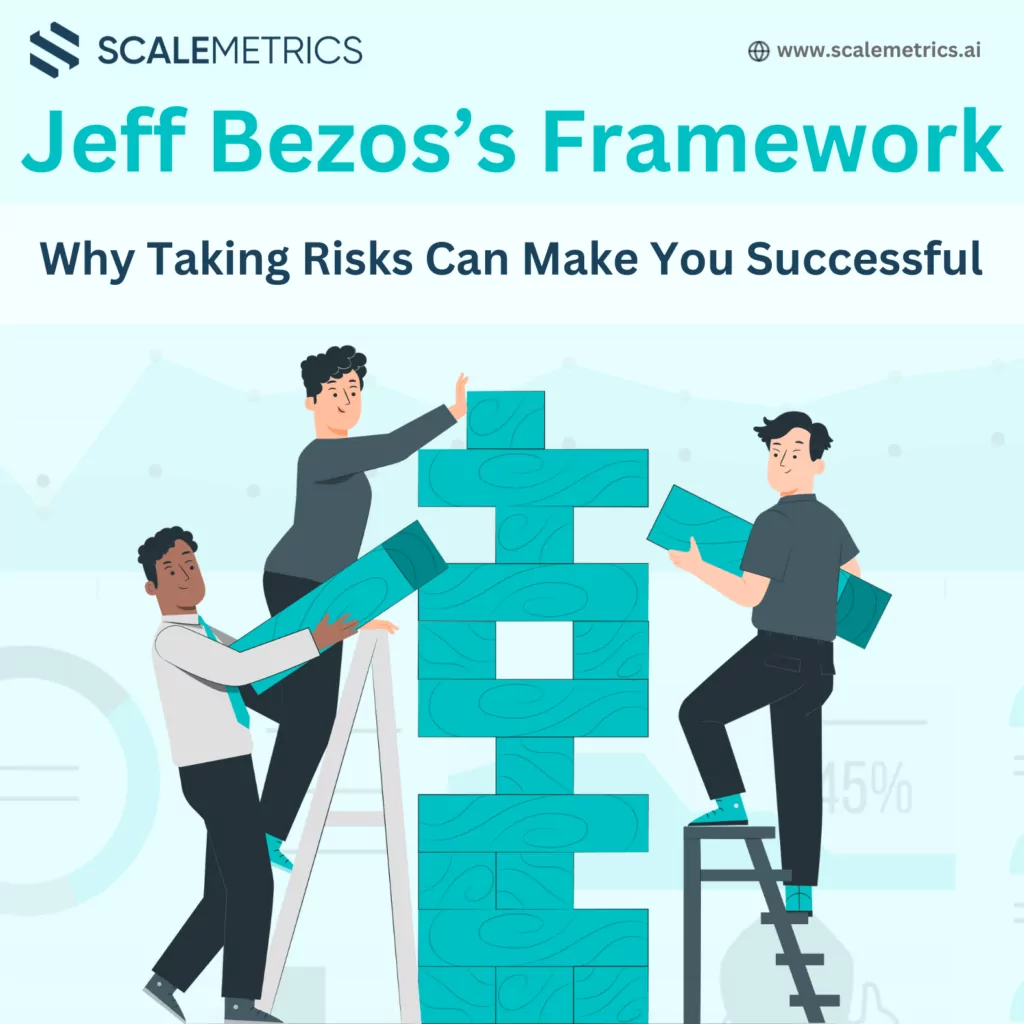
People who take bold risks are happier and more successful. Learn how to embrace smart risk-taking, like Jeff Bezos, and reduce financial fear.
Jeff Bezos once said that most people overestimate risk and underestimate opportunity.
The truth is, fear of the unknown keeps many people stuck in unfulfilling jobs, stagnant careers, and life situations they secretly want to change. But science backs what Bezos believes-those who take bold steps, like starting a business or moving to a new city, tend to be happier in the long run.
So if you’ve been hesitant to take a leap, ask yourself: What’s holding you back-the actual risk, or just the fear of it?
Why We Play It Safe (And Why That’s a Problem)
As humans, we are wired for loss aversion-we feel the pain of a loss far more than the joy of a gain. This makes us:
- Avoid risks, even when the potential upside is huge
- Stick with familiarity, even when it’s no longer fulfilling
- Convince ourselves that it’s safer to do nothing than to try something new
But what if staying in your comfort zone is actually riskier? Studies show that people who avoid change are more likely to experience long-term regret than those who take a chance on something new.
The Science of Risk-Taking and Happiness
Multiple studies have explored the link between taking risks and long-term happiness. Research from the National Bureau of Economic Research found that:
- People who make major life changes (such as switching careers, starting businesses, or moving to new places) report higher satisfaction than those who stick to the status quo.
- Entrepreneurs, despite facing uncertainty, often report greater happiness and fulfillment than those in traditional jobs.
- Taking calculated risks leads to higher confidence, stronger resilience, and better opportunities.
The Bezos Regret-Minimization Framework
When Jeff Bezos was deciding whether to leave his high-paying Wall Street job to start Amazon, he asked himself:
“When I’m 80, will I regret not taking this chance?”
His answer was yes, so he took the leap.
This decision-making framework can be life-changing. Instead of asking, “What if I fail?”, ask yourself:
- Will I regret not trying?
- Will I always wonder what could have been?
- What’s the worst that could happen-and can I recover from it?
Most of the time, the risk of doing nothing is far greater than the risk of taking action.
How to Take Smart Risks Without Losing Everything
Taking risks doesn’t mean being reckless. The goal is to take calculated risks-ones where the potential upside outweighs the downside.
1. Start Small, But Start Now
- Thinking about starting a business? Begin as a side hustle before quitting your job.
- Considering moving to a new city? Try staying there for a month to test the waters.
- Want a career change? Take a course or network in the industry before making the switch.
Every big leap starts with a small step.
2. Minimize Financial Risk
Financial fear is one of the biggest reasons people avoid risks. To make smart financial decisions:
- Build an emergency fund (3–6 months of living expenses) before making major career or life changes
- Cut back on unnecessary expenses to give yourself more flexibility
- Seek professional financial advice to ensure you’re making informed choices
3. Surround Yourself with Risk-Takers
The people around you influence your mindset. If everyone in your circle is risk-averse, you’re likely to be as well.
- Connect with entrepreneurs, investors, and ambitious professionals who have taken big leaps
- Read about successful risk-takers and learn from their experiences
- Seek mentors who encourage calculated risk-taking instead of discouraging change
4. Shift Your Perspective on Failure
Most people fear failure because they see it as permanent. But the most successful people see failure as data-a way to learn and improve.
- If your business idea doesn’t work, what skills will you gain that make you stronger for the next attempt?
- If you move to a new city and don’t like it, can you move back and carry that experience with you?
- If you change careers and it’s not what you expected, will you be in a worse position than before-or will you have gained new knowledge?
The reality is, most failures are recoverable, but missed opportunities are not.
Why 2026 Should Be the Year You Take the Leap
If there’s a change you’ve been thinking about-a business idea, a career move, a life decision-don’t let fear of risk hold you back.
The question isn’t, “What if I fail?” but rather, “What if I never try?”
The happiest and most successful people aren’t the ones who played it safe-they’re the ones who took calculatedchances and bet on themselves.
Need Help Mitigating Financial Risk? Let’s Talk.
Taking a big leap-especially financially-can feel overwhelming. But with the right strategy, you can take smart risks without unnecessary stress.
If you’re looking to start a business, invest, or make a big financial move, our team can help you plan and reduce risk while maximizing opportunity.
Let’s discuss how to make your bold move a reality!
Related Resources
Scalemetrics helps Swiss SMEs act on decisions like this before market conditions shift. Our budgeting and financial forecasting services and outsourced CFO team give finance directors the senior expertise to move first.
Sources & References
Frequently Asked Questions
How to Take Smart Risks Without Losing Everything?
Taking risks doesn’t mean being reckless. The goal is to take calculated risks, ones where the potential upside outweighs the downside.
Why 2026 Should Be the Year You Take the Leap?
If there’s a change you’ve been thinking about, a business idea, a career move, a life decision, don’t let fear of risk hold you back.
What financial metrics matter most for Swiss SME growth?
The most important financial metrics for Swiss SME growth are gross margin, EBITDA margin, working capital ratio, cash conversion cycle, and monthly cash burn. A fractional CFO builds KPI dashboards tracking these against budget monthly, enabling data-driven decisions rather than reactive cash management.
How does a fractional CFO support Swiss SME scaling?
A fractional CFO supports Swiss SME scaling by building the financial infrastructure needed for growth: management reporting, budgeting and forecasting, financial modelling for new market entry or hiring decisions, investor-grade reporting for fundraising, and tax optimisation across cantons. Scalemetrics provides this as a fully outsourced CFO mandate from CHF 3,000/month.
The Financial Dimension of Risk-Taking for Swiss Founders
The relationship between risk tolerance and business outcomes is well-documented in entrepreneurship research, but it is rarely examined through the lens of financial structure. Swiss founders who take calculated risks — entering new markets, investing ahead of revenue, making senior hires before the revenue fully supports them — tend to build more valuable businesses than those who optimise for caution at every decision point. The psychological benefit is real: founders who act on conviction rather than waiting for certainty report materially higher satisfaction and lower anxiety, because the weight of inaction is heavier than the weight of a manageable failure.
The critical qualifier is "calculated." Risk-taking in the absence of financial visibility is not entrepreneurial courage — it is a coin flip. The founders who take risks and come out ahead are almost always operating with clear financial awareness: they know their cash runway, they understand their burn rate at multiple scenarios, they have modelled what the downside looks like and confirmed it is survivable. This is not the same as being risk-averse. It is being risk-intelligent.
Switzerland's entrepreneurial environment adds specific context. The Swiss social contract — AHV, BVG, cantonal support systems — means that the personal downside of business failure is considerably cushioned compared to the United States. A Swiss founder whose business fails is not left without healthcare or a pension safety net. This structurally lower personal risk floor should, in theory, support greater business risk-taking. The evidence suggests it does, but slowly — Swiss founders are typically more conservative than their US or Israeli counterparts even accounting for the cushion.
Building the Financial Foundation That Enables Confident Risk-Taking
Founders who describe themselves as risk-averse are often, on closer examination, simply operating without adequate financial information. They cannot take the risk of hiring ahead of revenue because they do not know with confidence how long their cash will last if the new hire's impact takes six months to materialise. They cannot commit to a market expansion because they have not modelled the working capital requirement. The absence of financial clarity masquerades as risk aversion.
Three financial instruments transform risk-averse caution into risk-intelligent action. First, rolling twelve-month cash flow forecasts with scenario variants: a base case, an upside case assuming 20% faster revenue growth, and a downside case assuming 20% revenue delay. Seeing all three scenarios simultaneously gives founders the confidence to act on the base case while knowing the downside is modelled and manageable.
Second, break-even sensitivity analysis: knowing exactly which revenue level or cost reduction returns the business to cash-flow neutral removes the binary framing and replaces it with a set of levers the founder can actually pull. Third, contingency reserves: Swiss SMEs that maintain a liquidity reserve of two to three months' fixed costs — typically CHF 50,000–200,000 depending on team size — operate with a risk tolerance that those without reserves simply cannot afford.
Risk Tolerance vs. Financial Visibility: Impact on Founder Decision Quality
| Decision Type | Without Financial Clarity | With Financial Clarity |
|---|---|---|
| Senior Hire Before Full Revenue | Anxiety, delay, missed window | Modelled and time-boxed — act with confidence |
| Market Expansion Investment | Deferred indefinitely | Scoped, budgeted, triggered at defined milestone |
| Pricing Change | Fear of churn prevents action | Margin impact modelled; churn tolerance calculated |
| Funding Round Timing | Reactive — raise when desperate | Proactive — raise from a position of strength |
| Operational Downsizing | Crisis-driven, too late | Pre-empted by scenario modelling |
The finance function's highest-value contribution to a Swiss SME founder is not bookkeeping accuracy — it is decision confidence. Our financial planning services give Swiss founders the visibility and scenario framework to take risks intelligently and build the businesses they set out to build.
Pascal Stämpfli leverages over a decade of expertise in corporate finance and venture capital to scale and optimize businesses. A CFA charterholder with a Master's in Economics from the University of St. Gallen, Pascal specializes in market & company assessments, strategy, and business value creation. Having assessed more than 1,000 companies for financial and strategic investors provides him with a sophisticated understanding of investor rationale and capital allocation. As the Managing Director of Scalemetrics and Managing Partner at COREangels Big Data & AI Europe, Pascal operates at the intersection of financial discipline and technological innovation.