
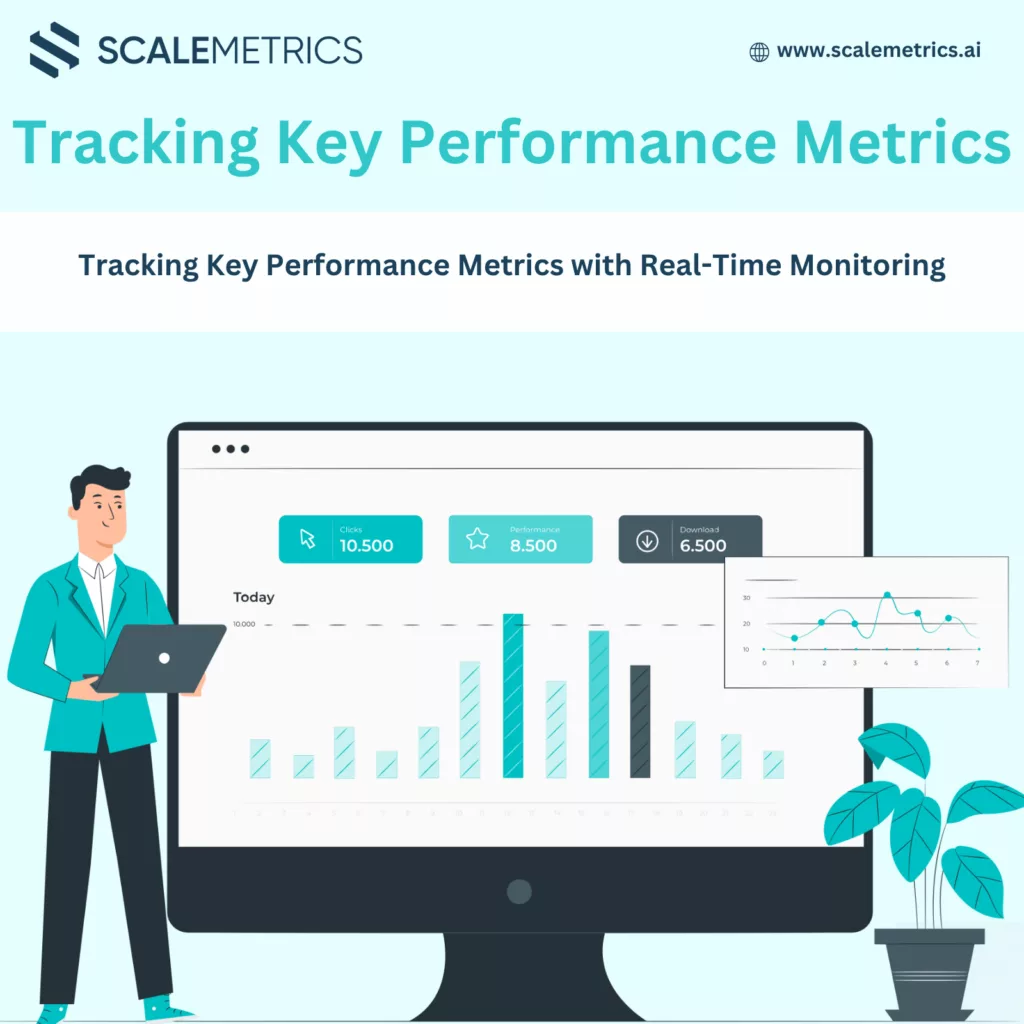
Tracking Key Performance Metrics with Real-Time Monitoring
Quick Answer
Discover how real-time monitoring of key performance metrics improves decision-making and operational efficiency. Learn how to implement real-time tracking for your business.
In today’s fast-paced business landscape, real-time monitoring of key performance metrics is critical for staying competitive and responsive to changing conditions. By tracking performance metrics in real time, businesses can quickly identify trends, respond to issues, and make informed decisions. This article explores the importance of real-time monitoring and how it enhances the tracking of key performance metrics across various business functions.
The Importance of Real-Time Monitoring
1. Immediate Access to Data
Real-time monitoring provides instant access to performance metrics, enabling businesses to react faster to emerging trends or potential problems. Instead of waiting for end-of-month reports, decision-makers can address issues as they arise.
Example: A sales team can monitor conversion rates in real time, allowing them to adjust their strategies immediately if the rate begins to decline.
2. Enhanced Decision-Making
With real-time data, businesses can make data-driven decisions faster, improving agility. Decision-makers no longer have to rely on outdated or incomplete information, ensuring that choices are based on the latest metrics available.
Benefit: Real-time insights help businesses remain proactive, addressing problems before they escalate.
3. Improved Operational Efficiency
By continuously monitoring key metrics, businesses can identify inefficiencies and optimise workflows. Real-time monitoring ensures that processes stay on track and that teams can quickly resolve bottlenecks or delays.
Example: A logistics company can monitor delivery times in real time and adjust routes to optimise efficiency, ensuring that packages arrive on time.
Key Metrics to Track with Real-Time Monitoring
1. Sales and Revenue Metrics
Real-time monitoring of sales performance metrics helps businesses maintain steady revenue growth and make adjustments as needed.
Key Metrics:
- Sales Conversion Rate: The percentage of leads converted into customers.
- Daily Sales Volume: Number of sales completed per day.
- Average Deal Size: The average revenue generated per sale.
2. Customer Experience Metrics
Monitoring customer experience metrics in real time ensures that businesses can quickly address issues, improving overall satisfaction and retention.
Key Metrics:
- Customer Satisfaction Score (CSAT): Real-time feedback from customers on their experience.
- Net Promoter Score (NPS): Tracks customer loyalty and likelihood of recommending the business.
- First Response Time: Measures how quickly customer inquiries are addressed.
3. Operational Efficiency Metrics
Real-time monitoring of operational metrics ensures that businesses can quickly identify and resolve inefficiencies, improving productivity and reducing costs.
Key Metrics:
- Cycle Time: The time it takes to complete a task or process.
- Throughput: The number of units or tasks completed in a specific time frame.
- Resource Utilization: Tracks how effectively resources (e.g., staff, equipment) are being used.
4. Financial Metrics
Monitoring key financial metrics in real time allows businesses to maintain a healthy cash flow and ensure profitability.
Key Metrics:
- Cash Flow: The movement of money in and out of the business.
- Expense Management: Tracks real-time expenses to avoid overspending.
- Profit Margins: Measures profitability after accounting for costs.
Benefits of Real-Time Monitoring for Business Functions
1. Sales and Marketing
Real-time monitoring helps sales and marketing teams track the effectiveness of campaigns and make adjustments based on live performance data.
Benefit: Sales teams can adjust their strategies mid-campaign to optimise lead generation and conversions, improving overall performance.
2. Customer Support
Customer service teams benefit from real-time metrics by being able to respond faster to customer inquiries, track ticket resolution times, and ensure consistent service quality.
Example: A customer support team can monitor ticket resolution time and receive alerts if response times exceed acceptable limits, allowing them to prioritise high-priority cases.
3. Operations and Supply Chain
Operational teams use real-time data to track processes like inventory management, production efficiency, and delivery times. This enables businesses to make adjustments to avoid delays, reduce waste, and ensure timely deliveries.
Example: Real-time monitoring of inventory levels helps a retailer avoid stockouts by automatically triggering reorders when stock falls below a certain threshold
How to Implement Real-Time Monitoring in Your Business
1. Identify Key Metrics for Monitoring
The first step in implementing real-time monitoring is identifying the key performance metrics most critical to your business. These metrics should be aligned with your strategic goals and provide actionable insights.
Example: A SaaS company may prioritise churn rate and monthly recurring revenue (MRR) for real-time monitoring to track customer retention and revenue growth.
2. Choose the Right Tools for Real-Time Data Tracking
To track metrics in real time, you’ll need data analytics and monitoring tools that collect and display data from various sources. Choose tools that integrate with your existing systems and allow for customizable reporting.
Popular Tools for Real-Time Monitoring:
- Google Analytics: Tracks real-time website traffic and user behavior.
- Tableau: Provides real-time data visualization and dashboards.
- Power BI: A business intelligence tool that integrates real-time data from multiple sources.
3. Set Up Dashboards for Easy Visualization
Dashboards help visualise key performance metrics in real time, making it easy for decision-makers to track performance at a glance. Ensure that your dashboards display the most important metrics for each department and can be customised for individual needs.
Example: A finance dashboard might show real-time data on cash flow, expenses, and profit margins, while a marketing dashboard focuses on lead generation and conversion rates.
4. Establish Alerts for Key Thresholds
Set up automated alerts to notify teams when performance metrics exceed or fall below certain thresholds. This allows businesses to react quickly to any issues that may arise, minimising negative impacts.
Example: A manufacturing company might receive alerts when production downtime exceeds a specific limit, allowing the operations team to resolve the issue before it affects overall output.
5. Review and Adjust Metrics Regularly
As business priorities and market conditions change, it’s important to regularly review and update the metrics you monitor in real time. This ensures that you’re always tracking the most relevant KPIs for your business.
Tip: Conduct quarterly reviews of your real-time monitoring system to ensure that it continues to align with your strategic goals.
Common Challenges in Real-Time Monitoring and How to Overcome Them
1. Data Overload
Real-time monitoring can generate vast amounts of data, which can be overwhelming if not managed properly.
Solution: Focus on key metrics that are most relevant to your business goals. Use filters and customizable dashboards to display only the most important data.
2. Inconsistent Data Quality
If data from different sources is inconsistent or incomplete, real-time monitoring may produce inaccurate insights.
Solution: Ensure that all data sources are integrated properly and that your monitoring system collects accurate, up-to-date information. Implement data validation processes to maintain data quality.
3. Technical Complexity
Implementing real-time monitoring systems can be technically complex, especially for businesses that don’t have in-house expertise.
Solution: Choose tools that are user-friendly and provide support for integration and setup. Consider hiring a data analyst or working with a third-party service to ensure proper implementation.
Case Study: Real-Time Monitoring Improves Performance for a SaaS Company
A SaaS startup in Germany implemented real-time monitoring to improve customer retention and increase recurring revenue:
- Challenge: The company faced a rising customer churn rate and needed to take immediate action.
- Solution: By monitoring customer behavior and product usage in real time, the company identified specific features that were underutilized by users, leading to dissatisfaction.
- Outcome: The company adjusted its product onboarding process and provided targeted support to struggling customers, resulting in a 15% reduction in churn and a 20% increase in monthly recurring revenue (MRR).
Conclusion: Real-Time Monitoring for Improved Business Outcomes
Real-time monitoring of key performance metrics empowers businesses to make faster, more informed decisions and improve overall performance. By identifying the right metrics, using appropriate tools, and setting up customizable dashboards and alerts, businesses can gain real-time visibility into their operations, sales, customer experience, and financial performance.
For companies looking to stay competitive and proactive in a fast-moving business environment, real-time monitoring is an essential tool for success.
Related Resources
Scalemetrics helps Swiss SMEs act on decisions like this before market conditions shift. Our business monitoring services and outsourced CFO team give finance directors the senior expertise to move first.
Sources & References
Frequently Asked Questions
What advantage does real-time monitoring give companies over traditional end-of-period reporting?
Real-time monitoring provides instant access to performance metrics, enabling businesses to react faster to emerging trends or potential problems. Instead of waiting for end-of-month reports, decision-makers can address issues as they arise.
How does real-time monitoring of sales metrics support steady revenue growth?
Real-time monitoring of sales performance metrics helps businesses maintain steady revenue growth and make adjustments as needed.
How does real-time monitoring benefit sales and marketing performance management?
Real-time monitoring helps sales and marketing teams track the effectiveness of campaigns and make adjustments based on live performance data.
What is the first step to implementing real-time performance monitoring in a company?
The first step in implementing real-time monitoring is identifying the key performance metrics most critical to your business. These metrics should be aligned with your strategic goals and provide actionable insights.
What is the main data management challenge when implementing real-time monitoring?
Real-time monitoring can generate vast amounts of data, which can be overwhelming if not managed properly.
What financial metrics matter most for Swiss SME growth?
The most important financial metrics for Swiss SME growth are gross margin, EBITDA margin, working capital ratio, cash conversion cycle, and monthly cash burn. A fractional CFO builds KPI dashboards tracking these against budget monthly, enabling data-driven decisions rather than reactive cash management.
How does a fractional CFO support Swiss SME scaling?
A fractional CFO supports Swiss SME scaling by building the financial infrastructure needed for growth: management reporting, budgeting and forecasting, financial modelling for new market entry or hiring decisions, investor-grade reporting for fundraising, and tax optimisation across cantons. Scalemetrics provides this as a fully outsourced CFO mandate from CHF 3,000/month.
Why Real-Time KPI Tracking Is a Competitive Necessity for Swiss SMEs
The pace at which business conditions change in today's market means that monthly or quarterly performance reviews are no longer sufficient for effective Swiss SME management. By the time a monthly report is compiled, distributed, and discussed, the operational deviations it reveals are already two to four weeks old. Real-time KPI tracking closes this gap — providing management with current performance data that enables intervention while there is still time to alter outcomes rather than simply explain them.
For Swiss SMEs, where the cost base is structurally elevated by AHV employer contributions of 5.3%, BVG pension commitments of 8–12%, and the general premium of Swiss operating costs, the financial consequences of delayed intervention are particularly significant. A manufacturing business that detects a quality issue two days into a production run can correct it before significant waste accumulates. The same business detecting the issue four weeks later in a monthly report has already absorbed the full cost. Real-time monitoring directly translates to real-time cost protection.
The most effective real-time KPI frameworks for Swiss SMEs focus on a small number of leading indicators — metrics that predict future financial outcomes rather than simply confirming past ones. In a service business, leading indicators might include pipeline value, proposal conversion rate, and project milestone achievement. In a manufacturing context, they might include machine utilisation, first-pass yield, and order fulfilment cycle time. The key design principle is that these indicators should move before the financial statements move, providing management with a forward-looking signal rather than a retrospective summary.
Technology Infrastructure for Real-Time KPI Monitoring
Building a real-time KPI monitoring capability does not necessarily require large-scale technology investment. Many Swiss SMEs can achieve meaningful real-time visibility by connecting their existing ERP, CRM, and accounting systems through lightweight dashboarding tools. Power BI, Tableau, and Qlik are widely used by Swiss businesses and integrate with the major Swiss ERP platforms including Abacus, SAP Business One, and Microsoft Dynamics. Cloud-based alternatives such as Klipfolio or Databox offer simpler implementations for smaller businesses.
The critical success factor is data quality rather than technology sophistication. A real-time dashboard built on inaccurate or inconsistently recorded source data will produce misleading signals that undermine rather than support decision-making. Swiss SMEs investing in real-time monitoring should begin with a data quality audit of their source systems, ensuring that key operational data is recorded consistently, completely, and with appropriate timeliness. MWST-relevant financial data, in particular, must be recorded accurately at source to ensure that real-time financial KPIs reflect the correct revenue and cost positions.
| KPI Type | Monitoring Frequency | Swiss SME Management Benefit |
|---|---|---|
| Cash Position | Daily | CHF liquidity management and payment timing |
| Pipeline Value | Weekly | Revenue forecasting confidence |
| Production Yield | Real-time / shift | Waste reduction, quality maintenance |
| Customer Satisfaction | Per transaction / weekly | Retention in premium Swiss client base |
Translating Real-Time KPIs into Financial Outcomes
The ultimate test of any real-time KPI monitoring system is whether it improves financial performance. Swiss SMEs that deploy real-time monitoring effectively see measurable improvements in cash conversion cycles, gross margin stability, and management response times to operational deviations. For businesses preparing for investor review or seeking to demonstrate financial discipline to lenders, a documented real-time monitoring framework is a powerful evidence point that supports valuation and credit discussions.
ScaleMetrics helps Swiss SMEs design and implement KPI monitoring frameworks that connect operational performance directly to financial outcomes. Explore our financial controlling service to understand how we support businesses in building real-time financial visibility.

Pascal Stämpfli leverages over a decade of expertise in corporate finance and venture capital to scale and optimize businesses. A CFA charterholder with a Master's in Economics from the University of St. Gallen, Pascal specializes in market & company assessments, strategy, and business value creation. Having assessed more than 1,000 companies for financial and strategic investors provides him with a sophisticated understanding of investor rationale and capital allocation. As the Managing Director of Scalemetrics and Managing Partner at COREangels Big Data & AI Europe, Pascal operates at the intersection of financial discipline and technological innovation.