
The True Cost of In-House Accounting vs Outsourcing in Switzerland (2026 Data)
Quick Answer
How much do accounting services Switzerland really cost vs an in-house bookkeeper? Full 2026 breakdown: CHF 79'725/year in-house vs CHF 14'400–26'400 outsourced – MWST, payroll, and year-end closing included.
Why Swiss SMEs Underestimate the True Cost of In-House Accounting
Ask most Swiss SME founders what their accountant costs, and they’ll quote you a salary figure. Ask them what the full cost is – including employer contributions, software licences, recruitment, and the hours their management team spends supervising finance work – and most go quiet.
This knowledge gap is expensive. Across Switzerland’s SME landscape, companies with revenues between CHF 1M and CHF 20M routinely make hiring decisions based on gross salary alone, leaving 30–50% of the true cost invisible on their P&L analysis. In a country where employer obligations under AHV, BVG, UVG, and KTG are mandatory and non-negotiable, that blind spot translates directly into budget overruns and misaligned resource allocation.
What Professional Accounting Services Switzerland Cover
Accounting services Switzerland from a full-service provider cover five core functions: monthly bookkeeping per OR (Code of Obligations) standards with bank reconciliation across UBS, ZKB, Raiffeisen, and PostFinance; payroll processing including AHV/IV/EO/ALV declarations to compensation funds, BVG contributions to pension providers, year-end Lohnausweise for all employees, and source tax declarations for foreign staff; quarterly or semi-annual MWST declarations to the ESTV with full input tax recovery and audit trail; annual financial statements and cantonal/federal corporate income tax filings; and monthly management reporting – P&L, balance sheet, and cash flow – for the CEO and board. A complete mandate replaces the need for in-house accounting staff while adding expertise across all Swiss compliance requirements.
The cost arithmetic is decisive: accounting services Switzerland on a fully managed basis typically run CHF 14’400–26’400 per year – compared to CHF 79’725+ per year for an 80%-FTE in-house bookkeeper once employer social contributions, BVG, software licences, training, and recruitment costs are included. The outsourced model also eliminates sick-day coverage risk and the competency gap that emerges when a single in-house hire faces a complex MWST audit or cross-border payroll scenario independently.
In 2026, the decision between in-house accounting and outsourcing is no longer simply about preference or trust – it is a quantifiable financial calculation. This post lays out the real numbers, using current Swiss salary data and employer contribution rates, so you can make the right decision for your business.
The Full Cost of an In-House Accountant in Switzerland (2026 Figures)
Swiss accounting salaries vary significantly by experience level, canton, and sector. Based on 2026 market data for the Zürich labour market – broadly representative of Basel and Zug as well – the ranges are as follows:
- Junior accountant (0–3 years experience): CHF 70,000–85,000 gross per year
- Senior accountant / chief accountant (5+ years): CHF 90,000–130,000 gross per year
But gross salary is only the starting point. Swiss employers are legally required to contribute to several social insurance schemes on top of every franc of gross pay:
- AHV/IV/EO (old-age, disability, loss of earnings insurance): 5.3% of gross salary
- BVG (occupational pension, second pillar): 8–12% of insured salary, depending on the plan and the employee’s age
- UVG (accident insurance): approximately 1.5% of gross salary
- KTG (daily sickness benefits insurance): approximately 1.5% of gross salary, employer share
- ALV (unemployment insurance): 1.1% of gross salary up to the maximum insured earnings
In aggregate, these statutory employer contributions add approximately 22–27% on top of gross salary. For a senior accountant on CHF 90,000 per year, that brings the fully-loaded employment cost to CHF 108,000–115,000 per year before a single software licence has been purchased.
Add a 13th month salary – standard practice in Swiss employment contracts – and the figure climbs further. For senior roles, total annual employment cost including the 13th month can reach CHF 120,000–125,000.
Hidden Costs Most Swiss SMEs Miss
The social charges are visible once you know to look. The following costs rarely appear in hiring decisions but are just as real:
- Recruitment: Placing a senior accounting role in Zürich through a specialist recruiter typically costs one month’s gross salary – CHF 7,500–10,000. Internal HR time adds another CHF 2,000–4,000 in absorbed cost.
- Onboarding and ramp-up time: A new accountant takes three to six months to reach full productivity in your specific ERP, chart of accounts, and reporting cadence. During that window, your management team carries a supervision overhead estimated at 20–30% of their own productive hours.
- Software licences: Bexio starts from CHF 49/month for basic bookkeeping; a full SME accounting stack on Abacus costs from CHF 200/month upwards; Run my Accounts charges from CHF 300/month. In-house teams also require access to payroll modules, expense management tools, and MWST filing systems – easily CHF 3,000–6,000 per year in software alone.
- Continuing professional development: Swiss accounting standards (Swiss GAAP FER, OR provisions, MWST at 8.1%) evolve regularly. Keeping an in-house accountant current requires CHF 1,500–3,000 per year in courses and subscriptions.
- Cover during absence: Illness, maternity leave, or resignation creates coverage risk. Hiring temporary staff through a Zürich staffing agency costs CHF 55–80 per hour, and senior finance temps can be scarce on short notice.
- Management overhead: In-house accountants require direction, target-setting, and output review. For an SME CEO, this equates to roughly two to four hours per week – four to eight hours per month of executive time spent on finance supervision rather than growth.
Aggregated across a year, these hidden costs typically add CHF 15,000–30,000 to the fully-loaded employment cost – money that rarely features in the hiring decision spreadsheet.
Side-by-Side Comparison
The table below presents a realistic annual cost comparison for a Swiss SME employing one senior accountant on CHF 90,000 gross, versus outsourcing accounting at a mid-tier service level of CHF 2,000/month.
| Cost Category | In-House (Senior, CHF 90k gross) | Outsourced (CHF 2,000/month) |
|---|---|---|
| Base salary / service fees | CHF 97,500 (incl. 13th month) | CHF 24,000 |
| Employer social charges (AHV, BVG, UVG, KTG) | CHF 18,000–24,000 | CHF 0 |
| Accounting software licences | CHF 3,000–6,000 | CHF 0 (typically included) |
| Recruitment & onboarding | CHF 8,000–14,000 (amortised) | CHF 0 |
| Training & CPD | CHF 1,500–3,000 | CHF 0 |
| Management overhead (CEO time, 3h/week @ CHF 200/h) | CHF 10,400 | CHF 1,040 (est. 0.3h/week) |
| Absence cover risk | CHF 3,000–8,000 (estimated) | CHF 0 (provider absorbs) |
| Total annual cost (estimate) | CHF 141,400–163,000 | CHF 25,040 |
Even at the outsourced price point of CHF 3,500/month – the upper end of the Swiss market for complex SME accounting mandates – the annual cost is CHF 42,000, still less than a third of the in-house total.
When In-House Makes Sense, and When It Doesn’t
| Company Profile | Revenue / Complexity | Recommended Approach |
|---|---|---|
| Early-stage SME, single entity | CHF 1M–5M, simple MWST, straightforward payroll | Outsourced accounting + fractional CFO |
| Growing SME, multi-project or multi-entity | CHF 5M–15M, intercompany transactions, reporting to bank (UBS, Raiffeisen) | Outsourced accounting with dedicated senior contact |
| SME with daily cash management needs | CHF 8M–20M, PostFinance/UBS treasury integration required | Hybrid: outsourced bookkeeping + part-time in-house finance manager |
| Complex manufacturing or trading SME | CHF 15M+, inventory accounting, multiple MWST rates, export | In-house senior accountant + outsourced CFO oversight |
| SME preparing for M&A, fundraising, or IPO | Any size, due diligence intensity | In-house or hybrid with fractional CFO for transaction support |
The clearest signal that in-house accounting makes sense is transaction volume and real-time decision-making need – not revenue per se. A CHF 3M manufacturing business with daily goods movements may genuinely need on-site finance capability. A CHF 12M professional services firm billing on retainers with 20 employees almost certainly does not.
What Outsourced Accounting Actually Costs in Switzerland
- Entry level (SMEs up to CHF 2M): CHF 800–1,200/month – bookkeeping, MWST filings, annual accounts
- Mid-tier (CHF 2M–10M, payroll, multi-MWST): CHF 1,500–2,500/month – full bookkeeping, payroll, management reporting, tax compliance
- Full-service (CHF 10M+, group consolidation): CHF 2,500–3,500/month – dedicated senior accountant, monthly management accounts, bank covenant reporting
These fees are fully deductible as a business expense. Unlike employment costs, there are no social contributions, no 13th month, no sick pay liability, and no redundancy risk.
The 2026 Tipping Point: AI + Outsourcing Changing the Math
According to PwC’s 2026 Swiss CFO Survey, 67% of Swiss CFOs now use AI for at least one core finance process – automated bank reconciliation, invoice coding, MWST pre-classification, and variance analysis. Outsourced providers have embedded these tools into their standard service stack.
The Tretor-Pictet partnership – combining one of Switzerland’s largest fiduciary networks with a global private bank – signals that outsourced finance services for SMEs are now an institutionally-backed operating model. The capability gap between in-house and outsourced has effectively closed.
Making the Decision: A Framework for Swiss SMEs
- What is your actual transaction volume? If monthly transactions are below 200, you almost certainly do not need a full-time accountant.
- Do you need real-time or periodic reporting? Most SMEs need accurate monthly accounts, not a daily dashboard – cloud-based outsourced systems deliver this.
- What is the true fully-loaded cost? Run the numbers with all employer contributions, software, recruitment amortisation, and management overhead included.
- What is your 24-month trajectory? Planning to raise finance or explore M&A? A fractional CFO model offers more flexibility than a single in-house hire.
Scalemetrics works with Swiss SMEs across Zürich, Basel, and Zug to provide fully managed accounting services Switzerland – from day-to-day bookkeeping and MWST compliance through to monthly management accounts and CFO support. Get in touch to receive a tailored cost comparison for your business.
Swiss SMEs that want to go beyond bookkeeping and bring in strategic financial leadership often pair outsourced accounting with a fractional CFO Switzerland engagement – getting a complete finance function at a fraction of in-house cost.
Frequently Asked Questions
Is outsourcing accounting cheaper than hiring in-house for Swiss SMEs?
Yes, in most cases. A full-time in-house accountant in Switzerland costs CHF 80’000–110’000 per year including salary, AHV/IV/ALV contributions, and overhead. Outsourcing the same function typically costs CHF 18’000–40’000 annually – a saving of CHF 50’000–70’000 – while providing broader expertise and eliminating recruitment and absence risk.
What hidden costs exist with in-house accounting in Switzerland?
The main hidden costs are: employer social security contributions (approximately 12–13% of gross salary), recruitment fees (1–2 months salary), onboarding time (3–6 months to full productivity), software licences, continuing education, and illness cover. These add 30–45% on top of the base salary.
What accounting tasks can a Swiss SME safely outsource?
Bookkeeping, monthly accounts close, VAT filings, payroll processing, year-end statutory accounts, and bank reconciliation are all routinely outsourced. Strategic tasks – cash flow decisions, investor reporting, board-level financial analysis – are better handled by a fractional CFO.
Does outsourcing accounting work for Swiss SMEs with complex VAT situations?
Yes. Specialist outsourced providers handle all Swiss VAT scenarios including partial VAT liability, import VAT, reverse charge on foreign services, and the CHF 100’000 registration threshold. Many have deeper VAT expertise than a generalist in-house hire.
How quickly can a Swiss SME transition to outsourced accounting?
Most transitions take four to eight weeks: two weeks for handover documentation, two to four weeks for the new provider to set up access, and one month of parallel running. Scalemetrics completes transitions without gaps in financial reporting.
Scalemetrics helps Swiss SMEs act on decisions like this before market conditions shift. Our accounting and payments services and outsourced CFO team give finance directors the senior expertise to move first.
Sources & References
What Stays Your Responsibility When You Outsource: Records, Access and Exit
Outsourcing the work does not outsource the legal duty. Under the Code of Obligations the company, not the provider, must keep its books and retain them for ten years (Art. 958f OR), and electronic records must stay unalterable through a write-once medium or a complete audit trail (Art. 9 GeBüV, revised version in force since 1 January 2025). That duty stays with you no matter who does the bookkeeping, so the engagement contract, not goodwill, has to protect it.
- Ownership: state in writing that you own the ledgers and source documents, not the provider.
- Access: keep live read access to the system at all times, not just a monthly report.
- Exit: on termination, receive a full export in a usable format plus the archived records.
- Integrity: confirm the provider’s tool archives on GeBüV-compliant, unalterable media.
Ordinary cloud drives like Dropbox or Google Drive do not meet the integrity requirement on their own, so a provider that only mails PDFs is not enough. Fix ownership, access and exit before you sign. For the ledger and archiving setup see our accounting and payments service; for the reporting layer on top, our business monitoring and controlling service.
If I outsource accounting in Switzerland, who owns the records and can I get them back?
You do. The company remains legally responsible for keeping and retaining its books for ten years (Art. 958f OR), regardless of who does the work. Fix ownership, live read access, and a full export on exit in the engagement contract, and confirm the provider stores records on GeBüV-compliant, unalterable media, either a write-once medium or a complete audit trail (Art. 9 GeBüV, in force since 1 January 2025).
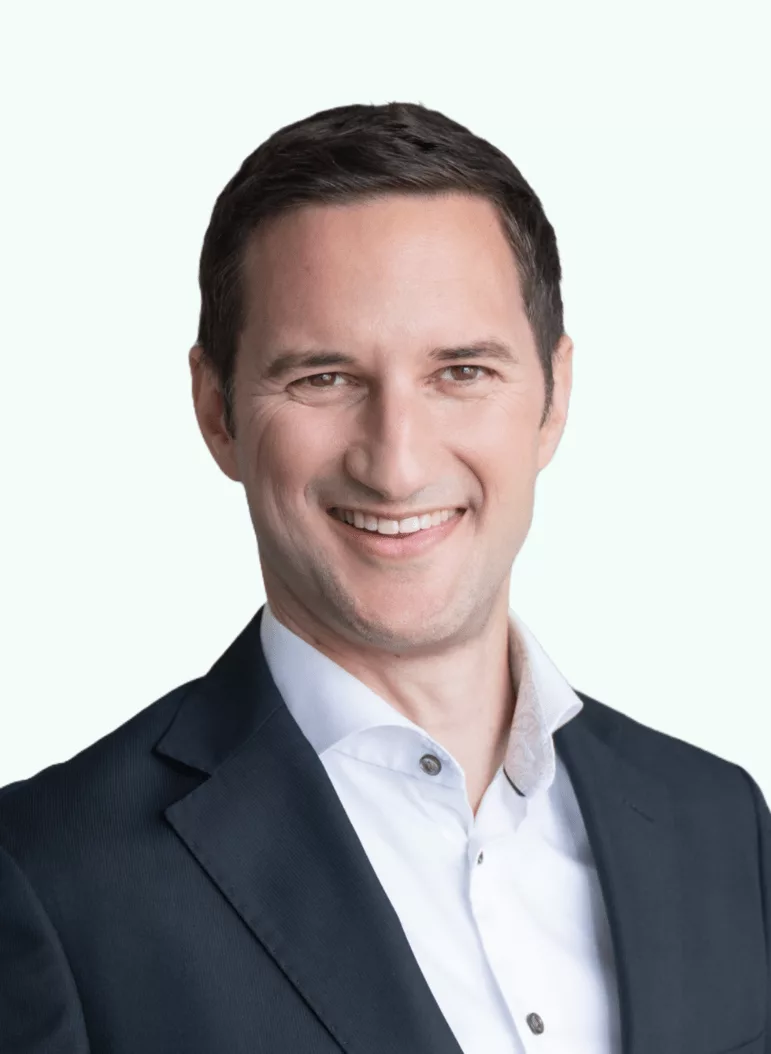
Pascal Stämpfli leverages over a decade of expertise in corporate finance and venture capital to scale and optimize businesses. A CFA charterholder with a Master's in Economics from the University of St. Gallen, Pascal specializes in market & company assessments, strategy, and business value creation. Having assessed more than 1,000 companies for financial and strategic investors provides him with a sophisticated understanding of investor rationale and capital allocation. As the Managing Director of Scalemetrics and Managing Partner at COREangels Big Data & AI Europe, Pascal operates at the intersection of financial discipline and technological innovation.