
US Tariffs Impact on Swiss SMEs: How to Protect Your Business in 2026
Quick Answer
US 10% flat tariff impact on Swiss exports 2026: GDP forecast cut to 0.8%, watch industry at risk, 8 protection strategies. Data-driven guide for Swiss SMEs with US market exposure.
Last updated: April 2026
The global trade landscape has shifted dramatically for Swiss businesses. Since February 2026, a flat 10% additional tariff on Swiss goods entering the United States has fundamentally altered the competitive equation for thousands of small and medium-sized enterprises across Switzerland. For Swiss SME leaders – whether you’re in Zurich’s financial district, Basel’s pharmaceutical corridor, or the precision engineering hubs of the Mittelland – understanding these tariffs and responding strategically is no longer optional. It’s a matter of business survival.
This guide provides Swiss SME CEOs and CFOs with the data, context, and actionable strategies needed to navigate the US tariff environment in 2026 and beyond.
What Are the Current US Tariffs on Swiss Goods?
Answer capsule: Swiss goods face a flat 10% additional US tariff since February 24, 2026, capped at 15% under a bilateral deal – down significantly from the 39% rate that existed before the November 2025 agreement.
The tariff situation has evolved rapidly. In late 2025, Swiss exports to the US faced a punishing 39% tariff rate that threatened to decimate export-dependent sectors. Following intensive negotiations, Switzerland and the United States reached a deal in November 2025 that reduced this rate substantially. Since February 24, 2026, Swiss goods entering the US market now face a flat additional tariff of 10%, with the bilateral agreement capping the maximum rate at 15% (Reuters, 2026).
However, the situation remains fluid. If sectoral levies are imposed – particularly in pharmaceuticals – a 15% tariff could apply specifically to pharma exports, which represent nearly half of all Swiss goods shipped to the United States (Swiss Federal Council, 2026).
For a Zurich-based medical device manufacturer exporting CHF 5 million in goods annually to the US, the current 10% tariff translates to an additional CHF 500,000 in costs – a figure that can erase thin margins entirely.
How Are US Tariffs Affecting the Swiss Economy?
Answer capsule: GDP growth forecasts have been slashed, export-dependent sectors are contracting, and the strong Swiss franc is compounding the pressure on exporters.
GDP Growth Forecasts Cut Sharply
The macroeconomic impact is already visible. EY Switzerland has cut its Swiss GDP growth forecast to just 0.6% for 2026, down from the roughly 1.5% that was expected before the tariff escalation (EY Switzerland Economic Outlook, 2026). The State Secretariat for Economic Affairs (SECO) is slightly more optimistic, projecting 1.1% growth, but even this figure represents a significant downgrade from pre-tariff expectations (SECO Economic Forecast, Spring 2026).
For context, Switzerland’s economy grew at approximately 1.5% in 2025. A drop to 0.6–1.1% represents a meaningful slowdown that will be felt across supply chains, hiring plans, and investment decisions for SMEs nationwide – from Geneva’s trading houses to St. Gallen’s textile manufacturers.
The Strong Swiss Franc: A Double Blow
Compounding the tariff challenge, the Swiss franc remains historically strong against both the euro and the US dollar. With the Swiss National Bank (SNB) holding its policy rate at 0% and Swiss inflation running at just 0.3–0.5%, the interest rate differential continues to attract capital flows into CHF (Swiss National Bank, 2026). For Swiss exporters, this means that on top of the 10% tariff, their goods are also more expensive in dollar terms simply due to currency dynamics – a genuine double pressure that no pricing strategy alone can fully resolve.
Which Swiss Sectors Are Most Affected by US Tariffs?
Answer capsule: Pharmaceuticals, watches, machinery, precision instruments, and chemicals face the greatest tariff exposure, with pharma bearing nearly half the total export impact.
Pharmaceuticals
The pharmaceutical sector, anchored by Basel-based giants but supported by hundreds of SME suppliers and contract manufacturers, accounts for nearly 50% of Swiss goods exported to the United States. If the proposed 15% sectoral tariff on pharmaceuticals is implemented, the impact would ripple through the entire supply chain – from active pharmaceutical ingredient (API) producers in the Espace Mittelland to logistics companies in Schaffhausen.
Watches and Luxury Goods
Swiss watchmakers – from major brands in the Jura Arc to smaller ateliers in Biel/Bienne and La Chaux-de-Fonds – face the 10% additional tariff on every timepiece entering the US. For an industry where margins can be substantial on luxury pieces but razor-thin on entry-level Swiss Made watches, this tariff fundamentally changes the pricing equation in the crucial American market.
Machinery and Precision Engineering
Swiss mechanical and electrical engineering exports fell sharply in Q4 2025 as the tariff threat materialized. Companies in Winterthur, Schaffhausen, and the greater Zurich area that supply CNC machines, automation equipment, and precision components to US manufacturers are finding their competitive advantage eroded against domestic US suppliers who face no such cost burden.
Chemicals and Precision Instruments
The specialty chemicals sector and precision instrument manufacturers – including many SMEs in the Bern and Lucerne regions – are similarly exposed. These sectors often operate on long-term contracts that may not include tariff adjustment clauses, leaving companies to absorb costs they never anticipated.
8 Strategies for Swiss SMEs to Navigate US Tariffs
Answer capsule: Swiss SMEs should take a multi-pronged approach combining pricing strategy review, market diversification, supply chain restructuring, financial hedging, and legal contract updates.
1. Review Your Pricing Strategy
Every Swiss SME exporting to the US must make a fundamental decision: absorb the tariff costs, pass them through to US customers, or negotiate a split. There is no one-size-fits-all answer. A Lucerne-based precision parts manufacturer with unique capabilities may be able to pass through most of the 10% tariff, while a Zurich machinery company competing against German and Japanese alternatives may need to absorb more to retain market share.
Model three scenarios for each major US customer: full absorption, full pass-through, and a 50/50 split. Calculate the margin impact of each and identify your walk-away point. This analysis should be completed within 30 days if you haven’t started already.
2. Diversify Export Markets
Reducing US dependency is essential. The European Union remains Switzerland’s largest trading partner, and with the recent progress on the bilateral framework agreement, market access conditions are stabilising. Asian markets – particularly Japan, South Korea, and Southeast Asia – offer growth opportunities for Swiss quality goods. A St. Gallen textile machinery company, for instance, might find that Southeast Asian manufacturers are eager for Swiss precision equipment at pre-tariff prices.
3. Review Your Supply Chain for US-Based Production
For SMEs with significant US revenue, establishing local production or assembly operations may justify the investment. Swiss companies have collectively committed to USD 200 billion in US investment over five years, with USD 67 billion planned for 2026 alone (SWI swissinfo.ch, 2026). While this commitment is driven largely by major corporations, it signals a broader trend: producing locally to serve the US market may be the most effective long-term tariff mitigation strategy for Swiss SMEs with annual US revenues exceeding CHF 2–3 million.
4. Implement FX Hedging Strategies
With CHF remaining strong against USD and EUR, unhedged export revenues represent a significant risk. Swiss SMEs should work with their bank – whether UBS, Credit Suisse successor entities, or cantonal banks – to implement forward contracts or options strategies that lock in exchange rates for 6–12 months. A CHF/USD forward contract at current rates can remove currency uncertainty from your tariff impact calculations, allowing clearer strategic decision-making.
5. Update Financial Forecasts with Tariff Scenarios
Your 2026 budget and financial forecast must now include tariff-adjusted scenarios. Build at minimum three models: the current 10% tariff persisting, a reduction to 5% if negotiations progress favourably, and an escalation to 15% if sectoral levies are imposed. Each scenario should flow through to cash flow projections, hiring plans, and investment decisions. This is where working with an experienced outsourced CFO can add significant value – particularly for SMEs that lack in-house financial modelling capacity.
6. Review Contracts for Tariff-Related Clauses
Examine every US-facing contract for price adjustment mechanisms, force majeure provisions, and tariff-related clauses. Many contracts signed before 2025 will lack specific tariff adjustment language. Work with your legal counsel to renegotiate where possible, adding clauses that allow price adjustments tied to tariff changes. For new contracts, include a tariff adjustment mechanism as standard.
7. Consider a US Entity or Subsidiary
For Swiss SMEs with US revenues exceeding CHF 5 million annually, establishing a US subsidiary (LLC or C-Corp) may allow you to import components at lower tariff rates and perform final assembly or value-add activities domestically. This approach requires careful analysis of transfer pricing rules, US corporate tax obligations, and operational complexity – but for qualifying businesses, the tariff savings can be substantial. Cities like Austin, Raleigh-Durham, and Nashville have emerged as popular landing spots for European SMEs establishing US operations.
8. Apply for Available Tariff Exemptions
Certain product categories may qualify for tariff exemptions or exclusions. The US Trade Representative periodically opens exclusion processes for specific products. Monitor these opportunities actively, and work with a US customs broker who understands the Swiss-US trade relationship. Industry associations like Swissmem (for machinery and electrical engineering) and scienceindustries (for chemicals and pharma) can provide guidance on current exemption opportunities.
What Swiss SMEs Should Do Right Now: A 90-Day Action Plan
Answer capsule: Immediate actions include tariff impact quantification, customer communication, contract review, and strategic planning for market diversification and potential US operations.
Days 1–30: Quantify and Communicate
- Calculate the exact tariff impact on each US product line and customer
- Model pricing scenarios (absorb, pass through, split)
- Communicate proactively with US customers about pricing implications
- Review all US-facing contracts for price adjustment mechanisms
Days 31–60: Hedge and Forecast
- Implement CHF/USD hedging for the next 6–12 months
- Build tariff-adjusted financial forecasts with three scenarios
- Identify tariff exemption opportunities for your product categories
- Begin exploring alternative export markets (EU, Asia)
Days 61–90: Restructure and Invest
- Evaluate feasibility of US-based production or assembly
- Renegotiate contracts to include tariff adjustment clauses
- Apply for any available tariff exclusions
- Develop a 12-month strategic plan that accounts for tariff uncertainty
Frequently Asked Questions
What is the current US tariff rate on Swiss goods in 2026?
Since February 24, 2026, Swiss goods entering the United States face a flat 10% additional tariff. A bilateral deal between Switzerland and the US caps the maximum rate at 15%. This is significantly lower than the 39% tariff that was in effect before the November 2025 agreement. Certain sectors like pharmaceuticals may face the full 15% if sectoral levies are imposed.
How do US tariffs affect Swiss pharmaceutical exports?
Pharmaceuticals account for nearly half of all Swiss exports to the United States, making this sector disproportionately affected. The current 10% tariff adds significant costs, and a proposed 15% sectoral levy on pharma would further increase the burden. Basel-region pharma companies and their SME supply chain partners should model both scenarios in their financial forecasts.
Can Swiss SMEs get exemptions from US tariffs?
Yes, certain product categories may qualify for tariff exclusions through the US Trade Representative’s periodic exclusion processes. Swiss SMEs should work with a US customs broker and monitor industry association updates from organisations like Swissmem and scienceindustries. The exclusion process typically requires demonstrating that no adequate domestic US alternative exists for the specific product.
Should Swiss SMEs establish US subsidiaries to avoid tariffs?
Establishing a US entity (LLC or C-Corp) can be an effective tariff mitigation strategy for Swiss SMEs with annual US revenues exceeding CHF 5 million. By importing components and performing assembly or value-add operations locally in the US, companies can reduce the tariff-applicable value. However, this requires careful analysis of transfer pricing, US tax obligations, and operational costs. An outsourced CFO can help model whether this approach makes financial sense for your specific situation.
What is the economic impact of US tariffs on Switzerland’s GDP?
US tariffs have significantly impacted Swiss economic growth projections. EY Switzerland has cut its 2026 GDP forecast to 0.6%, down from the pre-tariff expectation of approximately 1.5%. SECO projects a slightly more optimistic 1.1%. The strong Swiss franc (with SNB rates at 0% and inflation at 0.3–0.5%) compounds the challenge for exporters who face both tariff costs and unfavourable currency dynamics when selling to the US market.
How Scalemetrics Helps Swiss SMEs Navigate Tariff Challenges
At Scalemetrics, we work with Swiss SMEs across sectors to build financial resilience in uncertain trade environments. Our outsourced CFO services include tariff impact modelling, scenario-based financial forecasting, FX risk management strategy, and strategic advisory on market diversification and US market entry. Whether you’re a Basel pharma supplier, a Zurich machinery exporter, or a Biel/Bienne watchmaker, our team helps you turn tariff uncertainty into a structured, data-driven action plan.
Ready to quantify your tariff exposure and build a resilient strategy? Contact Scalemetrics today for a complimentary tariff impact assessment.
Related Resources
Scalemetrics helps Swiss SMEs act on decisions like this before market conditions shift. Our SME financing services and outsourced CFO team give finance directors the senior expertise to move first.
Sources & References
US Tariffs and Swiss SMEs: Quantifying the Exposure
The United States remains the largest single-country export market for Swiss goods, absorbing approximately CHF 16–18 billion in Swiss exports annually. The categories most exposed to US tariff policy — watches and precision instruments, pharmaceuticals and biotech products, machinery and industrial equipment, and specialty chemicals — are precisely the sectors where Swiss SMEs are most concentrated. Even a 10–15% blanket tariff increase on Swiss goods entering the US market would represent a material margin erosion for businesses that have built their US pricing on tariff-free assumptions.
The complexity for Swiss SMEs is that US tariff policy in 2025–2026 has been characterised by rapid changes, temporary exemptions, and sector-specific carve-outs that make static modelling inadequate. A company that secured a US tariff exemption in Q3 2025 may find that exemption not renewed in Q1 2026; a competitor that moved production to a third country to avoid tariffs may find that workaround challenged under rules of origin reviews. The only robust approach is dynamic scenario modelling rather than a single-point tariff assumption.
Practical Mitigation Strategies for Swiss Exporters
Pricing power assessment. The first question to answer is whether your US customers would absorb a tariff-driven price increase or whether you would need to absorb it in margin. This depends on how differentiated your product is, how many credible substitutes exist, and how price-sensitive your US customer segment is. Swiss precision engineering and pharmaceutical products typically have high switching costs and limited substitutes — pricing power is relatively strong. Commodity-adjacent goods (industrial components, standardised machinery) face more substitution risk and thus more limited ability to pass tariffs through.
Currency hedging alongside tariff modelling. US tariff shocks and USD/CHF movements often occur simultaneously, compounding or partially offsetting each other. A well-structured CFO analysis models both variables jointly rather than treating them as independent risks. If a 15% tariff increase coincides with a 10% CHF/USD appreciation, the combined margin impact on a USD-invoiced Swiss exporter is approximately 23–25% — potentially company-threatening without mitigation.
Supply chain restructuring options. For Swiss SMEs with high US revenue concentration, three restructuring approaches are being actively evaluated: establishing a light-touch US assembly or finishing operation that shifts the tariff classification of the product; routing through a preferential-tariff third country (Israel, South Korea, and Canada have US trade agreements that may benefit Swiss-origin inputs incorporated into finished goods); or shifting to US-sourced components to reduce the dutiable value of the final product.
US Tariff Scenario Analysis: Swiss SME Impact Matrix
| Tariff Scenario | EBIT Impact (15% US rev. share) | EBIT Impact (40% US rev. share) | Recommended Response |
|---|---|---|---|
| +5% tariff (partial pass-through) | −0.5% EBIT pts | −1.5% EBIT pts | Monitor; review pricing annually |
| +15% tariff (50% pass-through) | −1.1% EBIT pts | −3.0% EBIT pts | Hedge FX; review supply chain |
| +25% tariff (no pass-through) | −3.75% EBIT pts | −10.0% EBIT pts | Structural review required |
Swiss SMEs with significant US revenue exposure cannot afford to treat tariff risk as a low-probability event in 2026. Building a dynamic tariff scenario model, establishing FX hedges for US dollar exposure, and reviewing supply chain structures are all CFO-level activities that require dedicated attention. A strategic CFO engagement can deliver this analysis and the implementation roadmap to protect your US market margins in whatever tariff environment materialises.
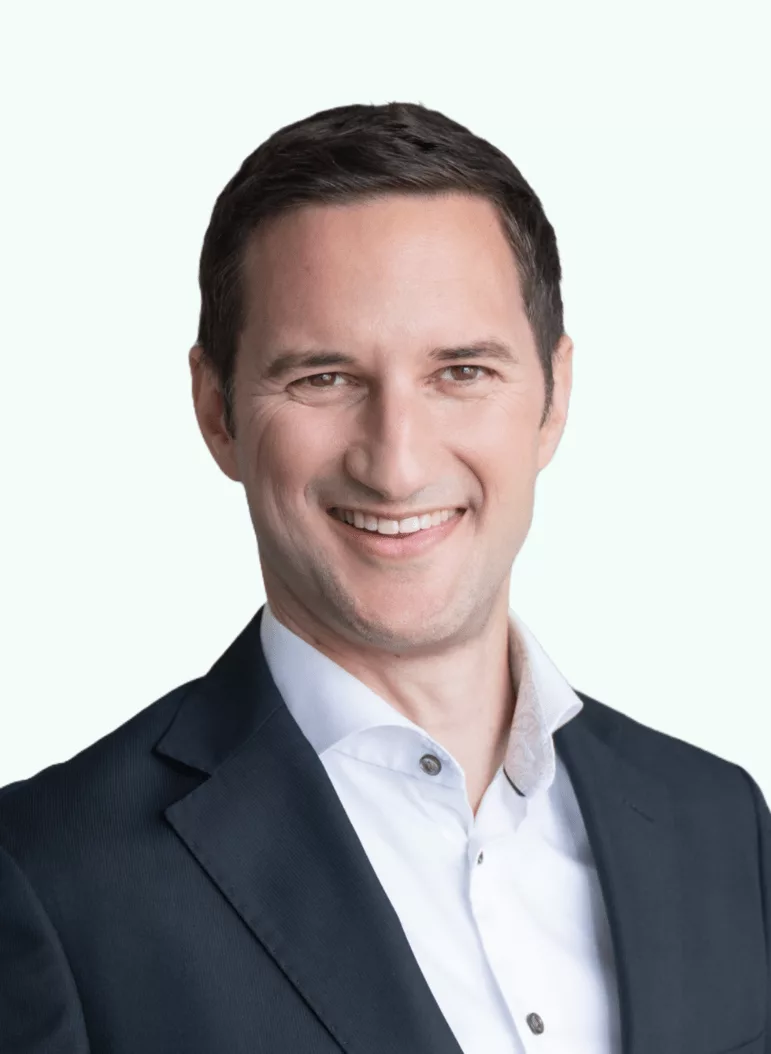
Pascal Stämpfli leverages over a decade of expertise in corporate finance and venture capital to scale and optimize businesses. A CFA charterholder with a Master's in Economics from the University of St. Gallen, Pascal specializes in market & company assessments, strategy, and business value creation. Having assessed more than 1,000 companies for financial and strategic investors provides him with a sophisticated understanding of investor rationale and capital allocation. As the Managing Director of Scalemetrics and Managing Partner at COREangels Big Data & AI Europe, Pascal operates at the intersection of financial discipline and technological innovation.