
What a strategic CFO really does for a Swiss SME in 2026
A strategic CFO’s real job is not to file the VAT or run payroll; it is to understand the business well enough to say where growth and margin come from, and where they do not. Most Swiss SME founders, when they add a finance function, picture someone who takes the admin off their plate. That work matters and it has to get done. But it is financial administration, and confusing it with financial strategy is one of the more expensive mistakes a growing company makes.
This guide sets out what a strategic CFO actually does for a Swiss SME, how the role differs from bookkeeping and accounting, and when it pays to bring one in.
Administration keeps the record; strategy reads it
Financial administration keeps the accounts tidy, the VAT filed, payroll paid and the invoices out. It records what happened. A strategic CFO starts where that record ends and asks what it means. The two are different jobs, and a company can have flawless administration while flying blind on the questions that decide its next two years.
| Financial administration asks | A strategic CFO asks |
|---|---|
| Is the VAT filed? | Why did margin compress in Q3, and what does that mean for pricing next year? |
| Are the invoices out? | Is the business structured to handle two or three times the revenue without breaking? |
| Is payroll paid? | Which roles do we hire next, and what has to be true for them to pay off? |
| Are the accounts closed? | Which service line carries the margin, and which clients are profitable once fully costed? |
The expensive pause
We speak to CEOs every week who run businesses that look healthy on paper. Revenue is up, the team is busy. Ask them which service line actually carries the margin, or which clients are profitable once the full cost of serving them is counted, and the answer is often a pause. That pause is expensive. It means decisions on pricing, hiring and investment are being made without knowing which parts of the business create value and which quietly consume it. A strategic CFO closes that gap by turning the accounts into a clear read on where the money is really made.
What full costing reveals
The profitability question is where the gap between administration and strategy shows most clearly. Take an illustration, with the figures labelled as assumptions. A service line bills CHF 500’000 a year and looks like the star of the business. Assumption: its direct delivery cost is CHF 300’000, so on that view it earns CHF 200’000. Once the full cost of serving it is counted, the senior time it absorbs, the rework, the slow-paying clients, the support it pulls from other teams, assumption: a further CHF 150’000, the real contribution is CHF 50’000, not CHF 200’000. A second line billing half as much, with none of the hidden drag, may be the one actually funding the company. Administration shows both lines as revenue. A strategic CFO shows which one to grow. That single distinction changes where the next hire, the next marketing franc and the founder’s own time should go.
The founder’s time is the scarcest input
Every hour a founder spends reconstructing what the numbers mean is an hour not spent on customers, product or the team. A strategic CFO gives that time back by making the financial picture legible on demand: not a spreadsheet to decode, but a clear answer to what is working, what is not and what to do next. For a Swiss SME running lean, that is often the difference between growth that compounds and growth that stalls.
Drivers, not just outputs
Revenue and profit are outputs. They are the result of a handful of drivers: price, volume, cost to serve, retention, the mix of what you sell. A strategic CFO works on the drivers, because that is where decisions are made. Knowing that gross margin fell three points is a fact. Knowing it fell because the fastest-growing service line is also the lowest-margin one is a decision. Our guide on business monitoring covers how those drivers get tracked month to month rather than discovered at year-end.
What changes when the role is done well
A strategic finance function changes how a company operates on several fronts:
- Hiring: roles are added against a plan of what they must produce, not added because the team feels stretched.
- Pricing: prices move on margin evidence, not on what feels defensible.
- Investment: capital goes to the lines that earn, and stops going to the ones that do not.
- Capital: the business is ready for a funding conversation or an acquisition because the numbers are built for it, not reconstructed after the fact.
Ready for the next phase, not recorded after it
When an outside conversation arrives, a funding round, a buyer, a bank facility, the difference between a company that has had strategic finance and one that has only had administration shows immediately. One can explain its drivers, defend its margins and model the next phase. The other is assembling the story under time pressure. Our guides on financing and the finance function set out what that readiness looks like in practice.
Confidence comes from information
The companies that scale with confidence are not necessarily making better decisions in the moment. They have better information and someone who knows how to read it. That is the strategic CFO’s contribution: not the record itself, but the judgement built on top of it. For a Swiss SME, this does not require a full-time hire. A fractional or outsourced strategic CFO gives a growing company the same read on its numbers without the cost of a permanent executive, which is the model most SMEs at CHF 1m to 20m revenue actually need.
What is the difference between a strategic CFO and financial administration?
Financial administration records what happened: it files the VAT, runs payroll, sends invoices and closes the accounts. A strategic CFO reads that record and acts on it, working out where margin and growth come from, how to price, whom to hire and how to prepare for outside capital. Administration keeps the books; strategy uses them to steer.
What does a strategic CFO do that a bookkeeper or accountant does not?
A bookkeeper or accountant produces accurate accounts. A strategic CFO interprets them: identifying which service lines and clients are genuinely profitable once fully costed, why margins moved, and what the numbers mean for pricing, hiring and investment. The accountant answers what happened; the strategic CFO answers what to do about it.
When should a Swiss SME bring in a strategic CFO?
Usually when decisions start to outrun the founder’s visibility: revenue is growing but margin is unclear, hiring and pricing calls are being made on instinct, or a funding round or acquisition is on the horizon. At that point the cost of decisions made without a clear read on the drivers exceeds the cost of the role. Many SMEs reach it between CHF 1m and 20m in revenue.
Can a Swiss SME get a strategic CFO without a full-time hire?
Yes. A fractional or outsourced CFO gives a company senior financial judgement on a part-time or retained basis, at a fraction of the cost of a permanent executive. For most SMEs the need is regular strategic input and a proper read on the numbers, not a full-time salary, which is why the fractional model fits the CHF 1m to 20m revenue range well.
How does a strategic CFO help before a funding round or sale?
A strategic CFO builds the financial foundation ahead of the conversation rather than after it: clean drivers, defensible margins, a model that projects the next phase, and answers to the questions an investor or buyer will ask. A business that has had this can explain and defend its numbers on demand, which shortens diligence and strengthens its position at the table.
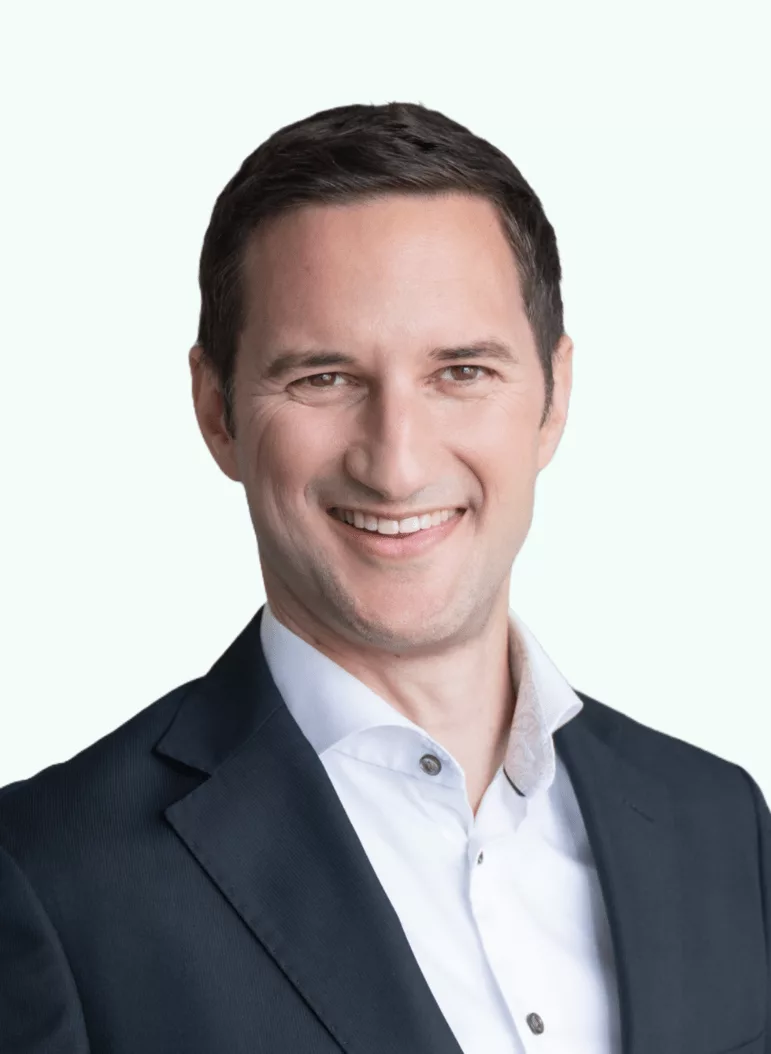
Pascal Stämpfli leverages over a decade of expertise in corporate finance and venture capital to scale and optimize businesses. A CFA charterholder with a Master's in Economics from the University of St. Gallen, Pascal specializes in market & company assessments, strategy, and business value creation. Having assessed more than 1,000 companies for financial and strategic investors provides him with a sophisticated understanding of investor rationale and capital allocation. As the Managing Director of Scalemetrics and Managing Partner at COREangels Big Data & AI Europe, Pascal operates at the intersection of financial discipline and technological innovation.