
Accounting Services Switzerland: The Complete Guide for Swiss SMEs
Quick Answer
Compare in-house bookkeeper vs outsourced accounting services in Switzerland. Real cost breakdown for SMEs with CHF 3M–8M revenue, MWST compliance requirements, and how to choose a provider.
When the finance director of a Geneva-based medical device distributor sat down to review the company’s true cost of its in-house bookkeeper, the number was startling. The bookkeeper’s gross salary of CHF 72’000 looked manageable in the budget – until you added employer AHV contributions (CHF 3’816), BVG (CHF 6’500), accident insurance (CHF 720), family allowances, sick-day cover, and the annual Bexio licence renewal. Total all-in cost: CHF 95’200. By contrast, the fully managed accounting services Switzerland package they switched to cost CHF 1’800 per month – CHF 21’600 per year – and covered everything from monthly bookkeeping to quarterly MWST declarations. The arithmetic was decisive. This guide explains what Swiss SMEs actually need from accounting services, what it costs, and how to choose a provider.
What Accounting Services Do Swiss SMEs Actually Need?
Swiss accounting obligations are defined by the Swiss Code of Obligations (OR) for most SMEs, with larger companies or those with international operations potentially also subject to IFRS or Swiss GAAP FER. At a minimum, every Swiss company must maintain proper books of account, prepare annual financial statements, and meet all tax filing obligations. In practice, the core accounting services a Swiss SME requires break down into five areas:
- Monthly bookkeeping: Recording all income and expenses per the OR chart of accounts. Reconciliation of bank accounts (UBS, ZKB, Raiffeisen, PostFinance), accounts receivable, accounts payable, and payroll journals. For SMEs on Bexio, Abacus, or Accounto, this includes managing the digital transaction feed.
- Payroll processing: Monthly salary runs, AHV/IV/EO/ALV declarations to compensation funds, BVG contribution payments to pension providers, year-end salary certificates (Lohnausweise) for all employees, and source tax declarations for foreign employees.
- MWST (VAT) declarations: Quarterly or semi-annual MWST returns to the ESTV. Input tax recovery, correct tax code application, and reconciliation of MWST accounts. Optional MWST advice on import/export transactions and cross-border services.
- Year-end closing: Annual financial statements per OR, accruals and deferrals, depreciation schedules, year-end audit support (if required), and preparation of tax declarations for cantonal and federal corporate income tax.
- Management reporting: Monthly profit and loss, balance sheet, and cash flow statements formatted for the CEO and board – not just compliance documents but decision-support tools.
In-House Bookkeeper vs Outsourced Accounting Switzerland: Real Cost Comparison
The true cost comparison between an in-house bookkeeper and outsourced accounting services in Switzerland is rarely done transparently. Here is a realistic side-by-side for a Swiss SME with 15–40 employees and CHF 3M–8M revenue:
In-house bookkeeper (part-time, 80%): Gross salary CHF 65’000 + AHV/IV/EO employer (5.3%) CHF 3’445 + BVG employer CHF 5’500 + UVG CHF 780 + accounting software licence (Bexio Pro) CHF 1’800 + annual training CHF 1’200 + recruitment cost amortised CHF 2’000 = CHF 79’725/year. And this assumes zero sick days and full productivity from day one.
Outsourced accounting services Switzerland (Scalemetrics full-service): CHF 1’200–2’200/month depending on transaction volume and complexity = CHF 14’400–26’400/year. Includes all of the above services, access to a senior accounting team, no recruitment cost, no software cost, no sick-day risk. Scales instantly with business volume.
The gap is CHF 50’000–65’000 per year for comparable service levels – and that gap grows significantly if the in-house hire needs to be replaced, makes a MWST filing error, or cannot handle a tax audit independently.
MWST Compliance: What Swiss Companies Must Get Right
Switzerland’s MWST (Mehrwertsteuer) system applies at 8.1% standard rate, 3.8% special rate (hospitality), and 2.6% reduced rate (food, medicine, books). Every Swiss company exceeding CHF 100’000 in annual taxable turnover must register with the ESTV and file regular MWST declarations – either quarterly or annually under the net tax rate method.
Common MWST errors that trigger ESTV audits include: incorrect treatment of mixed supplies (partly taxable, partly exempt), failure to apply reverse-charge on services purchased from foreign providers, improper input tax recovery on costs with private-use elements, and incorrect treatment of cross-border service exports. A single ESTV audit covering three years of returns can result in significant retrospective liability plus default interest. Professional accounting services with dedicated MWST expertise are the most cost-effective protection against this exposure.
How to Choose an Accounting Services Provider in Switzerland
The Swiss market offers three main categories of accounting services provider: traditional Treuhand firms, generalist bookkeeping services, and modern CFO-integrated accounting firms like Scalemetrics. When evaluating a provider, prioritise these five criteria:
- Swiss-specific expertise: OR accounting standards, Swiss cantonal tax differences, ESTV MWST rules, AHV/BVG payroll administration. A generic European accounting firm without Swiss-specific depth will create compliance gaps.
- Software compatibility: Confirm the provider works with your existing system – Bexio, Abacus ERP, Accounto, SAP Business One, or legacy Swiss systems. Data migration costs and disruption during a provider switch can be material.
- Scalability: Can they handle growth from CHF 2M to CHF 15M? Will your fee increase proportionally or exponentially? Fixed-scope monthly retainers are generally more predictable than hourly billing.
- CFO-layer availability: Can the same provider escalate to strategic financial support – forecasting, investor decks, bank negotiations – without a disruptive handoff to a different firm?
- Response time: Accounting questions in Switzerland often have deadlines. A provider that responds to MWST queries within 24 hours is worth a premium over a cheaper firm with 3-day response times.
How Accounting Differs by Business Type
The five service areas above apply to every Swiss company, but the accounting detail changes with the business model. Where the work diverges most:
- SaaS and subscription: revenue is earned over the service period, so advance billings sit in deferred revenue (passive Rechnungsabgrenzung, account 2300) and release month by month. Billing is not revenue.
- E-commerce and retail: inventory valuation, reconciliation across multiple payment providers and marketplaces, and cross-border VAT on physical goods dominate the ledger.
- Professional services and consulting: work in progress and project-based revenue recognition matter more than inventory, and unbilled work is accrued at period end.
- Trading and wholesale: inventory valued at the lower of cost or market, plus margin tracking per product line, are the core tasks.
- Holding companies: accounting for participations, intercompany balances and dividend flows, with an eye on the participation deduction for tax.
Getting the model-specific treatment right is what separates compliant books from books an investor or buyer can trust. Our accounting and payments team sets the chart of accounts and the recognition policy to fit your model from the start.
Frequently Asked Questions
At what revenue level should a Swiss SME outsource its accounting?
The decision point is typically at CHF 500’000–1’000’000 in annual revenue, when MWST registration becomes mandatory and payroll complexity increases. Below this level, a part-time in-house solution or quarterly Treuhand engagement may suffice. Above CHF 2’000’000, a fully outsourced monthly accounting service almost always delivers better quality and lower total cost than an in-house hire.
Does outsourced accounting work with my existing Bexio or Abacus subscription?
Yes. Professional accounting services providers work within your existing software environment. Scalemetrics operates across Bexio, Abacus ERP, Accounto, and SAP – we adapt to your system rather than requiring you to migrate. The only requirement is granting the provider read/write access to your accounting environment.
What happens during an ESTV MWST audit if I use an outsourced accounting service?
A reputable accounting services provider will manage the ESTV audit on your behalf – preparing the required documentation, liaising directly with the ESTV inspector, and defending the MWST positions taken in your declarations. This is included in a full-service mandate. Audit management is one of the most valuable services that distinguishes professional accounting firms from basic bookkeeping providers.
Can the same provider handle both accounting and strategic financial planning?
Not all providers can. Traditional Treuhand firms typically stop at compliance – tax returns, MWST declarations, and year-end accounts. Firms like Scalemetrics combine full accounting services with CFO-layer capabilities: rolling forecasts, cash flow models, KPI dashboards, and bank dossier preparation. If your SME is growing, choosing a provider with both capabilities eliminates the coordination cost between an accountant and a separate CFO adviser.
Is outsourced accounting confidential under Swiss law?
Yes. Professional accounting mandates are governed by Swiss contract law and standard NDA provisions. Additionally, Swiss data protection law (nDSG) sets strict requirements on data handling. Reputable providers use Swiss-hosted, encrypted systems for all financial data. The confidentiality protections are equivalent to – or stronger than – those applicable to in-house employees.
The transition from in-house bookkeeping to professional accounting services Switzerland is one of the most impactful operational decisions a Swiss SME can make in its first decade. Scalemetrics provides fully managed accounting mandates – bookkeeping, payroll, MWST, year-end closing, and management reporting – integrated with strategic CFO capabilities when you need them. For companies that also require tax advisory, our VAT compliance Switzerland practice covers the full MWST and corporate income tax lifecycle.
Sources & References
Who is legally required to keep double-entry accounts in Switzerland?
All legal entities, meaning AG, GmbH and associations or foundations entered in the commercial register, must keep full double-entry books. Sole proprietorships and partnerships must do so once turnover reached CHF 500’000 in the previous financial year; below that threshold they may keep simplified records of income, expenditure and asset position. Source: Art. 957 Swiss Code of Obligations (OR), Fedlex, in force 2026.
How long must a Swiss company keep its accounting records?
Ten years. The books, the accounting vouchers, the annual report and the audit report must be retained for ten years, counted from the end of the financial year. Records may be kept on paper or electronically provided they stay readable and unaltered, and the annual report and audit report must be kept signed. Source: Art. 958f Swiss Code of Obligations (OR), Fedlex, in force 2026.
Does a SaaS company need different accounting from a trading company in Switzerland?
Yes in the detail, not the framework. Both follow the Code of Obligations, but a SaaS company centres on deferred revenue and recognising subscriptions over time, while a trading company centres on inventory valuation and cost of goods sold. The chart of accounts and the period-end work differ accordingly.
How does e-commerce accounting differ in Switzerland?
E-commerce adds inventory valuation, reconciliation across multiple payment providers and marketplaces, and cross-border VAT on physical goods, including import VAT and the CHF 100’000 registration threshold measured on worldwide turnover. The bookkeeping volume is higher and automation matters more than for a service business.
Does Your Swiss SME Need a Statutory Audit?
Whether your accounts must be audited depends on size, and the answer shapes how you set up reporting. A company needs an ordinary audit (ordentliche Revision) if it exceeds two of these three thresholds in two consecutive financial years: a balance-sheet total of CHF 20 million, revenue of CHF 40 million, or 250 full-time-equivalents on annual average (Art. 727 OR). Below that, the default is a limited audit (eingeschränkte Revision, Art. 727a OR).
- Ordinary audit: two of three exceeded (CHF 20 million assets, CHF 40 million revenue, 250 FTE) in two consecutive years.
- Limited audit: the default for companies below those thresholds.
- Opting-out: a company with at most ten FTE on annual average can waive the audit if all shareholders agree.
The opt-out waiver must be declared before the financial year it covers. Opting out lowers cost but removes an independent check that buyers and banks often want, so weigh it against a likely fundraise or sale in the next two to three years. For books that pass either audit see our accounting and payments service; to prepare for a buyer’s review, our financial due diligence service.
Does my Swiss SME need a statutory audit (Revision)?
An ordinary audit is required if you exceed two of three thresholds in two consecutive years: balance-sheet total CHF 20 million, revenue CHF 40 million, or 250 full-time-equivalents (Art. 727 OR). Otherwise a limited audit applies (Art. 727a OR), and a company with at most ten full-time-equivalents on annual average can opt out entirely with all shareholders’ consent, declared before the year it covers.
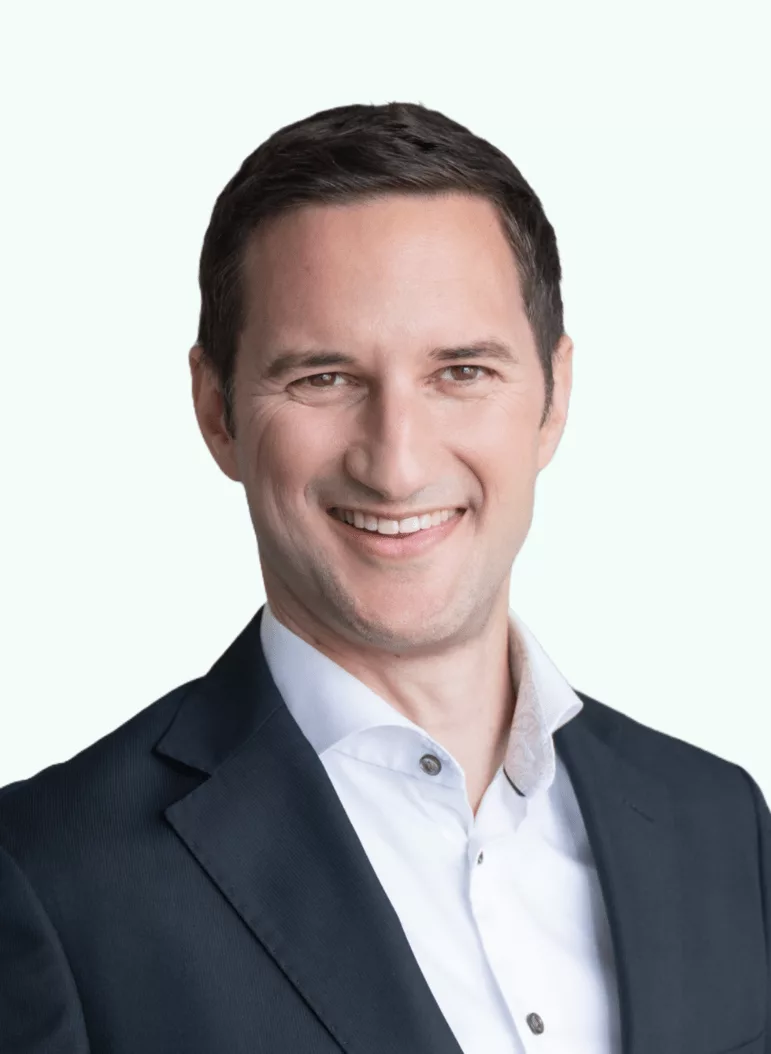
Pascal Stämpfli leverages over a decade of expertise in corporate finance and venture capital to scale and optimize businesses. A CFA charterholder with a Master's in Economics from the University of St. Gallen, Pascal specializes in market & company assessments, strategy, and business value creation. Having assessed more than 1,000 companies for financial and strategic investors provides him with a sophisticated understanding of investor rationale and capital allocation. As the Managing Director of Scalemetrics and Managing Partner at COREangels Big Data & AI Europe, Pascal operates at the intersection of financial discipline and technological innovation.