
Outsourced CFO Services Switzerland: The Complete Guide for Swiss SMEs in 2026
Quick Answer
Swiss SMEs between CHF 1.5M–15M revenue: compare outsourced CFO services vs. a full-time hire. Real cost breakdown, 5 trigger events, and Scalemetrics mandate models from CHF 1'500/month.
In the industrial outskirts of Zurich, a mid-sized precision manufacturing firm with an annual revenue of CHF 8’000’000 found itself at a financial crossroads. Despite a healthy order book and a reputation for Swiss-engineered quality, their bottom line was leaking. They were carrying the heavy overhead of a full-time, senior-level CFO whose compensation package-including social security, pension contributions, and bonuses-approached CHF 280’000 per year. Yet, this executive spent 70% of their time on repetitive accounting tasks that a junior controller could handle. By transitioning to outsourced CFO services Switzerland, the firm didn’t just modernize its finance function; it reclaimed CHF 160’000 in annual EBITDA. This wasn’t merely a cost-cutting exercise; it was the strategic deployment of expertise exactly where it was needed.
For many Swiss SMEs and high-growth startups, the traditional model of hiring a permanent, full-time C-suite financial officer is becoming an obsolete burden. The complexity of the Swiss regulatory environment, combined with the extreme talent war in hubs like Zurich and Geneva, makes the “CFO-as-a-Service” model not just an alternative, but a competitive necessity. At Scalemetrics.ai, we see this transition daily. Companies are realizing that they don’t need a CFO 40 hours a week; they need “CFO-level intelligence” for the 10 hours of high-stakes decision-making that actually move the needle.
What Does an Outsourced CFO Actually Do?
An outsourced CFO is often misunderstood as a “part-time accountant” or a “glorified bookkeeper.” In reality, the roles are worlds apart. While your bookkeeper looks at the past to ensure compliance, your outsourced CFO looks at the future to ensure growth. They are the strategic bridge between your operational data and your long-term vision. In the context of the Swiss market, where precision and reliability are non-negotiable, their role is multifaceted.
First and foremost, they provide strategic financial planning. This involves moving beyond simple profit and loss statements to building sophisticated three-statement financial models (Income Statement, Balance Sheet, and Cash Flow). For a Swiss company looking to expand into the EU or the US, an outsourced CFO evaluates the capital requirements, currency risks associated with the Swiss Franc (CHF), and the tax implications of international nexus. They don’t just report the numbers; they tell you what the numbers mean for your next three years of operations.
Secondly, they act as capital architects. Whether you are seeking a Series B round from venture capitalists in Lausanne or a mezzanine loan from a Kantonalbank, the “outsourced CFO services Switzerland” model provides the institutional-grade reporting that lenders and investors demand. They prepare the “data room,” manage the due diligence process, and help negotiate terms that protect the founder’s equity. In a country where banking relationships are still foundational, having a CFO who speaks the language of a Swiss credit officer is invaluable.
Furthermore, they lead performance optimization. By implementing Key Performance Indicators (KPIs) tailored to your specific industry-be it SaaS, MedTech, or manufacturing-they identify bottlenecks in your sales cycle or inefficiencies in your supply chain. If your customer acquisition cost (CAC) is rising faster than your lifetime value (LTV), the outsourced CFO is the one who sounds the alarm and provides the data-driven roadmap to fix it. They transform the finance department from a cost center into a value-generating engine.
Full-Time vs. Outsourced: A Swiss Cost Comparison
The financial argument for outsourcing is particularly compelling in Switzerland, home to some of the highest executive salaries in the world. To attract a high-caliber CFO in Zurich or Zug, a company must be prepared for a significant financial commitment. Let’s break down the “Total Cost of Employment” (TCE) for a senior full-time CFO compared to a strategic outsourced partnership.
A seasoned Swiss CFO typically commands a base salary between CHF 180’000 and CHF 250’000. Once you add the mandatory employer contributions to the 1st pillar (AHV/IV/EO), 2nd pillar (LPP/Pension Fund) which can be substantial for high earners, accident insurance (LAA), and potential bonus structures, the annual cost quickly escalates to CHF 220’000 – CHF 310’000. This does not account for office space, equipment, and the “opportunity cost” of the time spent on administrative management of a full-time executive.
Contrast this with the outsourced CFO services Switzerland model. A typical engagement for a mid-market company ranges from CHF 1’500 to CHF 6’000 per month, depending on the complexity and the “touchpoints” required. Annually, this totals CHF 18’000 to CHF 72’000. The math is undeniable: a company can access the same-and often superior-level of expertise for roughly 15% to 25% of the cost of a full-time hire. More importantly, this is a variable cost. If the business hits a quiet period, the engagement can be scaled back. If a merger is on the horizon, the hours can be ramped up. You pay for the “output,” not the “attendance.”
5 Trigger Events: When to Hire an Outsourced CFO
Knowing when to bridge the gap between basic accounting and strategic finance is critical. Hiring too early wastes precious capital; hiring too late can lead to catastrophic cash flow errors. In the Swiss ecosystem, we have identified five specific “trigger events” that signal the immediate need for an outsourced CFO.
1. The “Profit vs. Cash” Paradox: You are seeing healthy profits on your P&L, but your bank account is constantly near zero. This is often due to poor working capital management, delayed receivables, or excessive inventory buildup. An outsourced CFO will implement a 13-week rolling cash flow forecast to ensure you never miss a payroll or a supplier payment.
2. Preparing for an Exit or Acquisition: If you plan to sell your Swiss business within the next 24 months, your financials need to be bulletproof. Buyers will scrutinize every CHF. An outsourced CFO “cleans the books,” normalizes EBITDA, and ensures that the financial narrative of the company supports the highest possible valuation. They make the company “investor-ready.”
3. Rapid International Expansion: Moving from a domestic Swiss focus to a global one introduces layers of complexity. Currency hedging becomes a necessity to protect against CHF volatility. Tax structures need to be optimized for different jurisdictions. Managing these complexities requires a high-level strategist who understands international finance, not just a local accountant.
4. Navigating a Fundraising Round: Whether it’s an initial seed round or a more complex Series A/B, investors look for a “finance partner” alongside the CEO. They want to see that the capital will be deployed efficiently. Having an outsourced CFO lead the financial presentation provides a level of professional gravity that often secures better terms and faster closing times.
5. Outgrowing Your Current Systems: Many Swiss SMEs start with simple tools or manual spreadsheets. As the business scales to CHF 5M, 10M, or 20M, these systems break. An outsourced CFO leads the selection and implementation of advanced ERP and BI tools, ensuring that you have “one version of the truth” when it comes to your data.
The Scalemetrics Scope: Precision Financial Engineering
At Scalemetrics.ai, our approach to “outsourced CFO services Switzerland” is built on the principles of Swiss precision and tech-forward efficiency. We don’t just provide reports; we provide a “Financial Operating System” for your business. Our scope of work is designed to cover every strategic angle of your company’s life cycle.
Our core offering begins with budgeting and financial forecasting. We move away from static annual budgets that are obsolete by February. Instead, we implement dynamic, driver-based models. If your head of sales changes their forecast, the entire financial model updates automatically, showing the impact on your cash runway and hiring plans. This allows for proactive rather than reactive management.
We also specialize in Board-Level Reporting and Governance. For many Swiss founders, preparing for board meetings is a source of immense stress. We take the lead, preparing clear, visual, and high-impact “Board Decks” that focus on the KPIs that matter to your stakeholders. We often attend these meetings as your financial representative, providing objective answers to tough questions from investors or board members.
Furthermore, we provide Internal Control Systems (ICS) Optimization. Under Swiss law (CO 728a), certain companies are required to have an ICS. Even for those not legally mandated, having robust internal controls is the best defense against fraud and operational error. We design and implement these controls, ensuring that your assets are protected and your data is reliable. Our goal is to give the CEO the freedom to focus on the product and the customers, knowing that the financial engine is running at peak efficiency.
Frequently Asked Questions (FAQ)
How many hours a month does an outsourced CFO usually work?
Engagement levels are highly flexible. Most Swiss SMEs start with a “foundation” phase of 10-15 hours a month to set up systems and models. Once the “steady state” is reached, a typical engagement might involve 5-8 hours of strategic review, board attendance, and forecasting per month. During “surge events” like fundraising or an M&A deal, these hours can scale significantly to meet the demand.
Will an outsourced CFO replace my existing accountant or bookkeeper?
No. In fact, an outsourced CFO makes your accountant more effective. The bookkeeper handles the transactional “inputs” (invoices, payroll, VAT filings), while the CFO handles the strategic “outputs” (modeling, capital raising, strategy). The CFO provides the oversight and direction that ensures the bookkeeper’s work aligns with the company’s long-term goals.
Is my company too small for an outsourced CFO?
If your revenue is above CHF 1’500’000 or you have raised significant external capital, you are not too small. Smaller companies often benefit the most because they are in the most vulnerable growth phase. An outsourced CFO ensures that early-stage mistakes-like poor pricing models or excessive burn rates-don’t kill the company before it has a chance to scale.
How do you handle the confidentiality of my Swiss financial data?
Confidentiality is the cornerstone of the Swiss financial tradition. We use bank-grade, encrypted cloud environments (often hosted within Swiss data centers) for all financial modeling and data storage. Our contracts include robust non-disclosure agreements (NDAs) that meet the highest Swiss legal standards, ensuring your proprietary data remains strictly confidential.
Can an outsourced CFO help with Swiss tax optimization?
While an outsourced CFO is not a tax lawyer, they work closely with your tax advisors to ensure your business structure is optimized. They ensure that your financial decisions-such as capital investments or dividend distributions-are made with a clear understanding of the tax implications at the federal, cantonal, and communal levels, helping to minimize your overall tax burden legally.
Unlock Your Company’s True Financial Potential
The transition from “managing the books” to “engineering the future” is the defining moment for every successful Swiss company. Don’t let the overhead of a full-time executive or the lack of strategic insight hold your growth hostage. By leveraging specialized outsourced CFO services Switzerland, you gain access to the elite financial intelligence required to dominate your market, optimize your cash flow, and maximize your eventual exit value.
Ready to see the difference that precision financial modeling can make? Explore our approach to budgeting and financial forecasting or schedule a confidential consultation with the Scalemetrics.ai team today. Let us transform your finance department from a historical record-keeper into a strategic powerhouse.
Sources & References
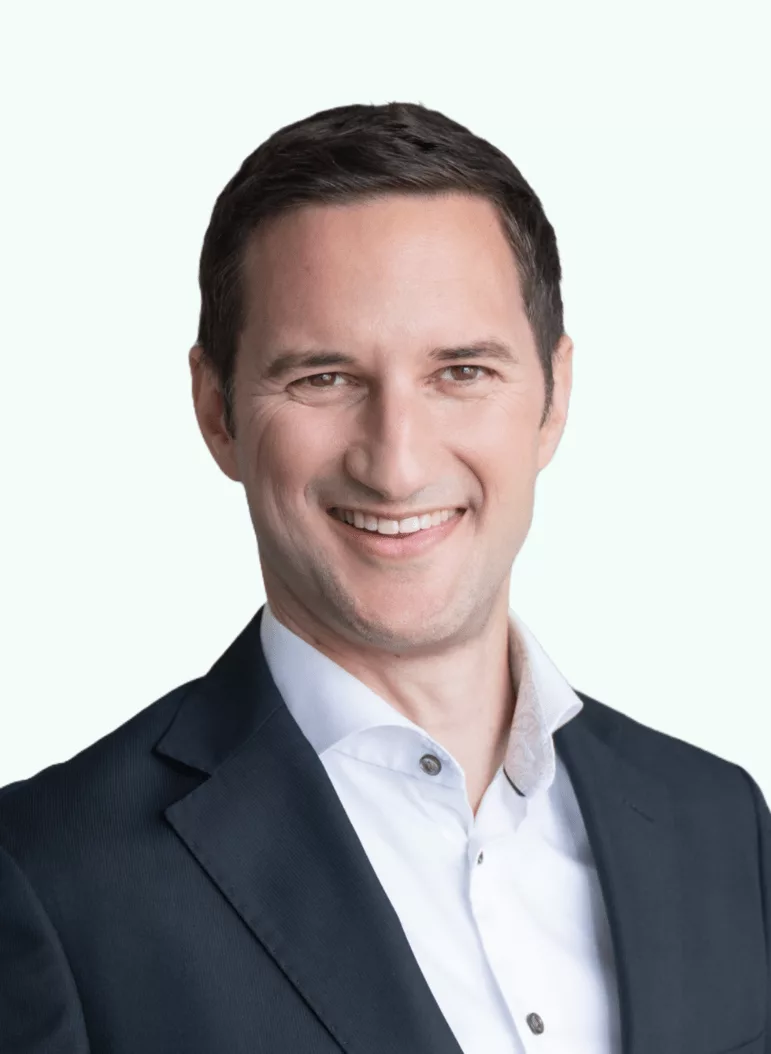
Pascal Stämpfli leverages over a decade of expertise in corporate finance and venture capital to scale and optimize businesses. A CFA charterholder with a Master's in Economics from the University of St. Gallen, Pascal specializes in market & company assessments, strategy, and business value creation. Having assessed more than 1,000 companies for financial and strategic investors provides him with a sophisticated understanding of investor rationale and capital allocation. As the Managing Director of Scalemetrics and Managing Partner at COREangels Big Data & AI Europe, Pascal operates at the intersection of financial discipline and technological innovation.