
Customer Retention: The Backbone of Long-Term Business Success
Quick Answer
Understand why customer retention is crucial for business success and how it impacts customer acquisition cost (CAC). Expert guide for Swiss SMEs.
Understanding Customer Retention
Customer retention reflects your company’s ability to create lasting value and maintain profitable relationships over time. It’s about understanding and expanding customer needs, leading to increased purchases over time. Every customer has a specific spending potential, often referred to as their ‘size of wallet.’ Enhancing your share of this wallet can significantly boost the value derived from each customer. High customer retention rates indicate strong customer loyalty and satisfaction.Calculating Customer Retention Rate (CRR)
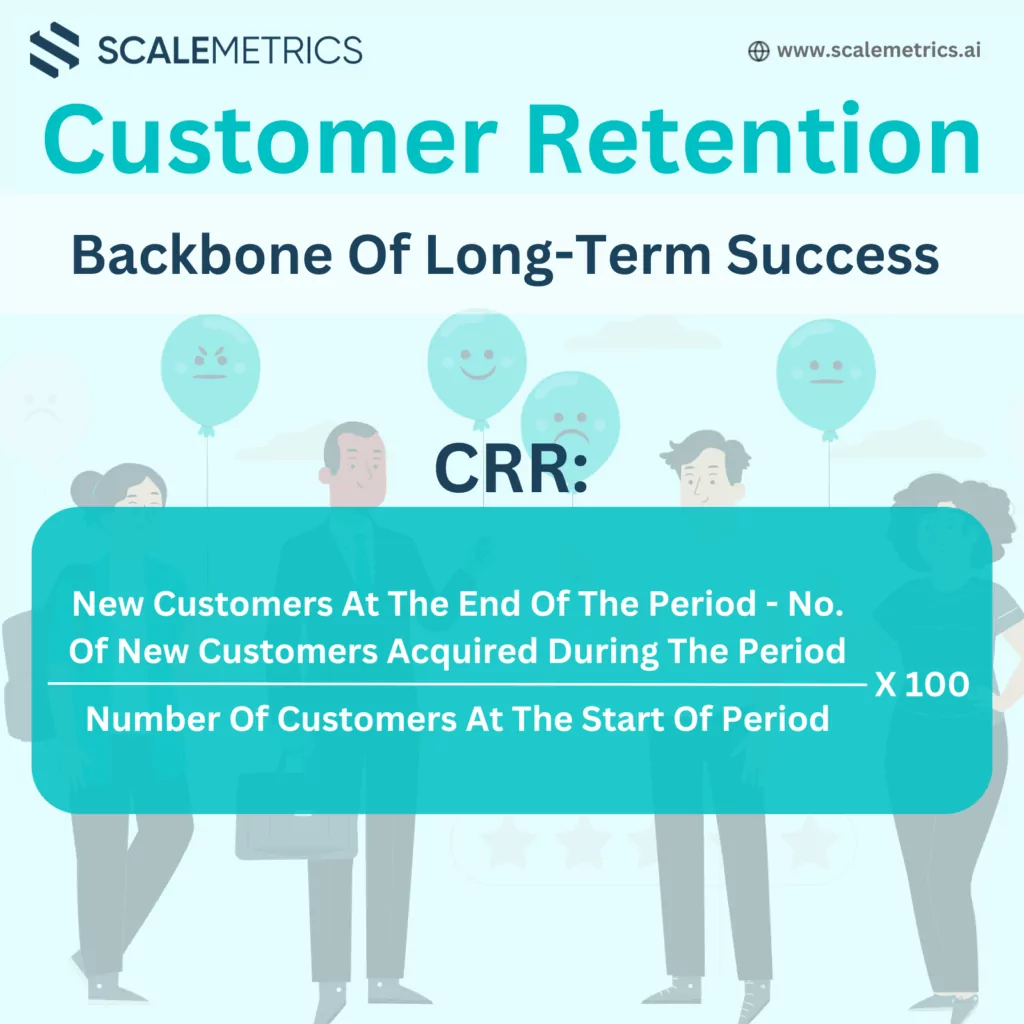
The customer retention rate is a vital metric for understanding how well your company retains its customers over a specific period. Here’s how to calculate it: CRR=(Number of Customers at End of Period−Number of New Customers Acquired During Period / Number of Customers at Start of Period)×100 For example, if you have 200 customers at the beginning of the period, gained 50 new customers during the period, and have 220 customers at the end, your CRR would be: CRR=(220−50200)×100=85% This means you retained 85% of your existing customers during the period.Key Drivers for High Customer Retention
- Product Quality
- The cornerstone of retention; your product must not only meet but exceed customer expectations. High-quality products create satisfied customers who are more likely to remain loyal and make repeat purchases.
- Product Evolution
- Continual improvements and updates ensure your product remains relevant and valuable. Regularly updating products based on customer feedback and market trends helps maintain customer interest and satisfaction.
- Customer Support Excellence
- High-quality support is crucial for resolving issues, thereby maintaining customer satisfaction and loyalty. Providing timely and effective customer support enhances the overall customer experience and encourages repeat business.
Strategies to Improve Customer Retention
- Personalized Communication
- Tailor your communication to meet the unique needs of each customer. Use CRM systems to track customer preferences and behaviors. Personalized communication makes customers feel valued and understood, strengthening their connection to the brand.
- Loyalty Programs
- Implement loyalty programs that reward repeat customers. This can include discounts, exclusive offers, or points-based rewards systems. Loyalty programs incentivize repeat purchases and build long-term customer relationships.
- Feedback Mechanisms
- Regularly seek customer feedback and use it to improve your products and services. This demonstrates that you value their input and are committed to meeting their needs. Acting on feedback helps build trust and shows customers that their opinions matter.
- Proactive Customer Support
- Provide proactive support to address potential issues before they escalate. This can include regular check-ins and offering resources to help customers get the most out of your product. Proactive support prevents problems and enhances the overall customer experience.
Example
Amazon is a prime example of a company with exceptional customer retention strategies. Through its Amazon Prime membership, personalized recommendations, and proactive customer support, Amazon has built a loyal customer base that consistently returns for repeat purchases. Amazon’s focus on customer satisfaction and continuous improvement has contributed to its success and market leadership.Use Cases of Customer Retention Metric
- Benchmarking Performance
- By calculating and analyzing CRR, businesses can benchmark their performance against industry standards. This helps in identifying areas of improvement and setting realistic retention goals.
- Segmenting Customers
- Use CRR to segment customers based on their retention rates. This allows businesses to tailor marketing and support strategies to different customer segments, improving overall retention.
- Predicting Revenue
- High retention rates lead to predictable revenue streams. By maintaining a stable CRR, businesses can forecast future revenues more accurately, aiding in financial planning and investment decisions.
- Improving Customer Experience
- Monitoring CRR can help businesses identify pain points in the customer journey. By addressing these issues, companies can enhance the overall customer experience, leading to higher satisfaction and loyalty.
Conclusion
Customer retention is more than merely keeping customers; it’s a direct reflection of product quality and profitability. While achieving a 100% retention rate is challenging, it symbolizes exceptional customer loyalty and a substantially higher Customer Lifetime Value (CLV), which is critical for long-term business success. Implementing effective customer retention strategies helps build strong customer relationships, enhance satisfaction, and drive sustainable growth. Monitoring and improving CRR can lead to more predictable revenues, better customer segmentation, and an enhanced customer experience, making your business more attractive to investors and stakeholders alike.Related Resources
Scalemetrics helps Swiss SMEs act on decisions like this before market conditions shift. Our budgeting and financial forecasting services and outsourced CFO team give finance directors the senior expertise to move first.
Sources & References
Frequently Asked Questions
What financial services does Scalemetrics provide for Swiss SMEs?
Scalemetrics provides Swiss SME owners and CFOs with practical financial expertise: from accounting and tax compliance to financial planning, KPI monitoring, and on-demand CFO services. The goal is to give growing businesses access to senior financial leadership without the cost of a full-time hire.
When does a Swiss SME need a fractional CFO?
A fractional CFO becomes valuable from around CHF 1–2M in annual revenue, or ahead of specific events: bank financing applications, investor rounds, M&A, or rapid growth phases. The cost is a fraction of a full-time CFO salary, with expertise available immediately.
How does Scalemetrics differ from a traditional Swiss fiduciary firm?
Traditional fiduciary firms focus on tax compliance and year-end accounts. Scalemetrics adds strategic financial leadership: rolling forecasts, cash flow modelling, KPI dashboards, and financing advisory, delivered as an ongoing mandate or for a specific project.
Which Swiss cantons does Scalemetrics cover?
Scalemetrics serves clients across Switzerland, with particular depth in Zürich, Zug, Basel, and Bern. Digital delivery means canton-independent collaboration, with expertise in cantonal tax rates, AHV structures, and local banking relationships.
What financial metrics matter most for Swiss SME growth?
The most important financial metrics for Swiss SME growth are gross margin, EBITDA margin, working capital ratio, cash conversion cycle, and monthly cash burn. A fractional CFO builds KPI dashboards tracking these against budget monthly, enabling data-driven decisions rather than reactive cash management.
How does a fractional CFO support Swiss SME scaling?
A fractional CFO supports Swiss SME scaling by building the financial infrastructure needed for growth: management reporting, budgeting and forecasting, financial modelling for new market entry or hiring decisions, investor-grade reporting for fundraising, and tax optimisation across cantons. Scalemetrics provides this as a fully outsourced CFO mandate from CHF 3,000/month.
The Financial Mathematics of Customer Retention
Customer retention is the most financially efficient growth strategy available to Swiss SMEs, yet it consistently receives less management attention and budget allocation than new customer acquisition. The mathematics are straightforward but frequently underappreciated: retaining an existing customer costs three to five times less than acquiring a new one. A business that improves its retention rate from 80% to 90% — reducing annual churn from 20% to 10% — doubles the average lifetime of its customer relationships and approximately doubles customer lifetime value, without changing a single aspect of its product or pricing.
In the Swiss B2B context, where relationship quality and reliability are primary purchase criteria, retention has a compounding effect that extends beyond the direct financial return. High-retention businesses benefit from lower sales costs (retained customers require no acquisition spend), higher referral rates (long-term satisfied customers are more likely to recommend), and higher pricing power (established relationships reduce price sensitivity in contract renewals).
The financial impact of retention improvements is most clearly demonstrated at the cohort level. Swiss SMEs that maintain cohort-level retention tracking — analysing the revenue retention of each annual or quarterly customer vintage over successive periods — consistently identify retention trends earlier and respond to them more effectively than businesses that track only headline churn numbers.
Building a Retention Programme That Delivers Financial Returns
Effective customer retention in a Swiss SME context requires a structured programme rather than a collection of ad-hoc relationship management activities:
- Health scoring: Develop a customer health score that aggregates usage data, payment behaviour, support ticket frequency, and sentiment signals into a single indicator. Customers with declining health scores warrant proactive engagement before they become formal churn risks.
- Structured review cadences: Quarterly business reviews with key accounts — formal structured conversations about performance, value delivered, and forward plans — create accountability and surface issues before they become departure reasons.
- Expansion revenue focus: Retained customers who expand their relationship generate net revenue retention above 100% — a metric that investors and acquirers value highly. Creating structured pathways for account expansion (additional services, higher-tier plans, referrals) converts the retention investment into growth capital.
- Exit interview discipline: When customers do leave, structured exit interviews — conducted by someone other than the account manager — provide genuine insight into the root causes of churn that can be addressed systematically.
Retention Rate Impact on Business Value
| Annual Retention Rate | Avg Customer Lifetime (Yrs) | LTV Multiplier (vs. 70%) | Valuation Impact |
|---|---|---|---|
| 70% | 3.3 years | 1.0x (baseline) | Baseline |
| 80% | 5.0 years | 1.5x | +30–50% multiple |
| 90% | 10.0 years | 3.0x | +80–120% multiple |
| 95% | 20.0 years | 6.0x | Premium tier |
The financial case for investing in customer retention is compelling at every stage of SME development. Our strategic CFO service helps Swiss SMEs quantify the return on retention investment and build the financial management systems that turn customer success into measurable enterprise value.

Pascal Stämpfli leverages over a decade of expertise in corporate finance and venture capital to scale and optimize businesses. A CFA charterholder with a Master's in Economics from the University of St. Gallen, Pascal specializes in market & company assessments, strategy, and business value creation. Having assessed more than 1,000 companies for financial and strategic investors provides him with a sophisticated understanding of investor rationale and capital allocation. As the Managing Director of Scalemetrics and Managing Partner at COREangels Big Data & AI Europe, Pascal operates at the intersection of financial discipline and technological innovation.