
The Capital Stack of 2026: Why the Future of Swiss SMEs Finance is Blended
Quick Answer
Equity is expensive. Learn how top Swiss founders use blended capital models combining grants, venture debt, and equity for smarter financing.
In the “growth-at-all-costs” era, the funding playbook for a Swiss founder was simple: pitch VCs, raise a massive equity round, dilute 20%, and repeat.
But the landscape in 2026 has fundamentally shifted. High-interest rates and a “valuation-sensitive” VC market have turned equity into the most expensive form of capital on earth. Today, the most resilient CEOs in Zurich and Lausanne aren’t just “fundraising”-they are architecting a capital stack.
The goal? Non-dilutive funding. By blending grants, venture debt, and equity, you can scale faster while keeping a larger “slice of the pie” for yourself and your team. Here is how a Strategic CFO helps you blend the three pillars of 2026 startup finance.
Pillar 1: Grants & Government Subsidies (The “Zero-Cost” Foundation)
Switzerland offers one of the most robust non-dilutive support systems in the world, yet many founders leave millions on the table because they view grants as “too bureaucratic.”
- Innosuisse & Swiss Accelerator: These remain the gold standard. In 2026, Innosuisse has doubled down on “Regulated AI” and “DeepTech” commercialization.
- Venture Kick: Not just for students anymore; their three-stage process can inject up to CHF 150,000 in equity-free cash.
- The CFO’s Role: Grants are not “free money”-they are “milestone money.” A CFO ensures your accounting is structured to pass Innosuisse audits and that your R&D roadmap aligns with grant reporting cycles.
Pillar 2: Venture Debt (The Growth Accelerator)
Venture debt has matured in the European ecosystem. In 2026, it is no longer a “last resort” for struggling startups; it is a strategic tool used by winners to bridge the gap between Series A and Series B.
- How it works: Unlike a bank loan, venture debt doesn’t require “hard assets” (like a factory). It relies on the “legitimacy” of your VCs and your recurring revenue.
- The Strategy: Raise 70% of what you need in equity and 30% in venture debt. This lowers your overall dilution and extends your runway by an extra 6–12 months.
- The Warning: Debt must be repaid. If your NRR (Net Revenue Retention) isn’t stable, debt becomes a “ticking time bomb” rather than a bridge.
Pillar 3: Equity (The Strategic Fuel)
Equity is still necessary for the “big bets”-international expansion, M&A, or massive R&D leaps. However, in 2026, equity is used as a precision tool, not a blanket solution.
- Valuation Strategy: By using grants and debt to hit your next set of KPIs before you raise your next equity round, you can negotiate from a position of strength and significantly higher valuation.
The “Blended Capital” Model in Action
Imagine a Swiss SaaS company aiming to raise CHF 5 Million for EU expansion.
| Funding Source | Amount | Cost/Dilution | Purpose |
| Equity (VC) | CHF 3.0M | 12-15% Dilution | Core team & EU market entry |
| Venture Debt | CHF 1.5M | ~10% Interest + Warrants | Working capital & Sales hiring |
| Innosuisse Grant | CHF 0.5M | 0% Dilution | R&D for AI automation features |
The Result: The founder raises the full CHF 5M but retains 5-8% more ownership than if they had raised a pure equity round. In a CHF 100M exit, that “blended” strategy is worth CHF 5-8 Million to the founding team.
How a CFO as a Service Orchestrates the Blend
Managing three different types of capital is a full-time job. A fractional CFO doesn’t just “find” the money; they manage the complexity:
- Covenant Monitoring: Ensuring you don’t breach the terms of your venture debt.
- Compliance: Managing the specialized reporting required by government grant bodies.
- Cap Table Management: Simulating the long-term impact of warrants and interest rates on your future exit.
Stop raising capital the old way. Start building a capital stack that protects your equity.
Related Resources
Scalemetrics helps Swiss SMEs act on decisions like this before market conditions shift. Our company valuation services and outsourced CFO team give finance directors the senior expertise to move first.
Frequently Asked Questions
What should Swiss SMEs know about pillar 1: Grants & Government Subsidies (The "Zero-Cost" Foundation)?
Switzerland offers one of the most robust non-dilutive support systems in the world, yet many founders leave millions on the table because they view grants as "too bureaucratic."
What should Swiss SMEs know about pillar 2: Venture Debt (The Growth Accelerator)?
Venture debt has matured in the European ecosystem. In 2026, it is no longer a "last resort" for struggling startups; it is a strategic tool used by winners to bridge the gap between Series A and Series B.
What should Swiss SMEs know about pillar 3: Equity (The Strategic Fuel)?
Equity is still necessary for the "big bets"-international expansion, M&A, or massive R&D leaps. However, in 2026, equity is used as a precision tool, not a blanket solution.
What should Swiss SMEs know about the "Blended Capital" Model in Action?
Imagine a Swiss SaaS company aiming to raise CHF 5 Million for EU expansion.
How a CFO as a Service Orchestrates the Blend?
Managing three different types of capital is a full-time job. A fractional CFO doesn't just "find" the money; they manage the complexity:
Sources & References
The Capital Stack Has Changed: What Swiss SMEs Need to Know
The traditional Swiss SME capital stack was simple: equity from the owner, a mortgage or leasing facility for physical assets, and a revolving credit line from the cantonal or main commercial bank. This model served well in a low-interest-rate, low-complexity environment. In 2026, it is no longer sufficient — and for fast-growing or capital-intensive SMEs, it is actively limiting.
The concept of a "blended" capital stack — combining traditional bank debt, alternative debt instruments, equity, and increasingly non-dilutive capital sources — has moved from the preserve of private equity-backed businesses to the strategic toolkit of ambitious Swiss SMEs. The drivers are straightforward: interest rates have normalised to levels that make bank debt more costly to service, making the traditional over-reliance on bank revolvers financially suboptimal; new financing instruments have proliferated (revenue-based financing, venture debt, asset-backed lending against receivables, green finance facilities); and Swiss banks have tightened SME lending criteria in response to rising NPL concerns, leaving gaps that alternative lenders are actively filling.
The Key Components of a Blended Capital Stack
Senior bank debt. The foundation layer — typically a term loan for capex or an overdraft facility for working capital. Swiss cantonal banks and the major commercial banks (UBS, Raiffeisen, Valiant) remain the primary providers. At current rates (SARON + 1.5–3.5% for SME lending), the all-in cost of bank debt is 2.5–5% per annum — significantly higher than 2021 but still the cheapest source of capital available.
Revenue-based financing (RBF). A non-dilutive instrument where a provider advances capital in exchange for a fixed percentage of monthly revenue until a multiple of the advance has been repaid. RBF works well for Swiss SaaS companies with predictable recurring revenue; effective APR typically runs 15–25%, which is expensive relative to bank debt but non-dilutive and faster to deploy. Swiss providers include Capchase European operations and several specialist fintech lenders active in the Swiss market.
Venture debt. A debt instrument structured alongside or following equity rounds, providing additional capital without the dilution of a larger equity raise. Venture debt covenants typically tie to the equity investor's continued support; it is available in Switzerland through Silicon Valley Bank's European operations, Kreos Capital, and a small number of local specialists.
Green and sustainability-linked finance. Swiss banks and the Swiss Federal Government's climate finance initiatives are actively promoting below-market financing for energy efficiency investments, renewable energy installations, and supply chain decarbonisation projects. Swiss SMEs with a credible sustainability investment programme can access 0.5–1.5% reductions in lending rates through PostFinance's SME green loan facility or SECO's export promotion financing.
Blended Capital Stack: Cost and Characteristics Compared
| Instrument | Typical Cost (CHF) | Dilutive? | Best Suited For |
|---|---|---|---|
| Senior bank debt | 2.5–5% p.a. | No | Capex, working capital base |
| Revenue-based financing | 15–25% effective APR | No | SaaS with predictable ARR |
| Venture debt | 8–14% + warrants | Minimal (warrants) | Post-equity raise growth |
| Green finance | 1.5–3.5% p.a. | No | Sustainability investments |
| Equity (VC/PE) | 20–35% IRR expected | Yes | High-growth, market expansion |
Designing the right blended capital stack for your Swiss SME requires a CFO-level analysis of your growth objectives, cash flow profile, and risk tolerance — not a single conversation with your bank relationship manager. A financial planning engagement can map the optimal capital structure for your business, identify the instruments for which you are likely to qualify, and manage the lender and investor conversations on your behalf.
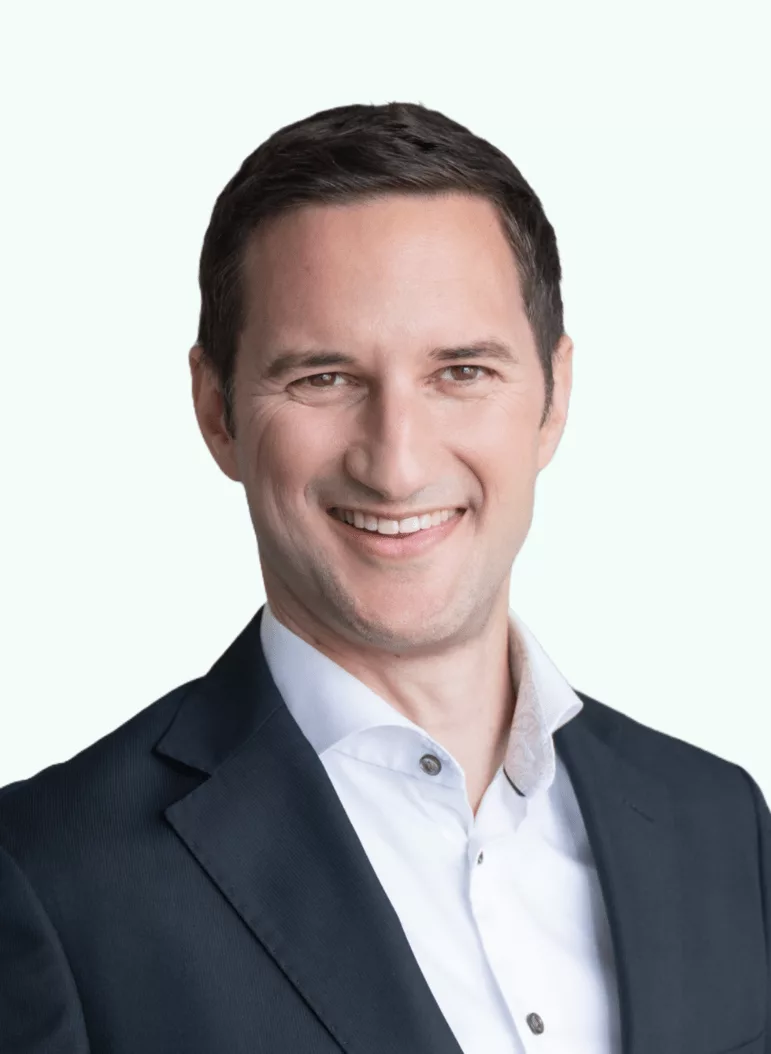
Pascal Stämpfli leverages over a decade of expertise in corporate finance and venture capital to scale and optimize businesses. A CFA charterholder with a Master's in Economics from the University of St. Gallen, Pascal specializes in market & company assessments, strategy, and business value creation. Having assessed more than 1,000 companies for financial and strategic investors provides him with a sophisticated understanding of investor rationale and capital allocation. As the Managing Director of Scalemetrics and Managing Partner at COREangels Big Data & AI Europe, Pascal operates at the intersection of financial discipline and technological innovation.