
Should your startup hire an interim CFO over a full-time CFO?
Quick Answer
Discover the benefits of hiring an interim CFO for your startup. Learn how an interim CFO can validate your business model, prepare financial models, & handle investor communication.
Benefits of Hiring an Interim CFO
1. Validate Your Business Model from a Financial Perspective
An interim CFO can provide an unbiased financial perspective on your business model. They can identify potential weaknesses and suggest improvements to ensure financial stability and growth. This validation is crucial for attracting investors and ensuring long-term success.2. Prepare and Maintain a Financial Model for Budgeting, Forecasting, and Controlling
Interim CFOs have extensive experience in creating and maintaining financial models. These models are essential for budgeting, forecasting, and controlling financial activities. A robust financial model helps in making informed decisions, setting realistic goals, and tracking progress effectively.3. Identify and Select Attractive Market Opportunities with a Systematic Market Assessment
An interim CFO can conduct a systematic market assessment to identify and select attractive market opportunities. They can analyze market trends, competitor performance, and customer needs to help your startup position itself strategically in the market.4. Estimate the Fair Value of Your Startup or Spin-off
Valuation is a critical aspect of securing investment. An interim CFO can estimate the fair value of your startup, taking into account various financial metrics and market conditions. This accurate valuation is essential for negotiations with investors and stakeholders.5. Create a Convincing Business Case to Bootstrap or Present in Front of Investors
Creating a compelling business case is vital for securing funding. An interim CFO can help craft a convincing business case that highlights your startup’s potential, financial projections, and strategic plans. This business case can be used to attract investors or to bootstrap your operations.6. Prepare a Convincing Pitch Deck for Investors
A well-prepared pitch deck is crucial for capturing investor interest. Interim CFOs have the expertise to create a pitch deck that clearly communicates your startup’s value proposition, market opportunity, financial performance, and growth potential. A strong pitch deck can significantly enhance your chances of securing investment.7. Prepare You for the Due Diligence Process
The due diligence process is rigorous and requires thorough preparation. An interim CFO can ensure that all financial documents and processes are in order, making the due diligence process smoother and less stressful. Their experience in handling due diligence can help anticipate and address potential issues.8. Handle Investor Communication and Prepare Investment Documents
Effective communication with investors is essential for building trust and securing funding. An interim CFO can handle investor relations, ensuring transparent and timely communication. They can also prepare all necessary investment documents, ensuring compliance and accuracy.Conclusion
In conclusion, hiring an interim CFO can provide significant benefits for your startup. They bring a wealth of experience and expertise, offering valuable insights and strategic guidance. Whether it’s validating your business model, preparing financial models, or handling investor relations, an interim CFO can help your startup navigate financial challenges and achieve sustainable growth.Related Resources
Scalemetrics helps Swiss SMEs act on decisions like this before market conditions shift. Our SME financing services and outsourced CFO team give finance directors the senior expertise to move first.
Sources & References
Frequently Asked Questions
What financial services does Scalemetrics provide for Swiss SMEs?
Scalemetrics provides Swiss SME owners and CFOs with practical financial expertise: from accounting and tax compliance to financial planning, KPI monitoring, and on-demand CFO services. The goal is to give growing businesses access to senior financial leadership without the cost of a full-time hire.
When does a Swiss SME need a fractional CFO?
A fractional CFO becomes valuable from around CHF 1–2M in annual revenue, or ahead of specific events: bank financing applications, investor rounds, M&A, or rapid growth phases. The cost is a fraction of a full-time CFO salary, with expertise available immediately.
How does Scalemetrics differ from a traditional Swiss fiduciary firm?
Traditional fiduciary firms focus on tax compliance and year-end accounts. Scalemetrics adds strategic financial leadership: rolling forecasts, cash flow modelling, KPI dashboards, and financing advisory, delivered as an ongoing mandate or for a specific project.
Which Swiss cantons does Scalemetrics cover?
Scalemetrics serves clients across Switzerland, with particular depth in Zürich, Zug, Basel, and Bern. Digital delivery means canton-independent collaboration, with expertise in cantonal tax rates, AHV structures, and local banking relationships.
What does a fractional CFO do for a Swiss SME?
A fractional CFO manages the full financial infrastructure of a Swiss SME: OR-compliant bookkeeping, quarterly MWST filings, AHV payroll, budgeting, financial modelling, and board-level reporting. The engagement is part-time and flexible, delivering CFO-level expertise at a fraction of the cost of a full-time hire (CHF 3,000–12,000/month vs CHF 216,000–350,000/year).
When should a Swiss SME engage CFO-as-a-Service?
A Swiss SME typically needs CFO-as-a-Service once annual revenue exceeds CHF 1M, headcount grows beyond 10 employees, or fundraising or M&A activity begins. The fractional model is optimal between CHF 1M and CHF 20M revenue. Above CHF 20M with active deal flow, a full-time CFO hire becomes justified.
The Case for Interim CFO Engagement in Swiss SMEs
The decision between hiring a full-time CFO and engaging an interim or fractional CFO is one of the most consequential resourcing choices a Swiss SME founder makes. It is also one where the financial arithmetic frequently points more strongly towards the interim model than intuition suggests — particularly for businesses below CHF 15 million in revenue or those at transitional stages (fundraising, restructuring, rapid scaling, or post-acquisition integration).
A full-time CFO for a Swiss SME in Zurich or Zug with appropriate experience commands a total package of CHF 180,000–250,000 per year, including base salary, social charges (AHV at 5.3%, BVG pension at 8–12%, SUVA accident insurance), and performance-related elements. At this cost level, the CFO function consumes 1.5–2.5% of revenue for an SME generating CHF 10 million — a significant overhead for a business that may only need 30–40% of a senior CFO's time in the course of normal operations.
An interim or fractional CFO typically engages at a day rate of CHF 1,500–3,000 or a monthly retainer of CHF 5,000–15,000 depending on scope and time commitment. For most Swiss SMEs below CHF 15 million revenue, this structure delivers equivalent financial leadership capability at 25–50% of the full-time cost — with the additional benefit of flexibility: the engagement can be scaled up during intensive periods (fundraising, year-end, audit) and scaled back during quieter phases.
What an Interim CFO Delivers That a Full-Time Hire Cannot
Beyond cost, interim CFOs bring a specific form of value that is structurally different from a full-time hire: pattern recognition across multiple companies and situations. A senior Swiss interim CFO who has led five fundraising processes, three restructurings, and two exit preparations brings institutional knowledge that a first-time full-time CFO in your company rarely possesses. In high-stakes situations — a complex fundraising round, a bank renegotiation, an OR compliance crisis — this experience differential is frequently the determining factor in outcome quality.
Interim CFOs also impose healthy discipline through their temporary engagement model. Because they are billing on results rather than tenure, they have an incentive to create efficient, well-documented processes that the company can maintain independently. Full-time CFOs sometimes — consciously or not — create complexity or information asymmetry that increases their own indispensability. A well-selected interim CFO builds a finance function designed to outlast them.
The OR and Swiss corporate governance framework places specific demands on CFO-level financial management: OR Art. 958 accounting standards, Art. 725 over-indebtedness obligations, and the increasingly formalised expectations of Swiss cantonal courts and tax authorities. An experienced Swiss interim CFO navigates these requirements fluently, reducing compliance risk during the vulnerable periods when an SME is growing fastest.
When a Full-Time CFO Becomes Necessary
There are genuine thresholds beyond which a full-time CFO is the rational choice: when revenue exceeds CHF 15–20 million, when the company has multiple legal entities requiring daily financial oversight, when a listed or near-listed status demands constant investor relations management, or when the complexity of ongoing treasury operations — multi-currency, hedging, complex debt structures — requires full-time senior attention. Below these thresholds, the interim model is almost always more capital-efficient.
| Dimension | Interim / Fractional CFO | Full-Time CFO |
|---|---|---|
| Annual cost (CHF) | CHF 60,000–180,000 | CHF 180,000–250,000+ |
| Flexibility | High — scale up/down by scope | Low — fixed headcount commitment |
| Cross-company experience | High — multi-company pattern recognition | Limited to prior career |
| Best suited for | < CHF 15M revenue, transitional phases | > CHF 15–20M, complex treasury |
To explore whether an interim or fractional CFO is the right model for your Swiss SME — and what a tailored engagement would look like — our strategic CFO services provide the senior financial leadership your business needs at the right scale.
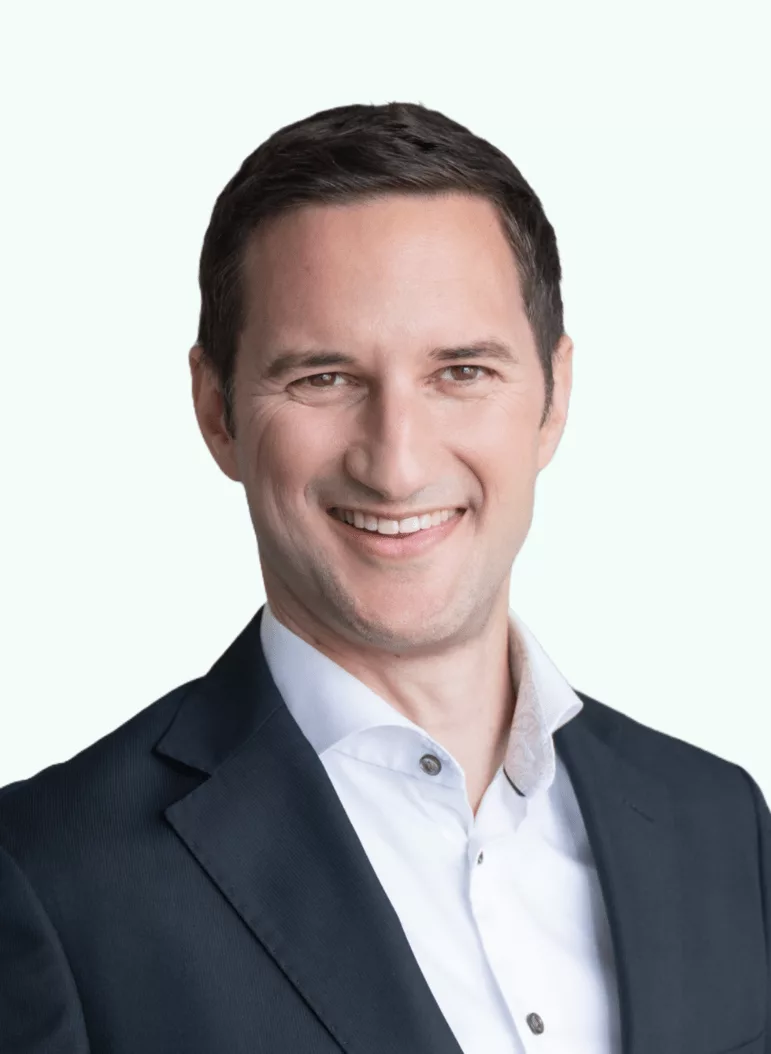
Pascal Stämpfli leverages over a decade of expertise in corporate finance and venture capital to scale and optimize businesses. A CFA charterholder with a Master's in Economics from the University of St. Gallen, Pascal specializes in market & company assessments, strategy, and business value creation. Having assessed more than 1,000 companies for financial and strategic investors provides him with a sophisticated understanding of investor rationale and capital allocation. As the Managing Director of Scalemetrics and Managing Partner at COREangels Big Data & AI Europe, Pascal operates at the intersection of financial discipline and technological innovation.