
What does a startup CFO do? And what are a startup’s CFO’s responsibilities?
Quick Answer
Explore the role and responsibilities of a startup CFO. Learn how they drive growth, optimize operations, and manage finances.
Key Responsibilities of a Startup CFO
1. Strategic Financial Planning
A startup CFO provides a deeper strategic financial perspective, helping young companies prepare for the future and optimize their business plans. This includes:- Financial Modeling: Creating detailed financial models for budgeting, forecasting, and performance evaluation.
- Investment Proposals: Crafting compelling investment proposals that highlight the startup’s potential and align with investor expectations.
- Long-term Planning: Developing strategic plans that align financial goals with business objectives.
2. Market Positioning and Growth Strategy
A startup CFO plays a crucial role in influencing the growth trajectory of the startup by:- Market Analysis: Assessing market conditions, customer needs, and competitor strategies to define the right market positioning.
- Growth Priorities: Identifying and prioritizing growth opportunities based on comprehensive market and financial data analysis.
- Scaling Strategies: Formulating strategies for scaling operations and expanding market reach.
3. Operational Optimization
Optimizing current operations is a significant part of a CFO’s role, which includes:- KPI Definition and Benchmarking: Establishing key performance indicators (KPIs) and benchmarks to measure operational efficiency and success.
- Financial Planning: Implementing robust financial planning processes to manage resources effectively.
- Performance Monitoring: Continuously analyzing and monitoring performance to identify areas for improvement.
4. Investor Relations and Communication
Handling investor communication efficiently is critical for securing funding and maintaining investor confidence. A startup CFO:- Growth Plans: Develops attractive growth plans based on relevant financial metrics to present to potential investors.
- Communication: Manages ongoing communication with investors, providing updates on financial performance and strategic initiatives.
- Investment Documentation: Prepares necessary investment documents and guides the startup through the due diligence process.
Overcoming Pain Points with a Startup CFO
1. Strategic Financial Perspective
A startup CFO helps young companies develop a strategic financial perspective, ensuring they are well-prepared for future challenges and opportunities. This involves:- Optimizing Business Plans: Refining business plans to make them more attractive to investors.
- Financial Forecasting: Providing accurate financial forecasts that guide decision-making and investment strategies.
2. Influencing Growth
By defining the right priorities and market positioning, a startup CFO significantly influences the growth of the startup. They do this by:- Market Assessment: Conducting systematic market assessments to identify the most lucrative opportunities.
- Customer Insights: Utilizing customer data to tailor products and services to market demands.
3. Operational Efficiency
A startup CFO enhances operational efficiency through:- KPI Management: Setting and monitoring KPIs to ensure the startup is on track to meet its goals.
- Performance Analysis: Continuously analyzing performance data to identify inefficiencies and areas for improvement.
4. Investment Readiness
Making a startup investment-ready is a key responsibility of a CFO. This includes:- Valuation: Determining a fair valuation using multiple valuation approaches.
- Pitch Preparation: Creating compelling pitch decks that effectively communicate the startup’s potential to investors.
- Due Diligence: Preparing the startup for the due diligence process by organizing financial records and addressing potential red flags.
Examples of Startup CFO Contributions
Case Study 1: Tech Startup
A tech startup developing a SaaS product faced challenges in securing Series A funding due to inconsistent financial projections. The interim CFO:- Developed a comprehensive financial model that aligned with market conditions.
- Refined the pitch deck, highlighting key growth metrics and competitive advantages.
- Successfully negotiated with investors, securing $5 million in funding.
Case Study 2: Health Tech Startup
A health tech startup struggled with high customer acquisition costs and low retention rates. The CFO:- Analyzed customer data to identify pain points and improve user experience.
- Implemented targeted marketing strategies to reduce CAC and enhance CLV.
- Achieved a 20% increase in customer retention within six months, making the startup more attractive to investors.
Conclusion
A startup CFO is an invaluable asset, providing the strategic, financial, and operational expertise needed to navigate the complexities of running a startup. By addressing key pain points and optimizing various aspects of the business, a CFO not only ensures financial stability but also drives growth and prepares the startup for successful fundraising and long-term success. If your startup is facing financial and strategic challenges, consider the benefits of hiring a startup CFO. With their expertise, you can achieve financial clarity, operational efficiency, and investor confidence, paving the way for sustainable growth and success.Related Resources
Scalemetrics helps Swiss SMEs act on decisions like this before market conditions shift. Our SME financing services and outsourced CFO team give finance directors the senior expertise to move first.
Sources & References
Frequently Asked Questions
What financial services does Scalemetrics provide for Swiss SMEs?
Scalemetrics provides Swiss SME owners and CFOs with practical financial expertise: from accounting and tax compliance to financial planning, KPI monitoring, and on-demand CFO services. The goal is to give growing businesses access to senior financial leadership without the cost of a full-time hire.
When does a Swiss SME need a fractional CFO?
A fractional CFO becomes valuable from around CHF 1–2M in annual revenue, or ahead of specific events: bank financing applications, investor rounds, M&A, or rapid growth phases. The cost is a fraction of a full-time CFO salary, with expertise available immediately.
How does Scalemetrics differ from a traditional Swiss fiduciary firm?
Traditional fiduciary firms focus on tax compliance and year-end accounts. Scalemetrics adds strategic financial leadership: rolling forecasts, cash flow modelling, KPI dashboards, and financing advisory, delivered as an ongoing mandate or for a specific project.
Which Swiss cantons does Scalemetrics cover?
Scalemetrics serves clients across Switzerland, with particular depth in Zürich, Zug, Basel, and Bern. Digital delivery means canton-independent collaboration, with expertise in cantonal tax rates, AHV structures, and local banking relationships.
What does a fractional CFO do for a Swiss SME?
A fractional CFO manages the full financial infrastructure of a Swiss SME: OR-compliant bookkeeping, quarterly MWST filings, AHV payroll, budgeting, financial modelling, and board-level reporting. The engagement is part-time and flexible, delivering CFO-level expertise at a fraction of the cost of a full-time hire (CHF 3,000–12,000/month vs CHF 216,000–350,000/year).
When should a Swiss SME engage CFO-as-a-Service?
A Swiss SME typically needs CFO-as-a-Service once annual revenue exceeds CHF 1M, headcount grows beyond 10 employees, or fundraising or M&A activity begins. The fractional model is optimal between CHF 1M and CHF 20M revenue. Above CHF 20M with active deal flow, a full-time CFO hire becomes justified.
The CFO Role in a Swiss SME or Spin-Off Context
The title of CFO carries different meanings at different company sizes. In a large Swiss corporation, the CFO heads a substantial finance function encompassing treasury, tax, control, investor relations, and financial planning. In a Swiss SME or early-stage spin-off, the CFO's role is simultaneously broader and more hands-on — combining the strategic financial leadership of a corporate CFO with the operational involvement of a financial controller.
A Swiss SME CFO is responsible for ensuring the business can always meet its financial obligations — maintaining liquidity, managing banking relationships, and monitoring cash burn against funding runway. This liquidity stewardship function is the most immediate and non-negotiable CFO responsibility in an early-stage context. An SME can survive without a marketing strategy for a quarter; it cannot survive a cash shortfall that was not anticipated.
Beyond liquidity, the SME CFO builds and maintains the financial infrastructure: the accounting system, the monthly close process, the management reporting pack, and the financial model. In Switzerland, this infrastructure must handle specific domestic requirements: MWST reporting at the applicable rates (8.1% standard, 3.8% accommodation, 2.6% reduced), AHV/IV/EO payroll processing and remittance, BVG pension administration, SUVA accident insurance, and cantonal tax accruals. A CFO unfamiliar with these specifics creates compliance risk that can materially disrupt operations.
Strategic Responsibilities of the SME CFO
The strategic dimension of the SME CFO role encompasses financial planning and analysis, investor relations, board reporting, and strategic advisory to the CEO. A high-functioning CFO serves as a financial partner to the CEO: challenging strategic assumptions with data, modelling the financial implications of major decisions before commitments are made, and ensuring that growth plans are calibrated to the capital available.
For Swiss SMEs seeking external financing — whether bank debt, venture investment, or strategic partnerships — the CFO's role in the fundraising process is central. They prepare the financial model and data room, manage the due diligence process, negotiate term sheet economics, and ensure that the post-investment reporting obligations are met. Swiss investors and lenders interact with the CFO as their primary counterpart on financial matters; a strong CFO materially reduces investor concern and accelerates deal timelines.
The CFO also acts as the board's financial conscience. Under OR Art. 716a, the board bears responsibility for the financial oversight of the company. In practice, the CFO provides the board with the monthly accounts, variance analysis, and forward-looking forecasts that enable meaningful oversight. A CFO who manages upwards — presenting sanitised information designed to avoid difficult conversations — fails this responsibility and ultimately fails the company.
When Does a Swiss SME Need a Full-Time CFO?
Most Swiss SMEs do not require a full-time CFO until they reach CHF 10–15 million in revenue or are managing a complex multi-round fundraising process. Before that threshold, the combination of a strong external fiduciary or accountant for compliance work and a fractional or part-time CFO for strategic financial leadership typically delivers 90% of the value at 30–40% of the cost.
| CFO Responsibility | Operational or Strategic | Swiss-Specific Dimension |
|---|---|---|
| Liquidity management | Operational | CHF cash flow, banking relationships |
| Financial reporting | Operational | OR compliance, MWST, AHV/BVG |
| Fundraising support | Strategic | Swiss investor expectations, OR structuring |
| Strategic financial advice | Strategic | Cantonal tax planning, scenario modelling |
To understand whether your Swiss SME is ready for a dedicated CFO or whether a fractional arrangement better fits your stage, explore our strategic CFO services — tailored for Swiss SMEs at every growth stage.
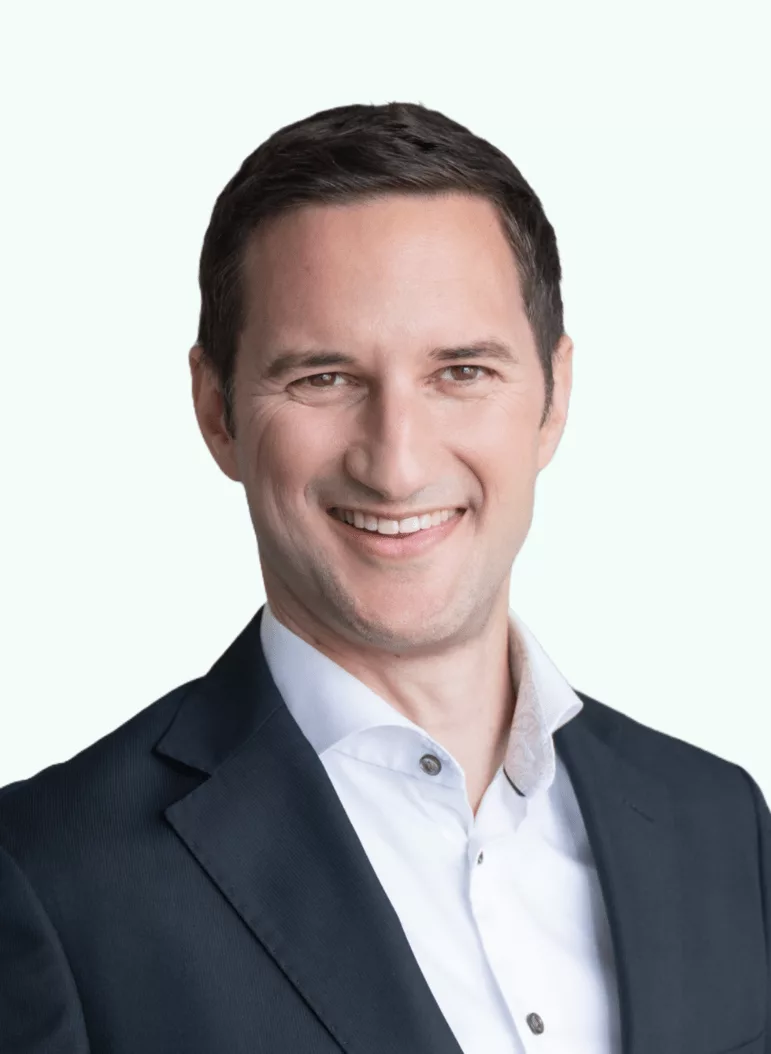
Pascal Stämpfli leverages over a decade of expertise in corporate finance and venture capital to scale and optimize businesses. A CFA charterholder with a Master's in Economics from the University of St. Gallen, Pascal specializes in market & company assessments, strategy, and business value creation. Having assessed more than 1,000 companies for financial and strategic investors provides him with a sophisticated understanding of investor rationale and capital allocation. As the Managing Director of Scalemetrics and Managing Partner at COREangels Big Data & AI Europe, Pascal operates at the intersection of financial discipline and technological innovation.