
15 Low-Capital SME Ideas in Switzerland from CHF 5,000 (2026 Guide)

Quick Answer
15 proven SME business ideas in Switzerland you can start from CHF 5,000. Legal structure, capital requirements, and realistic revenue potential for each. 2026 guide.
Starting a Business in Switzerland Doesn’t Require CHF 100,000
Switzerland has a reputation for being expensive – and for good reason. But when it comes to launching a new business, the picture is more nuanced than most people assume. According to the World Bank’s Ease of Doing Business Index, Switzerland consistently ranks among the top 40 countries globally for business formation speed, with sole proprietorships (Einzelfirma) registerable in under a week at zero minimum capital. Compare that to a German GmbH, which requires EUR 25,000 in minimum share capital, or even a UK Ltd, which – while technically £1 minimum – carries far higher operational compliance overhead.
The real barrier in Switzerland isn’t legal structure or minimum capital. It’s knowing which model fits your revenue model, canton, and risk appetite. Most founders overcomplicate it – and overspend as a result.
Here are 15 SME business ideas you can launch from CHF 5,000 in Switzerland in 2026 – with real capital ranges, legal structure recommendations, and Swiss-specific insight for each.
What Makes a Low-Capital Swiss SME Viable in 2026
The Einzelfirma (sole proprietorship) is the most overlooked legal structure in Switzerland. It requires CHF 0 minimum capital, no notarised deed, and no mandatory entry in the commercial register until your annual turnover exceeds CHF 100,000. Below that threshold, you simply register with your cantonal AHV compensation office, obtain a UID (Unternehmens-Identifikationsnummer) from uid.admin.ch, and you’re legally operational – often within days.
For service businesses – consulting, bookkeeping, coaching, IT – the Einzelfirma is ideal at launch. There is no mandatory audit obligation for companies with revenue below CHF 500,000 (opting out of ordinary audit), and VAT registration is only required once you cross the CHF 100,000 annual turnover threshold.
What this means practically: a Swiss founder can test a service offering, build a client base, and generate revenue before spending a single franc on incorporation, notary fees, or paid-in capital. Once revenue justifies it – typically when annual turnover approaches CHF 150,000–200,000 – converting to a GmbH provides liability protection and a more credible face to enterprise clients.
The Swiss market also offers structural advantages that reduce capital needs: strong B2B demand for specialised services, high average hourly rates (Zurich-based consultants routinely charge CHF 150–300/hour), and a dense SME fabric of over 590,000 firms that constantly need outsourced services.
The 15 Best Low-Capital SME Ideas for Switzerland in 2026
1. B2B Management Consulting
Swiss SMEs – particularly in manufacturing, medtech, and professional services – have a persistent need for operational strategy, process optimisation, and interim management. A solo consultant with sector expertise and a network in one or two cantons can reach break-even within 60–90 days.
- Startup capital: CHF 1,500 – CHF 4,000
- Legal structure: Einzelfirma (convert to GmbH at CHF 150k+ revenue)
- Year 1 revenue potential: CHF 80,000 – CHF 180,000
- Swiss tip: Register with the Swiss Consulting Group or cantonal chamber of commerce (e.g., Handelskammer Zürich) for referral flow and credibility signalling in a trust-driven market.
2. Outsourced Financial Advisory & Bookkeeping
Demand for outsourced finance services from Swiss SMEs is structurally high – the majority of firms under CHF 5M revenue cannot justify a full-time CFO or accountant. With Swiss GAAP and OR (Obligationenrecht) accounting skills, this service can be offered remotely from day one.
- Startup capital: CHF 2,000 – CHF 5,000
- Legal structure: Einzelfirma or GmbH
- Year 1 revenue potential: CHF 60,000 – CHF 140,000
- Swiss tip: Licence with Treuhand|Suisse (the Swiss fiduciary association) to signal credibility; many SME clients require Treuhand-affiliated providers for tax mandate work.
3. HR Consulting for Swiss SMEs
Swiss employment law – including Gesamtarbeitsverträge (GAV), termination notice periods, and cantonal sick pay rules – is complex enough that most SMEs under 50 employees need periodic external HR support. Retainer-based HR advisory is highly recurring and margin-rich.
- Startup capital: CHF 1,000 – CHF 3,000
- Legal structure: Einzelfirma
- Year 1 revenue potential: CHF 50,000 – CHF 110,000
- Swiss tip: Canton Aargau and Canton St. Gallen have high manufacturing SME density with underserved HR needs – strong markets for a solo HR consultant targeting 10–100-employee firms.
4. IT & Software Development Freelancing
Switzerland’s tech sector – concentrated in Zurich, Basel, and the Romandie – consistently faces a developer shortage. Freelance developers and solution architects command among the highest day rates in Europe, with Swiss clients willing to pay a premium for reliability and local availability.
- Startup capital: CHF 500 – CHF 2,000
- Legal structure: Einzelfirma
- Year 1 revenue potential: CHF 100,000 – CHF 220,000
- Swiss tip: Intermediary platforms like Malt.com (CH) and Swiss Dev Jobs allow direct client acquisition; avoid intermediary staffing agencies that take 20–30% margins once you have a portfolio.
5. SaaS Micro-Tools for Swiss SME Compliance
Swiss-specific compliance – AHV payroll calculations, MWST (VAT) filing, cantonal tax forms – is poorly served by generic European SaaS tools. A focused micro-SaaS targeting one specific compliance workflow (e.g., expense reporting aligned to Swiss OR standards) can reach profitability with as few as 200 paying subscribers.
- Startup capital: CHF 3,000 – CHF 8,000
- Legal structure: GmbH (recommended for IP ownership and investor readiness)
- Year 1 revenue potential: CHF 20,000 – CHF 80,000
- Swiss tip: Build for multilingual output from day one – DE/FR/IT – as Swiss federal procurement and mid-market clients require at least two national languages in any compliance tool.
6. Content & SEO Agency (Swiss/DACH Market)
Swiss B2B firms consistently underinvest in digital content. A boutique agency offering German-language SEO, thought leadership content, and LinkedIn strategy for Swiss financial services, legal, or manufacturing firms can differentiate sharply from generic DACH agencies.
- Startup capital: CHF 1,500 – CHF 4,000
- Legal structure: Einzelfirma or GmbH
- Year 1 revenue potential: CHF 50,000 – CHF 120,000
- Swiss tip: Swiss German (Schweizerdeutsch context) and formal Hochdeutsch are distinct audience registers – agencies that understand this distinction win mandates that generic DE-market agencies cannot serve credibly.
7. E-Learning Platform (German/French Bilingual Niche)
Corporate training in Switzerland is a CHF 1.8B+ market, yet most platforms are either US-English-centric or generic DE-language. A focused e-learning offering targeting Swiss professional certifications (e.g., ZHAW-aligned finance content, Swiss banking Sachbearbeiter prep) in both German and French fills a real gap.
- Startup capital: CHF 4,000 – CHF 8,000
- Legal structure: GmbH
- Year 1 revenue potential: CHF 30,000 – CHF 90,000
- Swiss tip: Partner early with a cantonal Berufsschule or Fachhochschule for co-branding – it dramatically accelerates trust and B2B sales cycles in the Swiss training market.
8. Swiss Artisan E-Commerce
Swiss-made artisan goods – watches, textiles, ceramics, specialty foods – command significant premiums in international markets. An e-commerce operation aggregating Swiss artisan products for export to Germany, the UAE, or the US can be launched lean using a third-party logistics provider and a Shopify store.
- Startup capital: CHF 2,000 – CHF 6,000
- Legal structure: Einzelfirma or GmbH
- Year 1 revenue potential: CHF 30,000 – CHF 80,000
- Swiss tip: The “Swiss Made” label has specific legal requirements under Swiss law (at least 60% Swiss value creation for watches, defined separately for other sectors) – verify applicability via the IGE/IPI (Federal Institute of Intellectual Property) before using it in marketing.
9. Niche Product Import & Resale
Switzerland’s import market benefits from strong consumer purchasing power and limited domestic production in categories like specialty health foods, Scandinavian design goods, and premium Asian electronics. A focused import business with 2–3 exclusive supplier agreements can reach profitability quickly.
- Startup capital: CHF 3,000 – CHF 7,000
- Legal structure: Einzelfirma (GmbH if volume justifies)
- Year 1 revenue potential: CHF 40,000 – CHF 100,000
- Swiss tip: Switzerland is outside the EU customs union – all imports are subject to Swiss customs duties and MWST. Use the EZV (Eidgenössische Zollverwaltung) tariff lookup tool to calculate landed cost before pricing.
10. Amazon FBA from Switzerland
Amazon FBA from Switzerland is viable – products ship into EU fulfilment centres (typically Germany), and Swiss sellers access the full EU marketplace. The key advantage: Swiss product quality perception often justifies premium pricing on Amazon DE and Amazon FR.
- Startup capital: CHF 3,500 – CHF 8,000
- Legal structure: GmbH (recommended for EU VAT registration compliance)
- Year 1 revenue potential: CHF 40,000 – CHF 120,000
- Swiss tip: EU OSS (One Stop Shop) VAT registration is required once EU sales exceed thresholds – engage a cross-border tax specialist early, as Swiss-based sellers are not automatically covered by EU VAT simplification rules.
11. Specialized Home Services (Zurich/Basel)
Zurich and Basel have extremely high household income levels and a persistent shortage of reliable tradespeople and premium home service providers. Services like high-end cleaning, garden maintenance, handyman services, and smart home installation command rates of CHF 80–150/hour with strong repeat client retention.
- Startup capital: CHF 1,000 – CHF 4,000
- Legal structure: Einzelfirma
- Year 1 revenue potential: CHF 50,000 – CHF 100,000
- Swiss tip: Zurich City’s Bewilligungsamt requires specific cantonal business authorisation for certain trade activities – verify your service category at stadtentwicklung.stadt-zuerich.ch before launching.
12. Airbnb Co-Hosting & Property Management
Switzerland’s short-term rental market – particularly in tourist cantons like Graubünden, Valais, and Lucerne – offers strong co-hosting demand from property owners who want passive income without operational hassle. A co-hosting service earning 15–25% of booking revenue can scale rapidly with 8–10 properties under management.
- Startup capital: CHF 1,500 – CHF 3,500
- Legal structure: Einzelfirma or GmbH
- Year 1 revenue potential: CHF 40,000 – CHF 90,000
- Swiss tip: Many Swiss municipalities require short-term rental registration and the collection of Kurtaxe (tourist tax) – verify cantonal and municipal rules before taking on property mandates, as liability sits with the operator in most agreements.
13. Tax Preparation for Expats in Switzerland
Switzerland has over 2.1 million foreign nationals – roughly 25% of the population – many of whom face complex cross-border tax situations involving home country obligations, Swiss Quellensteuer (withholding tax), and treaty applications. Expat tax advisory is underserved, high-margin, and highly recurring.
- Startup capital: CHF 1,500 – CHF 4,000
- Legal structure: Einzelfirma (Treuhand license recommended)
- Year 1 revenue potential: CHF 60,000 – CHF 130,000
- Swiss tip: Focus on one expat community initially (e.g., US nationals face FATCA obligations; UK nationals post-Brexit face specific treaty complexities) – niche positioning dramatically reduces client acquisition cost.
14. Payroll Service for Micro-SMEs
Swiss payroll is administratively intensive – AHV/IV/EO contributions, ALV (unemployment insurance), BVG (pension) administration, source tax deductions for foreign employees, and monthly reporting to multiple cantonal offices. Most micro-SMEs under 10 employees are significantly over-burdened by this and willing to outsource for CHF 200–500/month per company.
- Startup capital: CHF 2,000 – CHF 5,000
- Legal structure: Einzelfirma or GmbH
- Year 1 revenue potential: CHF 40,000 – CHF 100,000
- Swiss tip: Use SwissSalary or Abacus as your payroll engine – both are widely accepted by cantonal AHV offices and dramatically reduce manual processing time per client, making your unit economics highly scalable.
15. Financial Coaching for Swiss Founders
Swiss founders – particularly first-generation SME owners – consistently lack structured financial literacy: cash flow forecasting, tax planning, understanding OR-compliant accounts. Financial coaching (distinct from regulated financial advice) is unregulated, high-demand, and easily packaged into productised monthly programmes.
- Startup capital: CHF 500 – CHF 2,000
- Legal structure: Einzelfirma
- Year 1 revenue potential: CHF 40,000 – CHF 90,000
- Swiss tip: Clearly distinguish your offering from FINMA-regulated financial advice (investment products, insurance mediation) – use language like “financial literacy coaching” and “cash flow planning support” to remain outside regulatory scope.
Swiss Legal Requirements You Must Know Before Starting
Regardless of which business model you choose, these are the practical steps every Swiss SME must complete:
- UID Number (Unternehmens-Identifikationsnummer): Every Swiss business entity requires a UID, Switzerland’s unique business identifier. Register or look up existing registrations at uid.admin.ch. It is issued automatically upon commercial register entry for GmbH/AG; Einzelfirma owners must apply separately once commercially active.
- AHV/SVA Registration: Self-employed individuals must register with their cantonal AHV compensation office (SVA) within 90 days of commencing self-employed activity. AHV contributions are 10% of net income (both employer and employee share fall on the self-employed person). Failure to register triggers retroactive contribution demands plus interest.
- VAT (MWST) Registration: VAT registration with the ESTV (Eidgenössische Steuerverwaltung) becomes mandatory once annual turnover exceeds CHF 100,000. Voluntary registration below this threshold is permitted and sometimes advantageous for B2B businesses with significant input VAT. Register via estv.admin.ch. The standard Swiss VAT rate is 8.1% (2024 onwards).
- Commercial Register (Handelsregister): Mandatory registration in the cantonal Handelsregister is required for Einzelfirma businesses exceeding CHF 100,000 annual turnover, and for all GmbH and AG entities from formation. Registration at zefix.ch (national register portal).
- Cantonal Business Licence: Some cantons and business activities require additional cantonal authorisation. Zug and Zurich have different requirements for financial service providers; Basel-Stadt has specific rules for food and trade businesses. Verify with your cantonal Volkswirtschaftsdepartement (VWD) before operating.
- Professional Liability Insurance: Not legally mandatory in most cantons, but commercially essential for advisory businesses (financial, HR, legal consulting). Swiss insurers like Zurich, AXA, and Helvetia offer SME professional liability products from approximately CHF 400–800/year.
Startup Capital & Scalability Overview
| Business Idea | Startup Cost (CHF) | Break-Even Timeline | Scalability |
|---|---|---|---|
| B2B Management Consulting | 1,500 – 4,000 | 1–3 months | ★★★☆☆ |
| Outsourced Financial Advisory & Bookkeeping | 2,000 – 5,000 | 2–3 months | ★★★★☆ |
| HR Consulting | 1,000 – 3,000 | 1–2 months | ★★★☆☆ |
| IT & Software Development Freelancing | 500 – 2,000 | Immediate | ★★★☆☆ |
| SaaS Micro-Tools for SME Compliance | 3,000 – 8,000 | 6–12 months | ★★★★★ |
| Content & SEO Agency | 1,500 – 4,000 | 2–4 months | ★★★★☆ |
| E-Learning Platform | 4,000 – 8,000 | 6–12 months | ★★★★★ |
| Swiss Artisan E-Commerce | 2,000 – 6,000 | 3–6 months | ★★★☆☆ |
| Niche Product Import & Resale | 3,000 – 7,000 | 3–5 months | ★★★☆☆ |
| Amazon FBA from Switzerland | 3,500 – 8,000 | 4–8 months | ★★★★☆ |
| Specialized Home Services (Zurich/Basel) | 1,000 – 4,000 | 1–2 months | ★★★☆☆ |
| Airbnb Co-Hosting & Management | 1,500 – 3,500 | 2–4 months | ★★★★☆ |
| Tax Preparation for Expats | 1,500 – 4,000 | 1–3 months | ★★★★☆ |
| Payroll Service for Micro-SMEs | 2,000 – 5,000 | 2–4 months | ★★★★★ |
| Financial Coaching for Swiss Founders | 500 – 2,000 | 1–2 months | ★★★★☆ |
How Scalemetrics Can Help You Launch Lean
Choosing the right business model is only the first step. The founders who build durable Swiss SMEs are those who get their financial structure right from the start – the right legal entity, the right accounting setup, and a clear understanding of their cash flow from month one.
Scalemetrics provides CFO-level financial guidance without the CFO price tag. Whether you need help evaluating your financing options and capital structure, or you’re ready to set up clean bookkeeping from day one, our team works with Swiss SMEs at every stage of growth.
- For financing strategy and capital structure advice: Scalemetrics Financing Advisory
- For bookkeeping, accounting setup, and OR-compliant reporting: Scalemetrics Accounting & Payments
Starting lean doesn’t mean starting blind. Get the financial foundation right and every CHF of capital works harder.
How much capital do you need to start a company in Switzerland?
A sole proprietorship (Einzelfirma) needs no minimum capital. A GmbH requires CHF 20’000, fully paid in (Art. 773 CO). An AG requires CHF 100’000 nominal, with at least CHF 50’000 paid in at incorporation (Art. 621 and 632 CO). Many of the ideas above start as a sole proprietorship and convert later. Scalemetrics handles the accounting, payroll, and VAT setup once you launch, so the books are right from day one.
Frequently Asked Questions
How much does it cost to register a business in Switzerland?
It depends on the legal structure. An Einzelfirma (sole proprietorship) with revenue below CHF 100,000 does not require commercial register entry – total registration cost is effectively CHF 0 beyond any professional service fees. Once turnover exceeds CHF 100,000, cantonal Handelsregister entry costs approximately CHF 150–250 depending on the canton. A GmbH (Gesellschaft mit beschränkter Haftung) requires minimum paid-in share capital of CHF 20,000, notary fees of roughly CHF 500–1,500, and commercial register entry fees of CHF 600–900 – total formation cost typically CHF 22,000–23,000 including minimum capital. An AG (Aktiengesellschaft) requires CHF 100,000 minimum capital (at least CHF 50,000 paid in at formation).
Can a foreigner start a business in Switzerland?
Yes – but with conditions that vary by residency status. EU/EFTA nationals with a valid Swiss residence permit (B or C permit) can register an Einzelfirma or be a GmbH managing director (Geschäftsführer) without restriction. Non-EU nationals require at minimum a B permit and must demonstrate economic benefit to Switzerland for new work permit applications. Foreign nationals without Swiss residency can be shareholders of a Swiss GmbH or AG, but at least one managing director or authorised signatory with domicile in Switzerland is required – this person must be a Swiss resident (not necessarily a citizen). Specialist legal advice is recommended before incorporating as a non-resident foreigner, particularly for Zug or Schwyz-based entities where fiduciary management services are widely available.
What is the minimum capital for a GmbH in Switzerland?
The minimum share capital for a Swiss GmbH is CHF 20,000, and it must be fully paid in at the time of formation – there is no partial payment option as exists in some EU jurisdictions. This capital sits on the balance sheet as equity and is not a sunk cost; it can be used for operations immediately after incorporation. The revised Swiss company law (in force since January 2023) also introduced the possibility of forming a GmbH with capital denominated in a foreign currency (USD, EUR), subject to FINMA guidance – a notable change that benefits internationally-oriented founders.
Do I need to register for VAT immediately in Switzerland?
No. VAT (MWST) registration in Switzerland is mandatory only once annual worldwide turnover exceeds CHF 100,000. Below this threshold, you are exempt and do not charge or remit VAT. However, voluntary registration is permitted – and often advisable for B2B service providers with significant input VAT (e.g., software subscriptions, subcontractors) who can reclaim input tax. Register through the ESTV’s online portal at estv.admin.ch. Note: the CHF 100,000 threshold applies to global turnover, not just Swiss turnover – relevant for businesses serving international clients from Switzerland.
What is the cheapest legal structure in Switzerland?
The Einzelfirma (sole proprietorship) is unambiguously the cheapest structure to form and operate in Switzerland. It requires no minimum capital, no notary, and no commercial register entry until the CHF 100,000 turnover threshold. The only required step is AHV self-employment registration with your cantonal SVA (Sozialversicherungsanstalt), which is free. The primary trade-off is unlimited personal liability – business debts are the owner’s personal debts. For this reason, high-liability businesses (financial advisory, construction, medical services) should consider forming a GmbH once cash flow permits, to create legal separation between personal and business assets.
Sources & References
Starting a Business in Switzerland with Limited Capital: What the Numbers Show
Switzerland's reputation as one of the world's most expensive countries to live and work in leads many aspiring entrepreneurs to assume that starting a business here requires substantial capital. In many cases, that assumption is incorrect. The Swiss regulatory environment, particularly for service businesses and digital ventures, allows for legal entity formation (GmbH) from as little as CHF 20,000 in share capital and provides access to a high-value market of 8.8 million affluent consumers and several hundred thousand Swiss SMEs that pay premium prices for quality services.
The businesses that succeed with low initial capital in Switzerland share a common characteristic: they start with the service or product, not the structure. Rather than spending CHF 10,000 on a website, CHF 5,000 on a logo, and CHF 8,000 on office furniture before earning a single franc, they validate the market by finding the first paying customer with a minimal investment in presentation, then reinvest revenue to build the infrastructure. In Swiss German business culture, directness and substance are valued more highly than polish; a well-prepared one-page proposal and a credible conversation will win business in Switzerland that a glossy website alone will not.
15 Low-Capital Business Ideas for Switzerland in 2026
The following categories offer viable entry points for Swiss-based entrepreneurs with CHF 5,000–20,000 in starting capital:
1. B2B consulting and advisory. Swiss SMEs pay well for expertise in specific domains: IT security, regulatory compliance, HR management, sustainability, and finance are all sectors where a credible independent consultant can establish a CHF 150,000–300,000 annual revenue practice within 18–24 months. The primary capital requirement is time, not money.
2. Fiduciary and bookkeeping services. The Swiss fiduciary sector is growing due to the increasing complexity of Swiss regulatory requirements (MWST, LETA, BVG). A licensed Treuhänder with a quality accounting platform (Bexio or Banana) can serve 20–30 SME clients. Start-up costs: CHF 5,000–10,000 for licensing, software, and initial marketing.
3. Digital marketing for Swiss SMEs. The vast majority of Swiss SMEs have underinvested digital marketing infrastructure. A Google Ads specialist, SEO consultant, or social media manager serving Swiss mid-market clients can achieve CHF 8,000–15,000 monthly revenue with a small number of clients. Start-up costs: CHF 2,000–5,000.
4. Specialist recruitment. Swiss employer markets in engineering, finance, IT, and healthcare consistently experience talent shortages. A niche recruitment business requires relationships and persistence more than capital. Start-up costs: CHF 5,000–10,000 for basic infrastructure and initial candidate sourcing tools.
5. E-commerce (Swiss-focused). Swiss consumers pay premium prices for Swiss-made, locally sourced, or specialist imported goods. Shopify storefronts with a focus on a specific product category — artisan food, specialist hardware, niche sports equipment — can reach viability within 6–12 months. Start-up costs: CHF 5,000–15,000 for stock, platform, and initial marketing.
Low-Capital Swiss Business Models: Start-Up Cost and Revenue Potential
| Business Type | Start-Up Capital (CHF) | Year 1 Revenue Potential | MWST Threshold Risk |
|---|---|---|---|
| B2B consulting | 5,000–10,000 | 80,000–200,000 | Register if >CHF 100K |
| Bookkeeping / fiduciary | 5,000–12,000 | 60,000–150,000 | Register if >CHF 100K |
| Digital marketing agency | 2,000–8,000 | 60,000–180,000 | Register if >CHF 100K |
| Niche recruitment | 5,000–15,000 | 80,000–250,000 | Register if >CHF 100K |
| E-commerce (Swiss focus) | 8,000–20,000 | 40,000–120,000 | Monitor threshold carefully |
Every Swiss business that exceeds CHF 100,000 in annual turnover must register for MWST within 30 days. For low-capital ventures that grow quickly, this is a compliance moment that arrives sooner than expected. A financial planning engagement can set up the financial tracking, MWST planning, and basic accounting structure your new Swiss business needs from day one — without the cost of a full-service accountant before you need one.
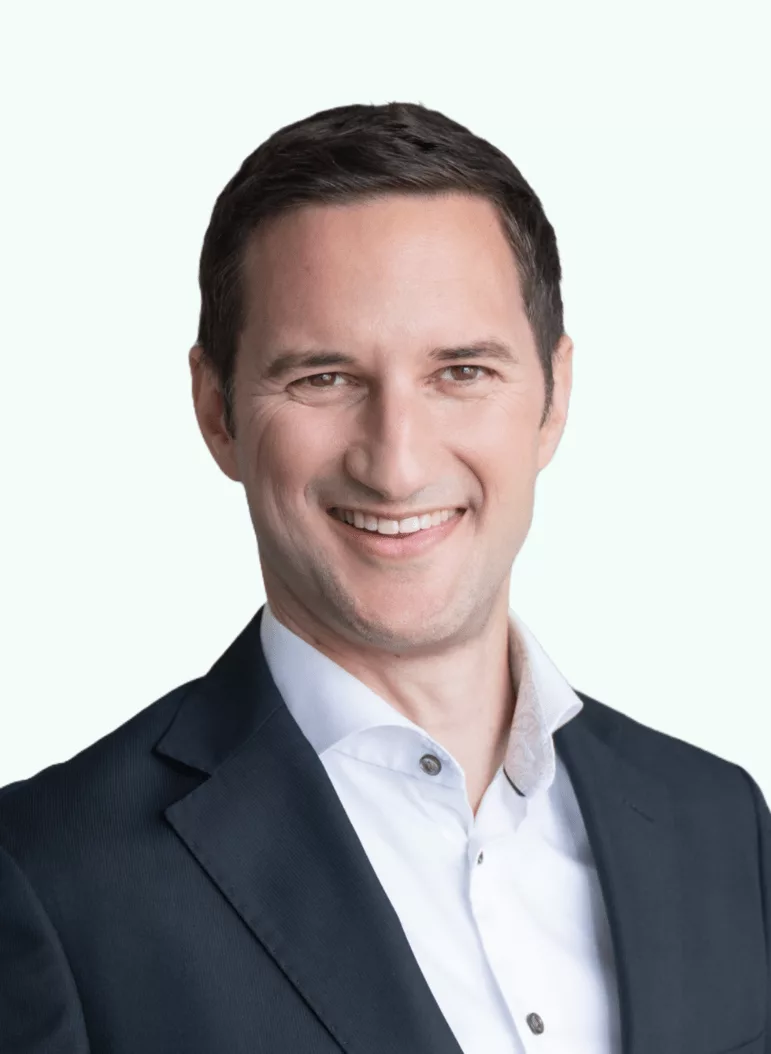
Pascal Stämpfli leverages over a decade of expertise in corporate finance and venture capital to scale and optimize businesses. A CFA charterholder with a Master's in Economics from the University of St. Gallen, Pascal specializes in market & company assessments, strategy, and business value creation. Having assessed more than 1,000 companies for financial and strategic investors provides him with a sophisticated understanding of investor rationale and capital allocation. As the Managing Director of Scalemetrics and Managing Partner at COREangels Big Data & AI Europe, Pascal operates at the intersection of financial discipline and technological innovation.