
When Does a Swiss SME Need a CFO? The 7 Warning Signs
Quick Answer
7 clear signals a Swiss SME needs an outsourced CFO: revenue above CHF 2M, bank credit application, investor round, liquidity pressure, M&A preparation, rapid internationalisation, and management reporting gaps.
The CFO question haunts almost every Swiss SME owner at some point: “Do I actually need one, or can I keep managing finance myself?” The honest answer depends less on your headcount or revenue and more on the specific financial challenges your business is facing right now. Knowing when to hire a CFO for your startup – or whether a fractional CFO gives you the same firepower at a fraction of the cost – is one of the highest-leverage decisions an early-stage Swiss SME can make. This guide maps the 7 clearest warning signs that your SME has outgrown founder-led finance, with Swiss-specific context throughout.
Why Swiss SMEs Wait Too Long
The default assumption in most Swiss SMEs is that a CFO is a luxury for later – something you hire after Series B, once you have the revenue to justify it. This assumption is expensive. The problems that a CFO prevents – cash flow crises, VAT miscalculations, fundraising delays caused by unclean financials, overpaid corporate tax because no one optimised your cantonal structure – are almost always cheaper to prevent than to fix. Swiss fiduciary firms routinely spend CHF 15,000–40,000 cleaning up financial records ahead of a fundraise or exit that could have been investor-ready for a fraction of that cost from day one.
What Outsourced CFO Services Switzerland Include in Practice
Outsourced CFO services Switzerland from providers like Scalemetrics operate on a fixed monthly mandate – CHF 1’500–3’500/month – and replace the full strategic finance function that a full-time hire would otherwise cover. In practice: rolling 13-week liquidity forecasts updated weekly; monthly budget-versus-actual reports with variance commentary for management; KPI dashboards calibrated to your industry benchmarks; financial model preparation for ZKB, UBS, or Raiffeisen credit applications; scenario modelling across best-case, base-case, and stress-case; and Verwaltungsrat reporting packages before each board meeting. The mandate covers the complete CFO remit – without recruitment risk, notice periods, or fixed headcount cost.
The structural advantage of outsourced CFO services Switzerland over a full-time hire is elasticity. The mandate scales with your business cycle – more intensive during financing rounds, M&A processes, or rapid growth phases; leaner during stable operating periods. For Swiss SMEs with CHF 1.5M–15M revenue, this model saves CHF 140’000–200’000 per year compared to a full-time hire at market salary – while delivering equal or better financial intelligence, because a mandate provider brings cross-industry benchmarks that no single internal CFO can replicate.
The fractional CFO model has changed the calculus for Swiss SMEs entirely. Rather than committing to a CHF 180,000–250,000 annual salary for a full-time CFO, Swiss SMEs can now access senior financial leadership for CHF 2,000–6,000 per month – a CFO-level skill set, deployed for the hours your business actually needs. Our outsourced CFO Switzerland are built specifically for this stage: companies that need strategic finance without a full-time finance department.
Warning Sign 1: You Don’t Know Your Runway Without Checking
If a co-founder or investor asks “how many months of runway do you have?” and your honest answer requires 30 minutes in a spreadsheet, you have a problem. Cash visibility is the most fundamental output of a functional finance function. A CFO or fractional CFO builds and maintains a rolling 13-week cash flow model that gives you this number in real time, updated automatically from your banking integrations.
Swiss SMEs with Zürich-level burn rates – typically CHF 80,000–200,000/month for a team of 8–15 – cannot afford cash flow surprises. The typical failure mode is not that the money runs out; it is that it runs out two months earlier than the model predicted, and the fundraise round didn’t close in time. A well-maintained cash model, owned by someone whose job it is to maintain it, eliminates this failure mode entirely.
Warning Sign 2: Fundraising Is Within 6 Months
Every Swiss VC and most angel investors will request three years of historical financials, a 3-year financial model, and a data room during due diligence. If your books are managed in a spreadsheet, if your revenue recognition is informal, or if your SAFE note cap table hasn’t been reconciled since your last round, you will lose 4–8 weeks of a time-sensitive fundraise to financial remediation. That is time spent getting your numbers right instead of closing investors.
A fractional CFO engaged six months before a raise prepares your business for investor scrutiny: clean IFRS or Swiss GAAP financials, a model that holds up to a VC’s stress-testing, and a data room that answers questions before they’re asked. See our guide on financial forecasting for Swiss SMEs for what investor-grade models look like at each stage.
Warning Sign 3: Monthly Reporting Takes You More Than 2 Hours
If you, the CEO or founder, are personally spending more than two hours each month closing the books, generating management accounts, or chasing your fiduciary for numbers, your time is being systematically misallocated. The opportunity cost of a Swiss SME founder spending 10 hours monthly on finance administration is conservatively CHF 5,000–15,000 in foregone business development, product decisions, and investor relationship time.
The correct model: your accounting system closes automatically each month through bank feed integrations. A fractional CFO or finance manager reviews, reconciles, and delivers a management pack to your inbox within 5 business days of month-end. You spend 30 minutes reviewing, not 3 hours producing. Our accounting and payments service handles the operational layer so your CFO time is purely strategic.
Warning Sign 4: You Have Employees and You’re Not 100% Certain on Swiss Payroll Compliance
Swiss payroll compliance is substantially more complex than most founders realise until they get it wrong. AHV/IV/EO contributions, UVG accident insurance, BVG pension fund obligations, and cantonal withholding tax for foreign-permit employees (particularly relevant in Zürich and Zug where most SMEs are based) all carry penalties for late or incorrect declarations. The Ausgleichskasse does not send warning letters – it sends invoices, with interest.
Once you have 3+ employees, or your first employee with a permit requiring withholding tax (L, B, or G permit in most cantons), the compliance burden exceeds what an accounting software subscription handles on its own. A CFO or finance lead who understands Swiss social insurance law saves multiples of their cost in avoided penalties and remediation fees. This is not a hypothetical risk – it is the most common compliance failure Scalemetrics sees in Swiss SMEs that scale from 5 to 20 employees without dedicated finance support.
Warning Sign 5: Unit Economics and Pricing Are Gut Feel, Not Model-Driven
If you cannot answer “what is our true gross margin per customer segment, and how does it change at 2x current volume?” with a model rather than an estimate, you are flying blind on the decisions that determine whether your business becomes profitable. Unit economics – Customer Acquisition Cost, Lifetime Value, payback period, contribution margin by product line – are CFO outputs, not founder intuitions.
Swiss B2B SaaS companies in particular frequently underprice their products because no one has modelled the true cost of service delivery: hosting, customer success hours, support overhead, and churn-adjusted LTV. A CFO who builds and maintains a unit economics model turns pricing decisions from guesswork into precision. At CHF 1M+ ARR, a 5% gross margin improvement driven by a model-backed pricing decision is worth CHF 50,000 annually – a multiple of any CFO cost.
Warning Sign 6: Tax Planning Is Reactive, Not Proactive
Most Swiss SMEs pay more corporate tax than they need to. Not because of anything illegal – but because no one has proactively optimised their cantonal structure, R&D deduction claims, or timing of major expenses. The Swiss cantonal tax system creates genuine arbitrage opportunities for companies that plan; it is indifferent to companies that don’t.
Common CFO-level tax interventions for Swiss SMEs: ensuring IP is held in the correct canton (Zug and Nidwalden offer patent box regimes), claiming the full R&D super-deduction available in cantons like Zürich and Bern, timing capital expenditure to maximise depreciation in high-profit years, and structuring intercompany agreements correctly if you have a holding structure. Our tax and VAT compliance service handles both the compliance and the planning.
Warning Sign 7: Board or Investors Are Asking for Better Financial Visibility
When your board, lead investor, or chairman starts asking for more granular financial reporting – segment analysis, cohort data, variance analysis against budget – and your honest answer is “we don’t have that yet,” you are operating without the financial infrastructure your governance structure requires. This is not a theoretical risk: it creates real friction at board meetings, delays investment decisions, and – in more serious cases – triggers investor concern about management capability.
A CFO builds the financial reporting infrastructure your governance requires and makes it repeatable. Monthly board packs, quarterly investor updates, and annual budget-vs-actuals analysis become systematic rather than scrambled. The board gets what it needs; you arrive at board meetings prepared rather than apologising for gaps in the data.
Fractional CFO vs Full-Time: The Swiss SME Decision Framework
| Situation | Recommended Model | Typical Cost (CHF/month) |
|---|---|---|
| Pre-seed, <CHF 500K revenue, <5 employees | Fiduciary + bookkeeping software | CHF 500–1,500 |
| Seed–Series A, CHF 500K–3M revenue, fundraise approaching | Fractional CFO (Scalemetrics) | CHF 2,000–5,000 |
| Series A+, CHF 3M+ revenue, >20 employees | Full-time CFO or Senior Finance Manager | CHF 12,000–20,000+ |
| Pre-exit, due diligence preparation | Fractional CFO + Financial Due Diligence | CHF 4,000–8,000 |
Frequently Asked Questions
At what revenue level does a Swiss SME need a CFO?
Revenue is the wrong trigger. The right triggers are: fundraising within 6 months, monthly reporting consuming founder time, payroll compliance uncertainty with 3+ employees, or investor/board requests for financial visibility. Most Swiss SMEs benefit from fractional CFO support between CHF 500K and CHF 3M in annual revenue – well before the revenue justifies a full-time hire.
What is the difference between a fiduciary and a CFO in Switzerland?
A fiduciary (Treuhänder) handles compliance: bookkeeping, VAT filing, tax return preparation, and annual accounts. A CFO provides strategic financial leadership: cash flow management, financial modelling, investor relations, fundraise preparation, unit economics, and board reporting. Most Swiss SMEs need both – a fiduciary for the compliance layer, and a fractional CFO for the strategic layer. Scalemetrics provides both under one engagement.
How much does a fractional CFO cost in Switzerland?
A fractional CFO in Switzerland typically costs CHF 2,000–6,000 per month depending on the scope of work, number of hours, and complexity of the engagement. This compares to CHF 180,000–250,000 per year for a full-time CFO, plus social contributions and benefits. For SMEs between seed and Series A, the fractional model delivers the same strategic output at 15–20% of the cost.
Can accounting software replace a CFO?
No. Accounting software (Bexio, Abacus, Swiss21) handles transaction recording, VAT reporting, and payroll processing. A CFO interprets the numbers, builds models, manages investor relationships, and makes strategic financial recommendations. The software produces the data; the CFO decides what to do with it. Both are necessary, and neither replaces the other.
What does a fractional CFO actually do day-to-day for a Swiss SME?
In a typical Scalemetrics fractional CFO engagement: weekly cash flow review, monthly management accounts delivery with commentary, quarterly board pack preparation, investor update support, annual budget build, tax planning coordination with the fiduciary, and ad-hoc financial modelling for growth decisions (new hire ROI, pricing changes, market entry costs). The exact scope is defined at onboarding and adjusted as the business evolves.
When should a Swiss SME hire a full-time CFO instead of fractional?
The full-time CFO threshold typically arrives at CHF 3M+ annual revenue with 20+ employees, when the company is in active Series A/B fundraising simultaneously with complex operational finance demands, or when preparing for an exit or M&A transaction that requires the CFO’s full attention over 12+ months. Below that threshold, the fractional model is almost always more cost-effective and equally capable.
Recognise more than two of these warning signs in your business? That is the clearest possible signal that you need strategic financial leadership now, not later. Talk to Scalemetrics about a fractional CFO engagement tailored to your stage and budget.
Scalemetrics helps Swiss SMEs act on decisions like this before market conditions shift. Our SME financing services and outsourced CFO team give finance directors the senior expertise to move first.
Sources & References
The Seven Warning Signs a Swiss SME Needs a CFO
Most Swiss SME owners delay bringing in a CFO — whether full-time or fractional — longer than is optimal. The reasons are understandable: CFO-level financial expertise is expensive, the need can be hard to articulate before a crisis forces the conversation, and many owner-managers have managed the finance function themselves since founding the business. But the cost of delayed CFO engagement is consistently higher than the cost of the CFO — in avoidable tax inefficiency, missed financing opportunities, and strategic decisions made without adequate financial analysis.
The seven warning signs below are based on patterns observed repeatedly across Swiss SMEs at the inflection point where owner-managed finance becomes inadequate for the complexity of the business.
Warning sign 1: Revenue is above CHF 3 million and growing. At this revenue scale, the financial decisions being made weekly — pricing, hiring, capital expenditure, working capital management — are material enough in absolute terms that the cost of a suboptimal decision exceeds the cost of CFO-level oversight. Below CHF 1 million, the cost-benefit case for dedicated CFO involvement is less compelling; above CHF 3 million, it is compelling in almost every case.
Warning sign 2: You have raised external capital or are planning to. The moment external investors are on your cap table, the financial reporting and governance obligations change materially. Investors expect monthly management accounts, quarterly board packs, and an annual audit process. Delivering these without a CFO is possible but inefficient and creates significant risk of presentation errors that damage investor confidence.
Warning sign 3: You have more than one legal entity. A Swiss holding company, an operating subsidiary, and perhaps a foreign subsidiary create intercompany transactions, transfer pricing obligations, consolidation requirements, and multi-entity tax planning that exceed what an accountant can manage alongside their normal compliance workload. The cost of getting this structure wrong — in tax inefficiency and legal exposure — is typically multiples of CFO advisory fees.
Warning sign 4: You do not know your cash position 60 days forward. Any business without a rolling cash flow forecast that extends at least 60 days is navigating blind. Swiss SMEs that discover cash shortfalls within the same month they occur have no time to respond; those with 60–90 day forward visibility have time to draw on credit lines, accelerate collections, or defer discretionary payments.
Warning sign 5: Your banking relationship is under strain. If your bank has asked for more information, expressed concerns, or declined a routine facility extension, a CFO can manage the relationship, present a credible narrative, and stabilise the situation before it becomes a genuine credit event.
Warning sign 6: You are making major capital allocation decisions without financial modelling. Capex above CHF 200,000, hiring a senior management team member, entering a new market, or signing a long-term lease without a financial model is a management decision made without a key input. The model does not make the decision — it informs it.
Warning sign 7: Finance is consuming 10+ hours of your time per week as owner. Every hour you spend on financial administration is an hour not spent on strategy, customers, and leadership. When the finance function is consuming this level of owner attention, the opportunity cost of not delegating it to a professional is typically CHF 50,000–150,000 per year in foregone strategic output.
CFO Engagement Models for Swiss SMEs: Cost vs. Value
| Model | Annual Cost (CHF) | Best For |
|---|---|---|
| Full-time CFO hire | 180,000–280,000 | CHF 15M+ revenue; complex multi-entity structure |
| Fractional CFO (1–2 days/week) | 48,000–96,000 | CHF 3–15M revenue; fundraising or growth phase |
| Project CFO (specific mandate) | 15,000–45,000 | Fundraising preparation; acquisition; restructuring |
| CFO advisory retainer | 12,000–30,000 | CHF 1–5M revenue; light-touch strategic oversight |
If you recognise two or more of the seven warning signs above in your business today, the conversation about CFO engagement is overdue. A strategic CFO engagement with ScaleMetrics can begin with a complimentary financial health assessment that identifies the specific gaps in your current finance function and recommends the engagement model best suited to your stage and budget.
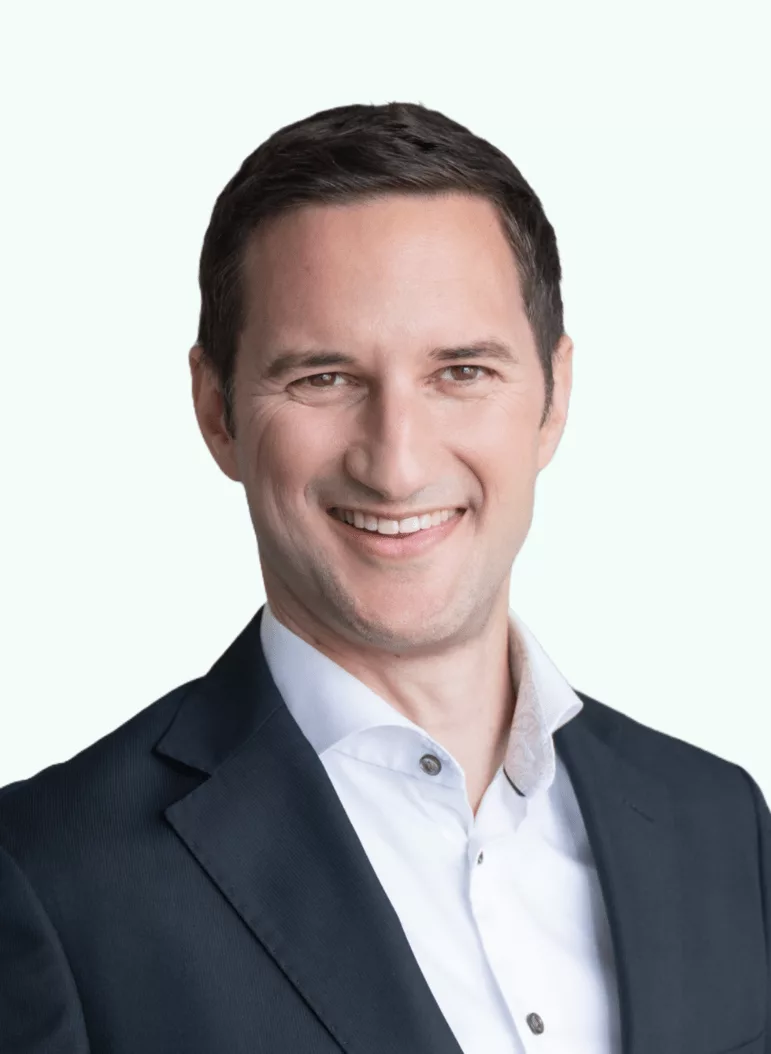
Pascal Stämpfli leverages over a decade of expertise in corporate finance and venture capital to scale and optimize businesses. A CFA charterholder with a Master's in Economics from the University of St. Gallen, Pascal specializes in market & company assessments, strategy, and business value creation. Having assessed more than 1,000 companies for financial and strategic investors provides him with a sophisticated understanding of investor rationale and capital allocation. As the Managing Director of Scalemetrics and Managing Partner at COREangels Big Data & AI Europe, Pascal operates at the intersection of financial discipline and technological innovation.