
Swiss Corporate Tax Guide 2026: Rates by Canton + OECD Minimum Tax Impact
Quick Answer
Switzerland corporate tax rates 2026 by canton: Zug 11.85% effective, Nidwalden 12.0%, Geneva 13.99%, Zurich 19.7%. Includes OECD Pillar 2 minimum tax impact and planning guide for Swiss SMEs.
Bern charges 20.54% corporate tax. Zug charges 11.85%. Same country, same federal rules – a 73% difference in the combined effective rate. For a Swiss SME earning CHF 1 million in profit, that gap is worth CHF 87,000 per year. In 2026, with the OECD minimum tax live and several cantons quietly adjusting their rates, the corporate tax landscape is shifting faster than most SME owners realise.
How Swiss Corporate Tax Actually Works in 2026
What is the corporate tax rate in Switzerland?
Switzerland has a three-layer tax system: the federal corporate income tax (CIT) is set at a flat 8.5% on profit after tax – which works out to approximately 7.83% on an effective pre-tax basis. On top of that, every canton levies its own rate, and each commune (municipality) within the canton adds a further surcharge. The combined effective rate – federal + cantonal + communal – is what you actually pay, and it varies from 11.85% in Zug to 20.54% in Bern.
Corporate Tax Switzerland Planning: Beyond the Canton Rate Table
Understanding the corporate tax Switzerland rate by canton is the starting point – not the end point – of effective tax planning. The real leverage for Swiss SMEs lies in three structural decisions: whether to hold intellectual property in a separate entity in a low-rate canton; how to structure intercompany charges if the group has multiple Swiss entities; and whether the current holding structure is optimal for dividend distributions and capital gain realisations. Each decision has a canton-specific dimension: Zug’s 11.9% ETR makes it attractive for IP and holding structures – but Pillar 2 QDMTT now applies to any entity within a qualifying MNE group, ensuring a minimum 15% ETR regardless of cantonal preference.
Professional corporate tax Switzerland advisory integrates annual compliance (cantonal and federal tax filings, MWST declarations, withholding tax reclaims) with forward-looking structuring – ensuring dividend policy, capital contribution reserves, and intercompany pricing are aligned with the Swiss and international tax framework before the year closes, not in hindsight.
Swiss corporate tax is assessed annually. Companies pay provisional tax instalments during the year, with final assessment issued by the cantonal tax authority – typically 1–3 years after the fiscal year ends. Interest accrues on underpayments, so accurate provisional payments matter.
Swiss Corporate Tax Rates by Canton: 2026 Comparison
The following rates are combined effective rates (federal + cantonal + communal) for the canton capital, which is the standard benchmark used for comparison.
| Canton | Effective Rate (combined) | Main City | Notes |
|---|---|---|---|
| Zug | 11.85% | Zug | Lowest in Switzerland |
| Nidwalden | 11.97% | Stans | Popular for holding companies |
| Lucerne | 12.15% | Lucerne | Strong SME infrastructure |
| Uri | 12.64% | Altdorf | Central Switzerland |
| Vaud | 14.00% | Lausanne | Post-TRAF reform rate |
| Schwyz | 14.06% | Schwyz | Growing business hub |
| Geneva | 14.70% | Geneva | International business hub |
| Ticino | 16.05% | Lugano | Italian-speaking region |
| Zurich | 19.61% | Zurich | Talent + infrastructure tradeoff |
| Bern | 20.54% | Bern | Highest major canton |
Should a Swiss SME move cantons to save on tax?
Possibly – but only if the move is genuine. Swiss tax authorities require real substance: a physical office, staff actually working there, and management decisions being made in the new canton. A mailbox address in Zug does not qualify. A genuine relocation from Bern to Lucerne for a CHF 1M profit business saves approximately CHF 84,000 per year – enough to justify the operational costs of a real presence. If you are considering a relocation, the substance requirements must be planned 12–18 months in advance and documented carefully.
The OECD Minimum Tax: What Swiss SMEs Actually Need to Know
The OECD Pillar Two rules went live in Switzerland on 1 January 2024, and the Swiss Federal Tax Administration (SFTA) issued updated GloBE administrative guidance on 7 April 2026. There has been significant confusion in the Swiss business press – most of it irrelevant to SMEs.
Does the OECD 15% minimum tax affect my Swiss SME?
Almost certainly not. Pillar Two applies exclusively to multinational enterprise groups with consolidated annual revenue above EUR 750 million. The vast majority of Swiss SMEs – including most companies with CHF 1M–50M in revenue – are completely outside the scope of this regulation. If your company operates only in Switzerland, or has foreign subsidiaries but is below the EUR 750M threshold, you have no Pillar Two obligations whatsoever. What may affect you indirectly: some low-tax cantons like Zug and Lucerne are moderately raising their cantonal rates as large multinationals pay top-up taxes, which changes the competitive dynamics – but the headline rates above remain accurate for 2026.
For the record: Swiss-based multinational groups within scope must submit their first GloBE Information Return (GIR) to the SFTA by 30 June 2026. If you have received a letter from the SFTA about this, your group is in scope. If you have not, you are not.
TRAF Tax Reform: The Deductions Swiss SMEs Are Still Missing
The Federal Act on Tax Reform and AHV Financing (TRAF) entered into force in 2020, but a surprising number of Swiss SMEs have never claimed the deductions it introduced. These are not aggressive tax schemes – they are government-designed incentives to encourage Swiss companies to invest in innovation.
What tax deductions are available to Swiss SMEs in 2026?
Three are particularly underused: (1) The patent box – income from qualifying intellectual property (patents, software, certain know-how) can be taxed at a reduced rate, with cantons allowing deductions of up to 90% of qualifying IP income. (2) The R&D super-deduction – cantons including Zurich, Bern, and Basel allow companies to deduct 150% of qualifying research and development costs. A Zürich-based SaaS SME spending CHF 500,000 on R&D can deduct CHF 750,000 – saving approximately CHF 50,000 in cantonal tax. (3) The notional interest deduction (NID) – available in certain cantons, this allows a deduction on equity used to finance Swiss operations, reducing the taxable base for capital-intensive businesses.
To access these deductions, you need to document qualifying expenditure correctly from the start of the fiscal year. Retroactive claims are complex and often partial. If you are investing in software, product development, or patentable processes, the conversation about patent box eligibility should happen before the spending occurs – not at year-end.
Practical Tax Planning for Swiss SMEs in 2026
Effective corporate tax planning is not about aggressive schemes – it is about using the rules correctly, on time. Four actions that consistently deliver results for Swiss SMEs:
- Audit your effective rate vs neighbouring cantons. If you are in Zurich (19.61%), a genuine relocation to Lucerne (12.15%) on CHF 1M profit saves CHF 74,600 per year. Model the real cost including office, staff relocation, and transition – for most profitable SMEs, the payback period is under two years.
- Register IP in a patent box canton before year-end. If your company owns software, algorithms, or process patents, assess canton-level patent box availability now. The deduction applies to the canton where the IP is registered and used.
- Time capital gains vs ordinary income. Swiss corporate capital gains are generally taxable as ordinary income – but the timing of asset disposals relative to your fiscal year-end can significantly affect the tax year in which the gain is assessed.
- Switch to quarterly VAT filings if cash flow is tight. Annual VAT filers pay estimated instalments then reconcile at year-end. Quarterly filers pay exactly what they owe each quarter. For SMEs with significant receivables, quarterly filing can improve working capital materially.
When should a Swiss SME get professional tax advice?
Four trigger points: revenue crosses CHF 500,000 (you are now in scope for optimisation that pays for itself), you are considering a canton change or new location, you are raising external funding or preparing for an acquisition, or you are hiring staff internationally (Swiss payroll tax + withholding tax on foreign employees is a common trap). At these moments, a fractional CFO or tax advisor earns back their fee many times over.
Common Corporate Tax Mistakes Swiss SMEs Make
- Paying the full cantonal rate without benchmarking. Most SME owners set up in Zurich or Bern because that is where their clients and team are – and never revisit the question. A structured canton analysis takes one afternoon and can reveal six-figure annual savings for profitable businesses.
- Missing TRAF deductions entirely. The patent box and R&D super-deduction are claimed by a fraction of eligible companies. Swiss accountants focused on compliance often do not proactively raise these – you need to ask specifically, or work with an advisor who does tax planning, not just tax filing.
- Panicking about the OECD minimum tax. The Swiss business press covered Pillar Two extensively. Many SME owners believe it affects them – it does not. Pillar Two is a regulation for Nestlé, UBS, and ABB. Not for you.
- Filing VAT annually when quarterly is better for cash flow. Annual VAT filers make estimated payments and then face a large reconciliation payment in Q1. Quarterly filers avoid the lump-sum hit and maintain more predictable cash flow throughout the year.
How Swiss SMEs legally reduce corporate tax in 2026
Swiss corporate tax planning goes beyond picking a low rate canton. It combines the canton and communal rate, TRAF deductions such as the patent box and the research and development super deduction, and the salary versus dividend split for owners, all inside the OECD Pillar Two rules if you are part of a large group. The savings sit in using these together. Scalemetrics handles corporate tax and VAT compliance for Swiss SMEs end to end. See also our Swiss VAT system guide for 2026.
Frequently Asked Questions
What is the corporate tax rate in Zurich in 2026?
The effective combined corporate tax rate in Zurich (city) is 19.61% – this includes federal tax, cantonal tax, and the Zurich city communal surcharge. Companies located in smaller Zurich communes outside the city centre may pay slightly less.
Is Switzerland still tax-competitive after OECD Pillar Two?
Yes – for SMEs, nothing has changed. Zug remains at 11.85%, Lucerne at 12.15%, and Nidwalden at 11.97%. Pillar Two only affects the largest multinationals, and even for those companies, Switzerland’s combination of low rates, legal certainty, talent, and quality of life keeps it highly competitive relative to Germany, France, and the UK.
What is the difference between GmbH and AG corporate tax treatment in Switzerland?
The corporate tax rates are identical for both GmbH (Gesellschaft mit beschränkter Haftung) and AG (Aktiengesellschaft). The difference lies at the shareholder level: AG dividends are subject to a 35% withholding tax (recoverable for Swiss residents), while GmbH distributions follow the same rules. The choice of legal form is more relevant for shareholder taxation, the partial taxation privilege on qualifying dividends, and governance flexibility than for the corporate rate itself.
When is Swiss corporate tax due?
Swiss corporate tax operates on a provisional payment system. The cantonal tax authority issues a provisional tax bill based on the prior year’s assessment; you pay this in instalments during the fiscal year. The final assessment is issued 1–3 years after year-end once the tax return is processed. If your provisional payment is too low, interest accrues on the shortfall – currently at a rate set by each canton, typically 3–4% per year. Accurate provisional payments based on current-year forecasts are worth the effort.
How does Scalemetrics help with Swiss corporate tax?
Scalemetrics handles corporate tax planning, VAT filings, canton-level rate optimisation, and TRAF deduction analysis as part of our fractional CFO and accounting service. Rather than only filing what you owe, we identify what you should not be paying. For Swiss SMEs at CHF 1M–20M revenue, our tax advisory work consistently delivers savings that outweigh the advisory cost.
About Scalemetrics
Scalemetrics is a Zürich-based fractional CFO and accounting firm serving Swiss SMEs. We handle corporate tax, VAT compliance, financial reporting, and strategic finance – so you can focus on running your business. Learn more about our corporate tax Switzerland.
Swiss SMEs seeking to optimise their cantonal tax position benefit from specialist advice on entity structure and timing of income. Scalemetrics’ corporate tax compliance Switzerland service covers both domestic structuring and OECD Pillar Two compliance for qualifying groups.
Need senior financial guidance for your Swiss SME? Learn how our outsourced CFO services can help your business respond to change faster.
Sources & References
How many years can a Swiss company carry forward tax losses in 2026?
Seven years. Under Art. 67 DBG a company may deduct losses from the seven business years preceding the tax period, so far as they could not be offset in those years. This is the rule in force for the 2026 tax period. Switzerland has no loss carry-back.
When are dividends and capital gains between companies tax-relieved in Switzerland?
Through the participation deduction (Beteiligungsabzug). Dividends qualify if the holding is at least 10% of capital or worth at least CHF 1’000’000. Capital gains qualify only if, cumulatively, the participation is at least 10%, was held for at least one year, and the sale is at least 10%. The relief proportionally reduces tax on the net participation income. Basis: Art. 69-70 DBG.
Can a Swiss company return reserves to shareholders free of tax?
Yes, within limits. Repayments of qualifying capital contribution reserves (Reserven aus Kapitaleinlagen) that were booked and reported to the ESTV are exempt from the 35% withholding tax and from income tax for individual shareholders, treated like a return of capital. Basis: capital contribution principle, Art. 5 para 1bis VStG.
Swiss Corporate Tax Rates by Canton: The Full Picture in 2026
Swiss corporate taxation operates on a three-level system: federal corporate income tax (a flat 8.5% on after-tax profit, equivalent to approximately 7.83% on pre-tax profit), cantonal corporate income tax (varying significantly by canton), and municipal corporate income tax (typically 100–150% of the cantonal rate). The combined effective rate — the number that matters for actual tax planning — ranges from approximately 11.9% in Zug (the lowest in Switzerland) to approximately 21% in Geneva and Bern (among the highest).
This cantonal variation — nearly 10 percentage points between the most and least favourable cantons — creates one of the most significant legal tax planning opportunities in any OECD country. For a Swiss SME generating CHF 3 million in pre-tax profit, the annual tax difference between a Zug domicile (approximately CHF 357,000) and a Geneva domicile (approximately CHF 630,000) is CHF 273,000. Over five years, correctly structured domicile decisions are worth more than most Swiss SMEs spend on external CFO advisory services in their lifetime.
The OECD Minimum Tax: Impact on Swiss Cantons and SMEs
The OECD Pillar Two global minimum tax — a 15% effective corporate tax rate for multinationals with revenues above EUR 750 million — has been implemented in Switzerland via the Supplementary Tax Act, effective 1 January 2024. For most Swiss SMEs, whose revenues are well below the EUR 750 million threshold, Pillar Two creates no direct obligation. However, the indirect effects are significant.
Low-tax cantons that previously competed for large multinational holding structures by offering effective rates well below 15% — primarily Zug, Nidwalden, and Appenzell — have had to adjust their effective rates upward to avoid Swiss companies of any size domiciled there being subject to top-up taxes by foreign jurisdictions. In practice, the Pillar Two adjustment has been modest (most low-tax cantons have moved from effective rates of 10–11% to 11.5–12.5%), and Switzerland's structural tax advantages remain intact for domestic SMEs and mid-sized businesses below the Pillar Two threshold.
The more relevant Pillar Two impact for Swiss SMEs is as subsidiary entities within larger groups. If your company is a subsidiary of a foreign group that exceeds EUR 750 million in consolidated revenues, your Swiss entity's effective tax rate may be subject to review and potentially a top-up payment in the parent's jurisdiction, even if your Swiss cantonal rate is above 15%.
Swiss Corporate Tax Rates by Canton 2026: Key Cantons
| Canton | Effective Combined Rate (approx.) | Tax on CHF 3M Profit (approx.) |
|---|---|---|
| Zug | 11.9% | CHF 357,000 |
| Nidwalden | 12.0% | CHF 360,000 |
| Lucerne | 12.3% | CHF 369,000 |
| Zurich | 19.7% | CHF 591,000 |
| Basel-Stadt | 13.0% | CHF 390,000 |
| Bern | 21.0% | CHF 630,000 |
| Geneva | 14.0% | CHF 420,000 |
| Vaud | 14.0% | CHF 420,000 |
Corporate tax optimisation within Switzerland's federal system is entirely legal and widely practised. The strategic CFO's role is to ensure that domicile decisions are made with a complete understanding of their tax, operational, and governance implications — not as an afterthought following incorporation. A strategic CFO engagement includes a tax structure review as standard, identifying whether your current cantonal domicile is optimal for your business and what a restructuring would cost and save over a five-year horizon.
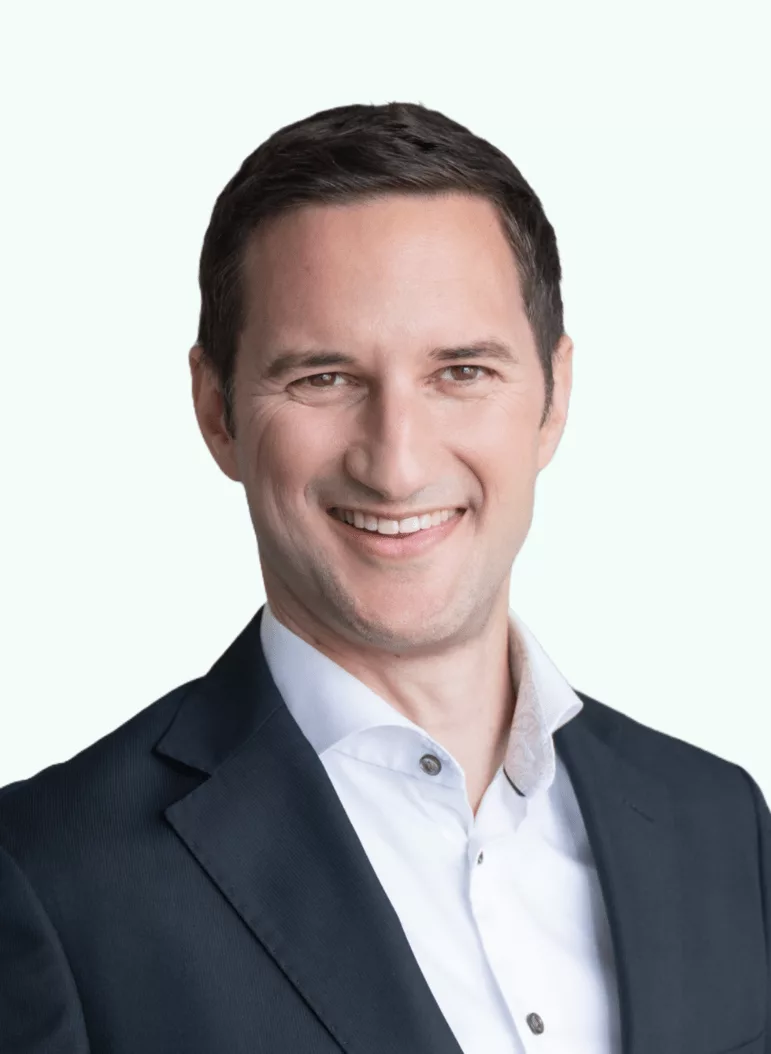
Pascal Stämpfli leverages over a decade of expertise in corporate finance and venture capital to scale and optimize businesses. A CFA charterholder with a Master's in Economics from the University of St. Gallen, Pascal specializes in market & company assessments, strategy, and business value creation. Having assessed more than 1,000 companies for financial and strategic investors provides him with a sophisticated understanding of investor rationale and capital allocation. As the Managing Director of Scalemetrics and Managing Partner at COREangels Big Data & AI Europe, Pascal operates at the intersection of financial discipline and technological innovation.