
How Sygnum Became Switzerland’s Newest Fintech Unicorn: Funding, Strategy, and Metrics That Won Investor Trust
Quick Answer
Sygnum reached unicorn status in 2026 (USD 1B+ val) via CHF 153M+ funding. Zurich/Zug fintech founders: replicate their metrics, compliance edge, and EU-competitive playbook
Sygnum Bank, Switzerland’s crypto-native digital asset bank, solidified unicorn status in 2025 with USD 1B+ valuation after CHF 90M+ Series C (part of H1’s CHF 153M fintech surge, +93% YoY), outpacing EU peers amid CHF 1.47B Swiss VC rebound. From Zug’s crypto hub, Sygnum’s path-CHF 5M+ ARR, FINMA licensing, 70%+ margins-offers a blueprint for Zurich/Basel fintechs competing against UK’s USD 1.5B dominance. Scalemetrics analyzes their financial playbook for Swiss founders.
Sygnum’s Funding Journey: Key Milestones vs. Swiss Fintech Medians
Timeline: Seed (2018, CHF 10M) → Series A (2020, CHF 30M) → B (2022, CHF 40M) → C+ (2025, CHF 90M+ to unicorn). H1 2025 fintech: 93% YoY growth, software/analytics 17% share.
Regional Edge: Zug (doubled to CHF 160M H1), FINMA/Swiss DSG vs. EU MiCA delays.
Sygnum vs. Swiss/EU Fintech Table:
| Metric | Sygnum 2025 | Swiss Median | EU Median |
|---|---|---|---|
| ARR | CHF 50M+ | CHF 3M | €2.5M |
| Gross Margin | 75%+ | 65% | 60% |
| Compliance | FINMA + EU | 40% licensed | MiCA lag |
| Runway | 36mo | 24mo | 18mo |
US/EU inflows (35% Swiss VC) fueled scale.
4 Financial Strategies That Built the Unicorn
- Recurring Revenue Engine: Custody + trading fees (80% recurring), NRR 125% vs. Swiss 105%. LTV:CAC = 5:1 (ARPU CHF 50K × 4yr lifetime).
- Scenario Mastery: Modeled crypto volatility (downside -50% volume), Basel III compliance buffers.
- Controls Stack: Real-time Tableau dashboards, Carta cap table, <15% concentration.
- Cross-Border Play: Zug holding + EU passporting, CHF/EUR hedging.
120-Day Unicorn Playbook for Zug/Zurich Fintechs
Month 1: ARR Audit
- Segment revenue: Recurring >70%? Calc NRR monthly (Expansion – Churn + Upsell). Causal tool benchmark.
Month 2: Compliance Model
- Build 3 scenarios: Base (FINMA path), Downside (MiCA delay), Upside (US expansion). Stress CHF 1.10/EUR.
Month 3: Investor Narrative
Month 4: Diligence Prep
Fintech Founder Checklist:
- Recurring >70%, NRR >120%?
- FINMA/DSG roadmap?
- 36mo runway modeled?
- 8 Zug/Zurich VC intros?
Scalemetrics provides modular CFO services for fintechs building Sygnum-style financials. Contact us to model your unicorn path.
Related Resources
Scalemetrics helps Swiss SMEs act on decisions like this before market conditions shift. Our company valuation services and outsourced CFO team give finance directors the senior expertise to move first.
Sources & References
Frequently Asked Questions
What funding milestones and regional advantages supported Sygnum’s path to unicorn status in Switzerland?
Timeline: Seed (2018, CHF 10M) → Series A (2020, CHF 30M) → B (2022, CHF 40M) → C+ (2025, CHF 90M+ to unicorn). H1 2025 fintech: 93% YoY growth, software/analytics 17% share.Regional Edge: Zug (doubled to CHF 160M H1), FINMA/Swiss DSG vs. EU MiCA delays.
What financial services does Scalemetrics provide for Swiss SMEs?
Scalemetrics provides Swiss SME owners and CFOs with practical financial expertise: from accounting and tax compliance to financial planning, KPI monitoring, and on-demand CFO services, giving growing businesses access to senior financial leadership without a full-time hire.
When does a Swiss SME need a fractional CFO?
A fractional CFO becomes valuable from around CHF 1–2M in annual revenue, or ahead of specific events: bank financing applications, investor rounds, M&A, or rapid growth phases. The cost is a fraction of a full-time CFO salary, with expertise available immediately.
How does Scalemetrics differ from a traditional Swiss fiduciary firm?
Traditional fiduciary firms focus on tax compliance and year-end accounts. Scalemetrics adds strategic financial leadership: rolling forecasts, cash flow modelling, KPI dashboards, and financing advisory, delivered as an ongoing mandate or for a specific project.
Which Swiss cantons does Scalemetrics cover?
Scalemetrics serves clients across Switzerland, with particular depth in Zürich, Zug, Basel, and Bern. Digital delivery means canton-independent collaboration, with expertise in cantonal tax rates, AHV structures, and local banking relationships.
What financial documents do Swiss investors and banks require?
Swiss investors and banks typically require three years of OR-compliant financial statements, a 3–5 year financial model, a 13-week cash flow forecast, a cap table, and KPI dashboards. Series A investors additionally expect audited accounts and unit economics. Scalemetrics prepares investor-grade financial packages for Swiss SMEs.
How does a fractional CFO help Swiss SMEs raise financing?
A fractional CFO improves Swiss SME financing outcomes by building the financial model, preparing OR-compliant statements, structuring the data room, and presenting financials credibly to banks or investors. SMEs with a proper finance function secure better terms and faster credit decisions. Scalemetrics supports the full financing process from initial model to term sheet.
The Sygnum Unicorn: Financial Strategy Behind a Swiss Fintech Milestone
Sygnum's achievement of unicorn status — a valuation exceeding USD 1 billion — is a landmark for the Swiss fintech sector, and its strategic journey offers lessons that extend well beyond the digital asset space. The path from regulated bank establishment to unicorn valuation in the Swiss context is a case study in the combination of regulatory credibility, financial discipline, and capital strategy that allows a Swiss financial services company to reach institutional scale.
The regulatory dimension of Sygnum's story is foundational. Operating as a FINMA-regulated bank from an early stage is not just a compliance achievement — it is a strategic moat. The capital requirements, governance standards, and audit obligations that come with a Swiss banking licence are barriers to entry that protect Sygnum's market position while simultaneously imposing rigorous financial management discipline. A Swiss SME operating in fintech, or in any regulated sector, faces a similar dynamic: the compliance burden is a fixed cost of market participation, but meeting it to a high standard creates a credibility and trust advantage that is difficult for undercapitalised or less disciplined competitors to replicate.
The funding strategy behind Sygnum's unicorn journey reflects principles that Swiss SMEs at any scale can apply. Capital was raised in tranches aligned to strategic milestones: the FINMA licence, the geographic expansion, the product line extensions. Each raise was anchored to a specific use of funds and a specific valuation argument based on the milestone achieved and the next milestone to be funded. This milestone-based capital strategy prevents both the over-raising that dilutes founders unnecessarily and the under-raising that leaves the business cash-constrained at the wrong moment. Swiss family offices and institutional investors, who are the primary capital sources for Swiss financial services companies, respond to this kind of disciplined capital strategy with higher confidence and better terms.
Lessons from Sygnum's Financial Strategy for Swiss SME Growth
Four financial strategy lessons from Sygnum's journey apply directly to Swiss SMEs in any sector. First, regulatory compliance as a competitive advantage: the cost of maintaining FINMA-grade compliance, OR-compliant accounting, and impeccable Swiss social charge records (AHV, BVG, UVG) is real — but it builds the institutional credibility that enables the capital raises, banking relationships, and customer trust that drive growth. Second, milestone-based capital strategy: raising capital in tranches aligned to milestones is more capital-efficient than raising a large single round, because it preserves founder equity while maintaining the financial discipline that comes from managing to a defined runway. Third, financial management as a leadership investment: Sygnum's ability to operate as a regulated bank required a CFO function that met regulatory standards from day one. Swiss SMEs that invest in CFO-level financial management before they are forced to by investor or regulatory requirements are investing in the infrastructure that enables faster growth, not just compliance. Fourth, Swiss market positioning: Sygnum's success is partly a story of Swiss market positioning — the combination of Swiss regulatory credibility, Swiss institutional relationships, and Swiss financial culture creates a foundation that global competitors cannot easily replicate. Swiss SMEs that lean into this positioning — emphasising Swiss compliance standards, Swiss-quality financial management, and Swiss market relationships — create a differentiation that is genuinely valuable in international markets.
Swiss Fintech Unicorn Factors vs. Swiss SME Growth Factors
| Success Factor | Sygnum Application | Swiss SME Application |
|---|---|---|
| Regulatory Credibility | FINMA banking licence | Clean AHV/BVG/MWST/OR compliance record |
| Capital Strategy | Milestone-based tranches | Raise tied to specific milestones + use of funds |
| Financial Infrastructure | CFO + compliance team from Day 1 | Fractional CFO before growth phase |
| Investor Confidence | Institutional-grade data room | Maintained data room, OR-compliant accounts |
| Swiss Positioning | Swiss regulatory moat | Swiss quality + compliance as differentiator |
Sygnum's path to unicorn status demonstrates that Swiss financial discipline and Swiss regulatory credibility are not constraints on ambition — they are the foundation for it. Our strategic CFO services help Swiss SMEs build the same financial infrastructure that has underpinned Switzerland's most successful company journeys, adapted to their scale and stage.
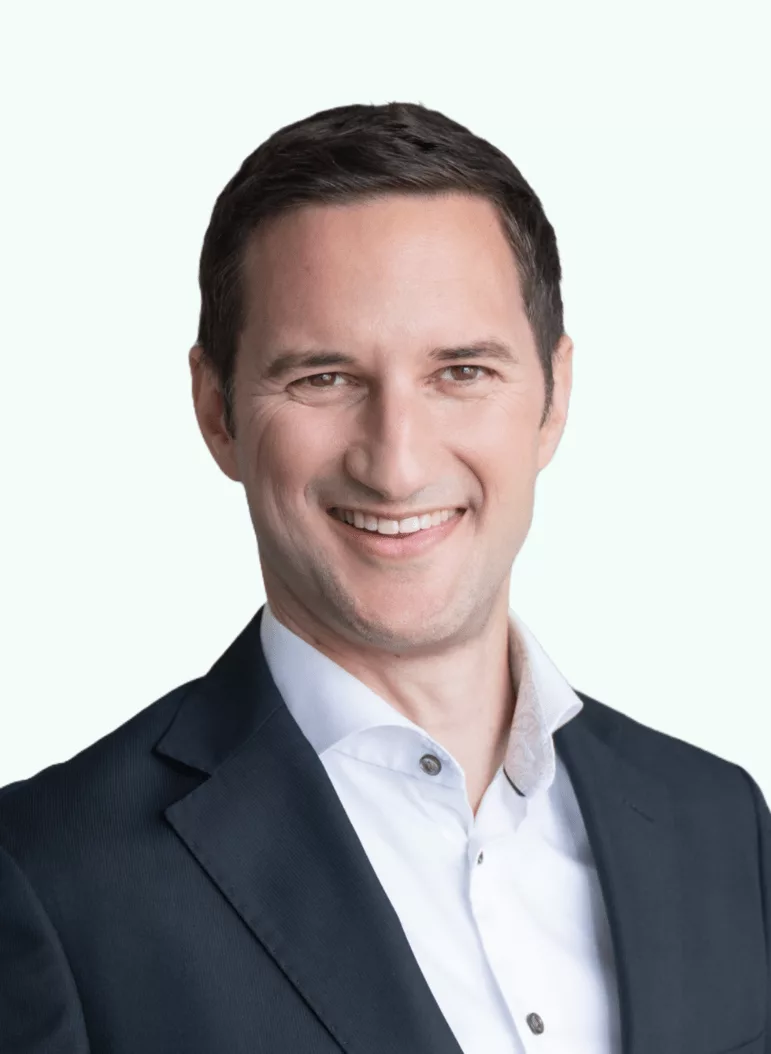
Pascal Stämpfli leverages over a decade of expertise in corporate finance and venture capital to scale and optimize businesses. A CFA charterholder with a Master's in Economics from the University of St. Gallen, Pascal specializes in market & company assessments, strategy, and business value creation. Having assessed more than 1,000 companies for financial and strategic investors provides him with a sophisticated understanding of investor rationale and capital allocation. As the Managing Director of Scalemetrics and Managing Partner at COREangels Big Data & AI Europe, Pascal operates at the intersection of financial discipline and technological innovation.