
7 Swiss Startup Success Stories to Watch in 2026 (And What Their Funding Journeys Teach Founders)
Quick Answer
Real Swiss startup success stories from 2026 – how founders scaled from CHF 1M to 20M, secured cantonal bank financing, and built lean finance functions without full-time CFO hires.
Switzerland's innovation economy is accelerating. Zürich, Lausanne, and Zug are producing ventures that attract European and global capital – in AI, biotech, fintech, and climate tech. The pattern across sectors is consistent: companies that combine strong IP with defensible financial models are raising larger rounds, faster.
Seven companies illustrate what that looks like in practice – and what founders building their own finance functions can take from each journey.
1. Unbound Potential (Climate Tech | Zürich)
Funding: €14M Pre-Seed Round (2024) Investors: Energy and deep-tech VCs across Europe
Clean energy storage is a genuinely hard problem. Unbound Potential is working on membraneless flow battery technology, an approach that could change how renewable energy moves through grids at scale. The €14M pre-seed is notable for its size at that stage.
What made it work: the team married rigorous IP with a clear commercialization argument. Investors are no longer funding research alone. They fund research that has a plausible path to revenue – and Unbound Potential made that case convincingly. Early-stage deep-tech ventures that map the distance between breakthrough and bill-paying customer raise faster.
2. DeepJudge (AI LegalTech | Lausanne)
Funding: CHF 10M Series A (2024) Investors: Wingman Ventures, Seedcamp, and strategic angels
DeepJudge builds AI search tools for legal teams, helping them surface internal knowledge without the usual manual trawl through document repositories. The Lausanne origin matters: Swiss legal and financial services are demanding environments, and products that survive them tend to travel well.
Academic spin-offs from institutions like EPFL succeed when the founders resist the temptation to stay in research mode. The CHF 10M Series A came because DeepJudge moved early to industry partnerships and turned a research capability into a product with measurable outcomes for paying clients.
3. Planted Foods (FoodTech | Zürich)
Funding: CHF 70M Growth Round (2024) Investors: L Catterton, Vorwerk Ventures, and others
CHF 70M at growth stage is not a bet on a concept. It is a bet on a unit-economics story. Planted Foods produces plant-based meat at scale, and its production model gave investors confidence that margins would hold as volume grew.
In consumer sectors, the narrative alone does not close growth rounds. Operational efficiency does. Planted Foods earned that capital by running a tight operation with numbers that held up to scrutiny – brand trust reinforced by financial fundamentals, not despite them.
4. ANYbotics (Robotics | Zürich)
Funding: $50M Series B (2023) Investors: Walden Catalyst, NGP Capital, and Swisscom Ventures
ANYbotics is an ETH Zürich spin-off building autonomous inspection robots for industrial facilities. Energy and manufacturing clients in Europe and beyond are running them in live operations. The $50M Series B followed a track record of deployed hardware – not prototypes.
The takeaway is straightforward. Swiss deep-tech ventures with ETH or EPFL roots carry credibility, but credibility does not close rounds. International proof points and paying industrial partners do. Investors want to see the robot doing its job, not sitting in a lab.
5. Yokoy (Fintech | Zürich)
Funding: $80M Series B (2023) Investors: Sequoia Capital, Balderton Capital
Yokoy has built an AI-driven spend management platform for corporate finance teams. Sequoia and Balderton do not write $80M cheques for unproven software. They write them when the underlying metrics – retention, expansion revenue, compliance track record – are solid.
For Swiss fintech SMEs watching this space: automation, FINMA-compatible compliance, and scale potential are what the top-tier investors are pricing. Speed matters too, but not at the expense of precision. Yokoy's growth came from getting both right simultaneously.
6. Cutiss AG (Biotech | Zürich)
Funding: CHF 25M Series C (2024) Focus: Personalized skin grafts for burn victims
Biotech timelines are long, regulatory pathways are expensive, and clinical failure is always a real risk. Cutiss raised a CHF 25M Series C anyway, because the team communicates milestones with the same rigour it applies to tissue engineering.
Investors in long-cycle biotech back founders who can manage uncertainty on paper as well as in the lab. Clear milestone maps, realistic development timelines, and regulatory strategy that anticipates Swiss and EU requirements: these are not soft skills, they are capital-raising requirements.
7. Nexoya (MarTech | Zürich)
Funding: CHF 8M Series A (2024) Investors: BlackSheep Ventures, Swisscom Ventures
Nexoya uses AI to optimize digital marketing campaigns, turning complex ad performance data into ROI figures that non-technical decision-makers can act on. The CHF 8M Series A is a B2B SaaS story: recurring revenue, measurable customer outcomes, and unit economics that improve with scale.
Swiss B2B SaaS companies that master net revenue retention and can show expanding customer value over time have a clear advantage in competitive rounds. Nexoya built that case before approaching investors, not during the raise.
What These Journeys Teach About Fundraising in 2026
Three themes cut across all seven funding stories:
1. Bigger rounds, fewer deals – Investors are concentrating capital on proven teams with traction and defensible technology, not spreading it across early bets. 2. AI and deep-tech dominate – Data-driven ventures with protected IP are leading most Series A and later rounds in Switzerland this year. 3. Operational excellence matters – Finance functions that produce investor-ready reporting are a fundraising differentiator, not an administrative overhead.
How Scalemetrics Helps Founders Scale Confidently
The Scalemetrics team has supported Swiss SMEs through the full financing journey: building the financial model investors will stress-test, preparing OR-compliant statements, structuring the data room, and ensuring the numbers support the story founders want to tell.
From first model to term sheet, the team provides SME financing services and an outsourced CFO function that gives finance directors the senior expertise to move with confidence.
The finance groundwork behind every funding story
Each of these journeys rests on the same base: reliable numbers, a model investors could stress-test, and reporting that kept pace with growth. Founders who build that early raise faster and defend valuation better. Scalemetrics provides the financial model, controlling, and due-diligence readiness Swiss SMEs need before they raise, advising on financing rather than providing it.
Related Resources
Scalemetrics helps Swiss SMEs act on decisions like this before market conditions shift. Our SME financing services and outsourced CFO team give finance directors the senior expertise to move first.
Frequently Asked Questions
What should Swiss SMEs know about 1. Unbound Potential (Climate Tech | Zürich)?
Unbound Potential raised a €14M Pre-Seed Round in 2024 from energy and deep-tech VCs across Europe. The raise was backed by proprietary membraneless flow battery technology and a credible commercialization path – a combination that early-stage investors in climate tech increasingly require before committing capital at this level.
What should Swiss SMEs know about 2. DeepJudge (AI LegalTech | Lausanne)?
DeepJudge closed a CHF 10M Series A in 2024 with Wingman Ventures, Seedcamp, and strategic angels. The Lausanne-based company built AI-powered search tools for legal teams and earned the round by translating academic research into a product with measurable outcomes for paying clients in a demanding Swiss regulatory environment.
What should Swiss SMEs know about 3. Planted Foods (FoodTech | Zürich)?
Planted Foods raised a CHF 70M Growth Round in 2024 from L Catterton, Vorwerk Ventures, and others. At growth stage, that level of capital follows a proven unit-economics story: scalable production, defensible margins, and a brand backed by financial performance rather than narrative alone.
What should Swiss SMEs know about 4. ANYbotics (Robotics | Zürich)?
ANYbotics, an ETH Zürich spin-off, raised $50M in a 2023 Series B from Walden Catalyst, NGP Capital, and Swisscom Ventures. The round came after the company demonstrated deployed hardware in live industrial operations internationally – proof that Swiss deep-tech credibility converts when combined with paying customers.
What should Swiss SMEs know about 5. Yokoy (Fintech | Zürich)?
Yokoy raised $80M in a 2023 Series B from Sequoia Capital and Balderton Capital. The AI-driven spend management platform earned that valuation through strong financial metrics and enterprise adoption – specifically automation capability, compliance with applicable regulatory requirements, and scale potential that justified top-tier investor confidence.
Sources & References
What Swiss Startup Success Stories Reveal About Financial Strategy
The Swiss startup success stories of 2026 — the companies that have broken through to sustainable growth, significant funding, or commercial milestones — share financial characteristics that are as instructive as their product or market stories. Analysing what their funding reveals about financial strategy, capital discipline, and the conditions that allowed them to attract investor confidence illuminates the path that other Swiss companies can follow.
The common financial thread across the Swiss startup success cohort of 2026 is not sector-specific — it cuts across life sciences, deep tech, fintech, and enterprise software. It is the combination of credible unit economics, clean Swiss compliance infrastructure, and CFO-level financial management that was in place before the fundraising process began rather than assembled in response to investor requests. Swiss investors in 2026 have more options than in previous cycles — the funding rebound that brought CHF 1.47 billion into Swiss companies in H1 has given them the opportunity to be selective. They are selecting companies that demonstrate financial management maturity as a proxy for execution capability.
The funding patterns in the 2026 cohort also reveal something about the optimal capital strategy for Swiss startups: the most successful raises in terms of terms, valuation, and investor quality were not the biggest raises relative to the stage — they were the most precisely sized ones. Companies that raised exactly what they needed to reach the next valuation-relevant milestone, with a clear use-of-funds narrative and a cash flow model that showed how the capital would be deployed and when it would run out, consistently achieved better terms than those that raised on the basis of ambition rather than precision. Swiss investors respond to precision — it is a cultural and professional expectation — and founders who internalise this are at a structural advantage in the Swiss capital market.
Financial Patterns in the 2026 Swiss Startup Success Cohort
Three financial patterns recur in the 2026 success stories. The first is the fractional CFO as a scaling accelerant: a significant proportion of the Swiss companies that raised successfully in 2026 had brought in a fractional or part-time CFO 12–18 months before their fundraising process, specifically to build the financial infrastructure that would make them investor-ready. The cost of this investment — typically CHF 60,000–120,000 per year for a high-quality fractional CFO — was recovered multiple times over in better investor terms, shorter due diligence timelines, and avoided compliance costs.
The second pattern is Swiss compliance precision as a competitive advantage: in due diligence processes, Swiss startups that had never had an AHV calculation error, never filed a late MWST return, and maintained OR-compliant accounts from inception were processed faster and with less legal friction than those where compliance remediation was required before close. The cost of compliance precision is ongoing and material — AHV employer contributions (5.3%), BVG pension obligations, MWST at the correct rates (8.1%, 3.8%, 2.6%), cantonal tax filings — but its value in a fundraising process is disproportionate. The third pattern is scenario modelling sophistication: the 2026 success cohort presented financial models with genuine scenario analysis — not just a base case and an optimistic case, but a stress case that showed the business surviving a 30% revenue miss and a clear set of operational levers that would be pulled to navigate it. This stress-case transparency, counterintuitively, increased investor confidence rather than reducing it.
Swiss Startup Financial Success Factors: 2026 Cohort Analysis
| Success Factor | Present in Top Performers | Investment Impact |
|---|---|---|
| Fractional CFO in Place | 12+ months pre-raise | Shorter due diligence, better terms |
| Clean Compliance Record | AHV/BVG/MWST zero errors | Faster close, no remediation cost |
| Stress-Case Financial Model | Presented proactively | Increased investor confidence |
| Milestone-Sized Round | Precisely calibrated to milestones | Higher valuation, lower dilution |
| Swiss-Benchmarked Valuation | DACH comparables, not US benchmarks | Credibility with Swiss investors |
The 2026 Swiss startup success stories are a blueprint for what financial preparation looks like in practice. Our investor readiness and strategic CFO services help Swiss companies replicate the financial foundation that has made this year's success cohort competitive for institutional capital.
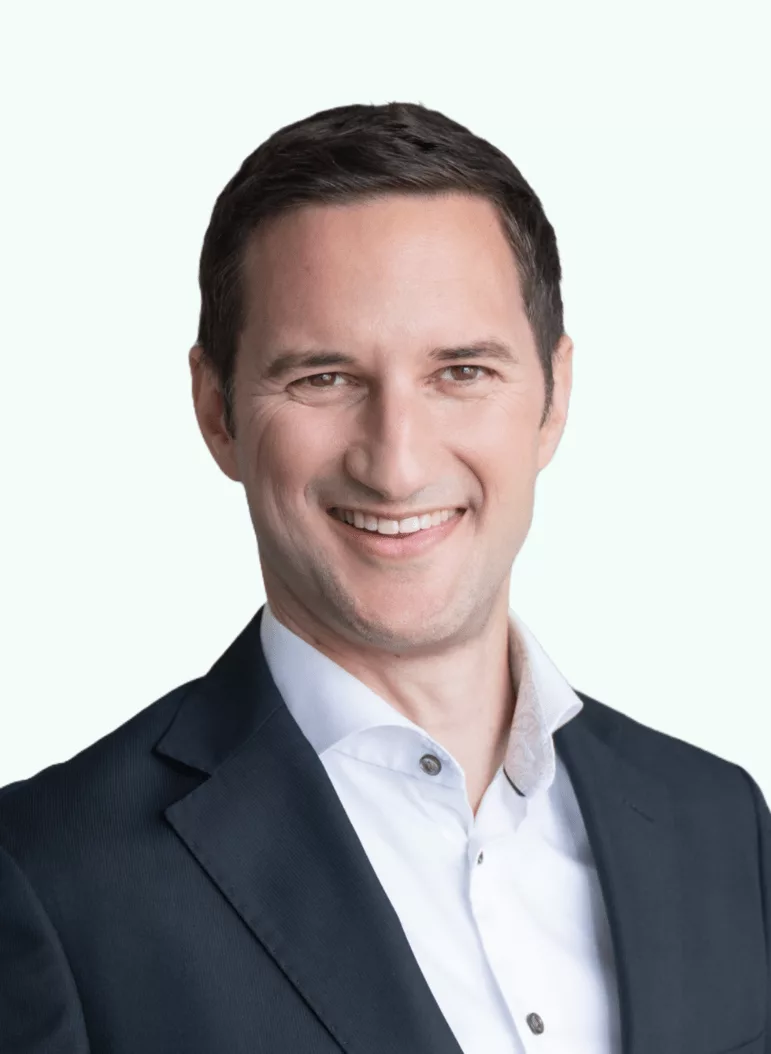
Pascal Stämpfli leverages over a decade of expertise in corporate finance and venture capital to scale and optimize businesses. A CFA charterholder with a Master's in Economics from the University of St. Gallen, Pascal specializes in market & company assessments, strategy, and business value creation. Having assessed more than 1,000 companies for financial and strategic investors provides him with a sophisticated understanding of investor rationale and capital allocation. As the Managing Director of Scalemetrics and Managing Partner at COREangels Big Data & AI Europe, Pascal operates at the intersection of financial discipline and technological innovation.