
Zürich vs Basel vs Zug: Where to Incorporate Your Swiss SME (Tax & Legal Compared 2026)
Quick Answer
Compare Zürich, Basel and Zug corporate tax rates for 2026. CFO-level framework to choose the right Swiss canton for your SME – tax rates, talent, VC access compared.
More than 60% of Swiss venture capital flows into companies headquartered in Zürich, Zug, or Basel. That concentration is not a coincidence – it reflects a deliberate choice by founders and CFOs who understand that canton selection is one of the highest-leverage decisions a Swiss company makes. The choice affects your effective corporate tax rate, your access to talent, your proximity to investors, and your administrative overhead for years to come.
Yet most Swiss founders approach incorporation the wrong way: they pick the canton where they happen to live, or where their first client is based, rather than where their business model will thrive financially. This guide gives you the CFO-level framework to make that decision correctly in 2026 – with current tax rates, OECD minimum tax implications, and specific recommendations by business type.
Corporate Tax Switzerland: What Every Swiss SME Needs to Know for 2026
Switzerland’s competitive corporate tax Switzerland environment – effective rates ranging from 11.9% in Zug to 19.7% in Geneva at the combined federal, cantonal, and municipal level – is one of the country’s key competitive advantages. But for Swiss SMEs, the advantage only materialises if the tax position is actively managed. The introduction of the OECD Global Minimum Tax (Pillar Two) from 2024, applying a 15% minimum effective rate for groups with consolidated revenue above EUR 750 million, has changed the planning landscape for larger Swiss holding structures. More relevant for most Swiss SMEs is the Qualified Domestic Minimum Top-Up Tax (QDMTT), which affects Swiss subsidiaries of multinational groups.
For typical Swiss SMEs below the Pillar Two threshold, the highest-value corporate tax Switzerland planning levers remain: choosing the right cantonal domicile, optimising the timing and form of profit distributions (dividend vs. salary), maximising the R&D super-deduction (150% of qualifying R&D costs under cantonal law in many cantons), and managing hidden equity contributions and distributions that trigger withholding tax exposure. Scalemetrics prepares corporate tax returns for Swiss SMEs across all cantons, coordinates with cantonal tax authorities on advance rulings, and flags planning opportunities that generic accounting firms often miss because they lack the CFO-level strategic overlay to connect the tax position to the broader financial plan.
Why Your Incorporation Canton Matters More Than You Think
Switzerland’s federal structure means corporate taxation operates at three levels: federal (8.5% on profit after tax, effectively ~7.83% pre-tax), cantonal, and communal. The combined effective rate varies dramatically by location – from approximately 11.9% in Zug to 19.7% in Geneva for smaller companies.
For 2026, the OECD Pillar Two global minimum tax introduces an important caveat: companies with global revenues exceeding CHF 900 million (EUR 750 million) are subject to a minimum effective rate of 15%. For the vast majority of Swiss SMEs operating below this threshold, cantonal tax differentials remain fully exploitable. The OECD floor does not affect you unless you are part of a large multinational group.
Beyond tax rates, canton selection also determines:
- AHV and payroll costs – communal differences in social contribution rates affect total employment cost
- Commercial register fees – GmbH incorporation costs vary from approximately CHF 600 in Zug to CHF 1,200+ in Geneva
- Cantonal tax authority responsiveness – ruling turnaround times differ significantly (Zug: days; larger cantons: weeks)
- Real estate and office costs – directly tied to canton and commune
Zürich: Switzerland’s Financial and Startup Capital
Zürich Canton’s combined effective corporate tax rate for SMEs sits at approximately 19.7% for the city of Zürich and closer to 14–16% for outer communes such as Küsnacht or Zollikon. For companies incorporated in the city itself, the rate is among the higher cantonal rates – but this premium buys access to Switzerland’s deepest talent pool and most active investment ecosystem.
The canton hosts over 300 fintech companies, ETH Zürich (ranked #7 globally for engineering), and the Swiss headquarters of UBS, Credit Suisse (now UBS-absorbed), and most major international banks. For a company selling financial services, B2B SaaS, or professional advisory services to Swiss corporates, proximity to decision-makers in Zürich’s Paradeplatz and Sihlcity districts is commercially more valuable than a 4–5 percentage point tax saving in Zug.
Zürich’s SIX Swiss Exchange also provides a realistic IPO pathway for scaling SMEs – something neither Basel nor Zug can match. For fractional CFO and finance advisory firms like Scalemetrics, Zürich’s concentration of SMEs in professional services, technology, and asset management creates the densest pipeline of potential clients in Switzerland.
- Effective corporate tax (city of Zürich): ~19.7%
- Effective corporate tax (outer communes): 14–16%
- Best for: Fintech, SaaS, professional services, asset management, consulting
- Talent: Deepest pool in Switzerland – ETH, UZH, HSG graduates
- VC access: Highest – Zürich hosts 70%+ of Swiss VC deal flow
- Key risk: Highest staff costs and real estate in Switzerland
Basel: The Underrated Option for Life Sciences and International Trade
Basel-Stadt’s effective corporate tax rate of approximately 13.0–13.5% makes it one of the most competitive cantons in Switzerland – and one of the most underappreciated by founders outside the life sciences sector. For 2026, Basel-Stadt has maintained stable rates following the OECD minimum tax implementation, which had minimal impact on Swiss-domiciled SMEs below the revenue threshold.
The city’s structural advantage is its position at the intersection of Switzerland, Germany, and France – the so-called Dreiländereck. This tri-border location means Basel-headquartered companies can access EU markets with minimal friction, recruit across three countries without relocation packages, and position themselves as genuinely international from day one. For import/export businesses, logistics companies, and firms with significant EU customer bases, this geographic advantage is worth more than any cantonal tax rate differential.
Basel’s economy is anchored by Roche (global HQ), Novartis (global HQ), and a dense cluster of medtech, biotech, and pharmaceutical companies. The University of Basel’s life sciences faculty and the FMI (Friedrich Miescher Institute) create a continuous pipeline of specialist talent. For SMEs operating in healthcare, medtech, diagnostics, or specialty chemicals, Basel provides access to both talent and procurement networks that no other Swiss canton can replicate.
- Effective corporate tax: ~13.0–13.5%
- Best for: Life sciences, medtech, biotech, logistics, import/export, EU-facing businesses
- Unique advantage: Tri-border access – Switzerland, Germany, France talent and markets
- VC access: Strong in life sciences; limited outside that sector
- Key risk: Smaller professional services ecosystem than Zürich
Zug: The Crypto Valley and Tax Optimisation Hub
Zug’s reputation as Switzerland’s lowest-tax canton is historically accurate – and for SMEs below the OECD threshold, it remains so in 2026. The canton’s effective corporate tax rate for small companies sits at approximately 11.9%, the lowest of any major Swiss canton, with the commune of Baar offering rates as low as 11.5%.
For large multinationals with revenues exceeding CHF 900 million, OECD Pillar Two applies a 15% minimum through Switzerland’s supplementary domestic top-up tax (Ergänzungssteuer), which Zug introduced effective January 1, 2024. This means Zug’s tax advantage for large MNCs has been partially compressed. For an SME generating CHF 5M–50M in revenue, however, Pillar Two is entirely irrelevant – you benefit from the full 11.9% rate.
Zug is the global centre of the crypto and Web3 industry. The canton’s progressive regulatory framework, established from 2016 onward with the Zug City UID pilot and the FINMA sandbox regime, has attracted over 1,000 blockchain and crypto companies, including the Ethereum Foundation, Cardano Foundation, and Dfinity. For any company dealing in digital assets, tokenised securities, or decentralised finance, Zug is the only serious option – Swiss FINMA guidance applies nationally, but Zug’s communal administration has the deepest familiarity with crypto-specific structures.
- Effective corporate tax: ~11.9% (Zug city), ~11.5% (Baar commune)
- OECD Pillar Two impact: None for SMEs under CHF 900M revenue
- Best for: Crypto/Web3, holding structures, international operations, treasury companies
- Unique advantage: Crypto Valley ecosystem, fast tax rulings, progressive administration
- Key risk: Limited talent pool – most staff must commute from Zürich (30 min by train)
Side-by-Side Comparison
| Canton | Effective Corp Tax (2026) | Best For | VC/Talent Access | Cost of Living (Staff) | OECD Pillar Two Impact on SMEs |
|---|---|---|---|---|---|
| Zürich | 19.7% (city) / 14–16% (outer communes) | Fintech, SaaS, professional services | Highest in Switzerland | Very high | None below CHF 900M |
| Basel | ~13.0–13.5% | Life sciences, logistics, EU-facing | Strong in life sciences | Moderate | None below CHF 900M |
| Zug | ~11.9% (city) / 11.5% (Baar) | Crypto/Web3, holding structures | Limited – Zürich dependent | Moderate–High | None below CHF 900M |
The CFO’s Verdict: Which Canton Should You Choose?
The right answer depends on your business model, growth stage, and talent requirements – not on which canton has the lowest headline tax rate. Here is the decision framework Scalemetrics applies when advising clients on incorporation:
- Revenue under CHF 500K, professional services: Zürich outer communes or Zug. Tax difference is minimal at low revenue; prioritise where you can find clients.
- Raising VC or planning institutional growth: Zürich. Investor proximity and deal flow density outweigh a 4–7% tax saving at this stage.
- Life sciences, medtech, pharma: Basel, without exception. The ecosystem advantage is structural and irreplaceable.
- Crypto, Web3, digital assets: Zug. Regulatory familiarity and the Crypto Valley network create compounding advantages unavailable elsewhere.
- Holding structure or international treasury: Zug. The combination of lowest rates and fast tax rulings makes it optimal for intra-group finance.
- EU-facing operations, logistics, import/export: Basel. Tri-border access is a genuine operational advantage worth more than the Zug tax differential.
Note that relocation between cantons is legally straightforward for a GmbH – it requires a Handelsregister amendment and notarial act, typically costing CHF 1,500–3,000 and completing within 4–6 weeks. Companies that start in Zürich for client access and later optimise by relocating to Zug’s outer communes follow a well-established playbook.
Practical Next Steps for Incorporating in Switzerland in 2026
For most Swiss SMEs, the optimal legal form is the GmbH (Gesellschaft mit beschränkter Haftung), requiring a minimum share capital of CHF 20,000 – compared to CHF 100,000 for an AG. The GmbH is faster to incorporate (typically 2–3 weeks from notarial deed to Handelsregister registration), carries lower compliance overhead, and is fully eligible for all cantonal tax structures.
Key steps for 2026 incorporation:
- Step 1 – Canton and commune selection: Use the tax calculator at the Eidgenössische Steuerverwaltung (ESTV) to compare effective rates across communes within your target canton.
- Step 2 – Draft articles of association: Engage a Swiss notary (Notar) in the target canton. Budget CHF 1,000–2,500 for notarial fees.
- Step 3 – Open a capital deposit account: Any Swiss bank will open a Kapitaleinzahlungskonto for the CHF 20,000 minimum capital. UBS, ZKB (Zürcher Kantonalbank), and PostFinance are the most common choices.
- Step 4 – Register with the Handelsregister: File the incorporation documents with the cantonal commercial registry. Online submission is available in most cantons.
- Step 5 – Register with the cantonal AHV Ausgleichskasse: Mandatory within 30 days of first payroll. Obtain a UID number via uid.admin.ch.
- Step 6 – Consider an advance tax ruling: For complex structures, request a binding ruling (Steuerruling) from the cantonal Steueramt before incorporation. Zug and Schwyz are known for fast turnaround.
Scalemetrics unterstützt Schweizer KMU bei der Wahl der optimalen Unternehmensstruktur und des richtigen Kantons – damit Ihre finanzielle Basis von Anfang an stimmt. Kontaktieren Sie uns für eine kostenlose Erstberatung.
Scalemetrics helps Swiss SMEs act on decisions like this before market conditions shift. Our corporate tax and VAT compliance services and outsourced CFO team give finance directors the senior expertise to move first.
Frequently Asked Questions
Why Your Incorporation Canton Matters More Than You Think?
Switzerland's federal structure means corporate taxation operates at three levels: federal (8.5% on profit after tax, effectively ~7.83% pre-tax), cantonal, and communal. The combined effective rate varies dramatically by location – from approximately 11.9% in Zug to 19.7% in Geneva for smaller companies.
What should Swiss SMEs know about zürich: Switzerland's Financial and Startup Capital?
Zürich Canton's combined effective corporate tax rate for SMEs sits at approximately 19.7% for the city of Zürich and closer to 14–16% for outer communes such as Küsnacht or Zollikon. For companies incorporated in the city itself, the rate is among the higher cantonal rates – but this premium buys access to Switzerland's deepest talent pool and most active investment ecosystem.
What should Swiss SMEs know about basel: The Underrated Option for Life Sciences and International Trade?
Basel-Stadt's effective corporate tax rate of approximately 13.0–13.5% makes it one of the most competitive cantons in Switzerland – and one of the most underappreciated by founders outside the life sciences sector. For 2026, Basel-Stadt has maintained stable rates following the OECD minimum tax implementation, which had minimal impact on Swiss-domiciled SMEs below the revenue threshold.
What should Swiss SMEs know about zug: The Crypto Valley and Tax Optimisation Hub?
Zug's reputation as Switzerland's lowest-tax canton is historically accurate – and for SMEs below the OECD threshold, it remains so in 2026. The canton's effective corporate tax rate for small companies sits at approximately 11.9%, the lowest of any major Swiss canton, with the commune of Baar offering rates as low as 11.5%.
Side-by-Side Comparison Canton Effective Corp Tax (2026) Best For VC/Talent Access Cost of Living (Staff) OECD Pillar Two Impact on SMEs Zürich 19.7% (city) / 14–16% (outer communes) Fintech, SaaS, professional services Highest in Switzerland Very high None below CHF 900M Basel ~13.0–13.5% Life sciences, logistics, EU-facing Strong in life sciences Moderate None below CHF 900M Zug ~11.9% (city) / 11.5% (Baar) Crypto/Web3, holding structures Limited: Zürich dependent Moderate–High None below CHF 900M The CFO's Verdict: Which Canton Should You Choose?
The right answer depends on your business model, growth stage, and talent requirements – not on which canton has the lowest headline tax rate. Here is the decision framework Scalemetrics applies when advising clients on incorporation:
Sources & References
The Three Cities Compared: Tax, Legal, and Operational Dimensions
The choice of Swiss city for company incorporation is one of the most consequential decisions a founder makes — and one of the most frequently made without adequate quantitative analysis. Zürich, Basel, and Zug are the three cities that dominate the incorporation conversation for Swiss and international entrepreneurs, each offering distinct advantages and trade-offs across tax rates, labour market access, regulatory environment, and ecosystem quality. What follows is a structured comparison across the dimensions that matter most to a Swiss SME founder making this decision in 2026.
Zug: The Tax Efficiency Leader. Zug's combined effective corporate tax rate of approximately 11.9% remains the lowest of any major Swiss business centre. For a company generating CHF 2 million in taxable profit, the annual tax saving versus Zürich (at approximately 19.7%) is approximately CHF 156,000 — a material figure that compounds over years. Zug also has a well-developed fiduciary and legal services ecosystem accustomed to supporting holding companies, IP-heavy businesses, and international structures. Its labour market is smaller than Zürich's but benefits from proximity to the Zürich metropolitan area.
Basel: The Life Sciences Hub. Basel's effective combined corporate tax rate of approximately 13.0% sits between Zug and Zürich in cost terms, with the significant additional advantage of proximity to the Swiss pharmaceutical and biotech cluster centred on Roche, Novartis, and their extensive supplier and spinoff ecosystems. For life science, medtech, or chemistry businesses, Basel offers unmatched access to potential corporate partners, clinical trial infrastructure, and specialist talent. The city also offers strong cross-border access to Germany and France, making it logistically attractive for businesses with operations in all three jurisdictions.
Zürich: The Financial and Tech Capital. Zürich carries the highest effective corporate tax rate of the three cities (approximately 19.7%), but remains the preferred choice for businesses where talent density, investor access, and ecosystem quality outweigh the tax cost differential. Switzerland's primary VC ecosystem, almost all major Swiss bank headquarters, and the largest concentration of technology talent (fed by ETH Zürich) are located in Zürich. For SaaS, fintech, and financial services businesses, Zürich's network advantages typically justify the higher tax rate up to a certain scale.
Practical Legal Considerations for Swiss Incorporation
The legal form choice between AG (Aktiengesellschaft, minimum share capital CHF 100,000) and GmbH (Gesellschaft mit beschränkter Haftung, minimum share capital CHF 20,000) has several practical implications that extend beyond the capital requirement. AGs are typically preferred for businesses planning to bring in external investors (convertible instruments and share option schemes are more easily structured in an AG), whilst GmbHs are simpler and cheaper to administer for early-stage and owner-managed businesses.
For foreign founders incorporating in Switzerland, the requirement that at least one director resident in Switzerland be authorised to represent the company is a practical consideration that requires advance planning. Swiss fiduciaries and lawyers offer registered director services, but the costs (CHF 2,000–8,000 per year) and the fiduciary's own risk assessment of the business must be factored into the incorporation plan.
Zürich vs. Basel vs. Zug: Key Comparison for Swiss SMEs 2026
| Criterion | Zürich | Basel | Zug |
|---|---|---|---|
| Effective corp. tax rate | ~19.7% | ~13.0% | ~11.9% |
| Tax saving vs. Zürich (CHF 2M profit) | — | ~CHF 134,000/year | ~CHF 156,000/year |
| Talent pool depth | Excellent | Strong (life sciences) | Limited (proximity to ZH) |
| VC / investor access | Excellent | Good | Good |
| Office rental (sq m, Grade A) | CHF 550–800/m²/yr | CHF 350–550/m²/yr | CHF 300–500/m²/yr |
| Best for | Tech, fintech, financial services | Life sciences, medtech, tri-country ops | Holding structures, IP companies, tax-sensitive SMEs |
The optimal incorporation decision depends on your business model, growth plan, talent requirements, and investor expectations. A strategic CFO engagement includes a jurisdiction selection analysis that models the tax, legal, and operational costs of each option against your specific business case — ensuring the most consequential structural decision you make is supported by numbers, not assumptions.
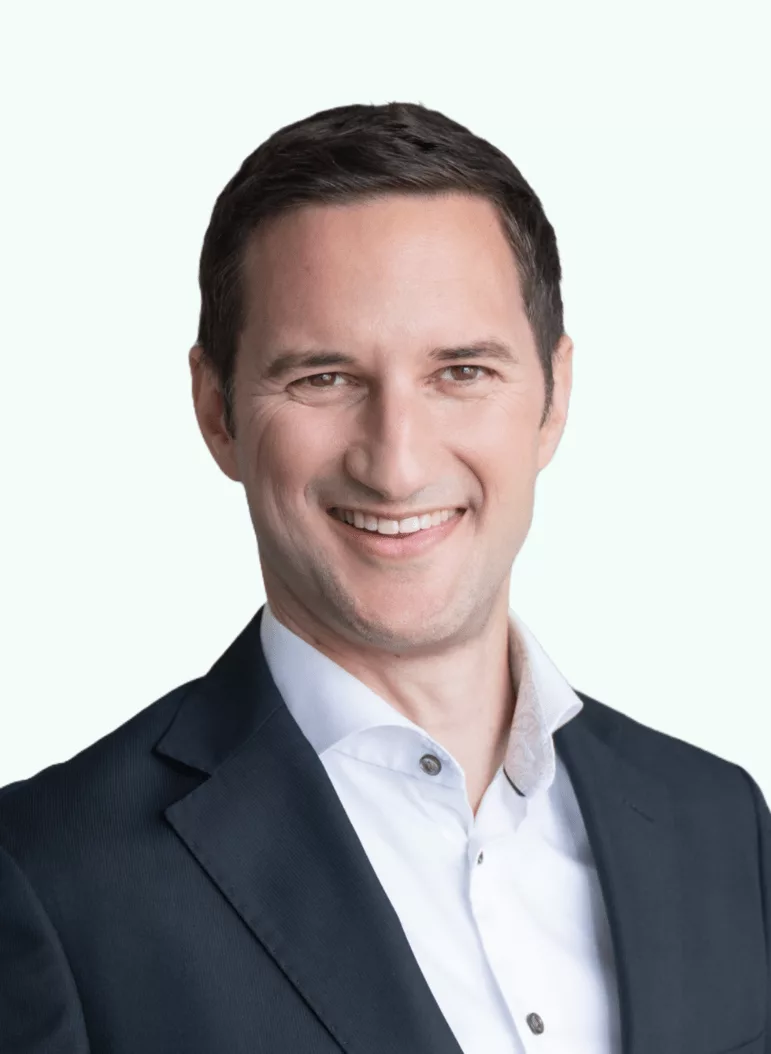
Pascal Stämpfli leverages over a decade of expertise in corporate finance and venture capital to scale and optimize businesses. A CFA charterholder with a Master's in Economics from the University of St. Gallen, Pascal specializes in market & company assessments, strategy, and business value creation. Having assessed more than 1,000 companies for financial and strategic investors provides him with a sophisticated understanding of investor rationale and capital allocation. As the Managing Director of Scalemetrics and Managing Partner at COREangels Big Data & AI Europe, Pascal operates at the intersection of financial discipline and technological innovation.