
Cloud-based documentation for accounting-why & how?
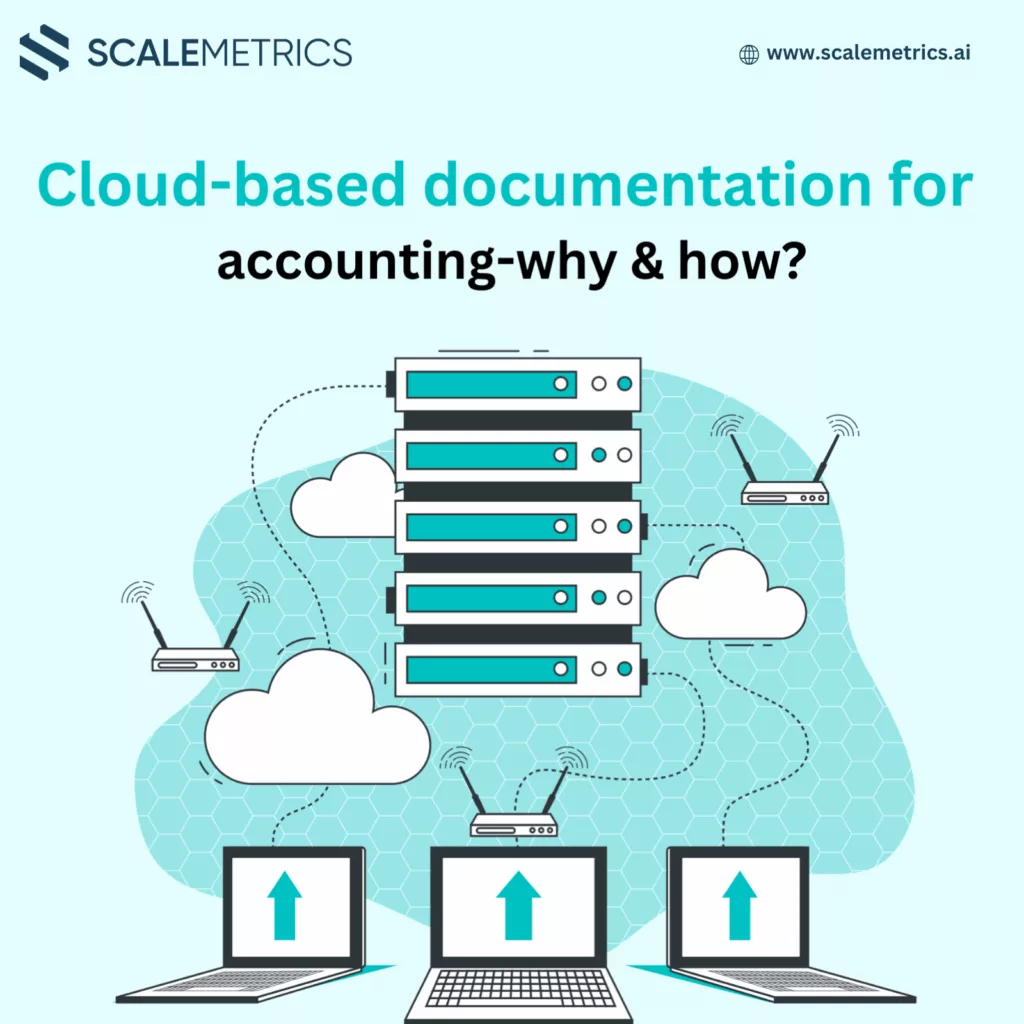
Quick Answer
Learn why cloud-based documentation is becoming the standard in modern accounting practices. Boost efficiency and stay compliant as a Swiss SME. See full guide.
Importance of Document Integrity
Document integrity is critical for maintaining accurate and reliable financial records. Ensuring that documents are tamper-proof and properly tracked helps in:- Preventing Fraud: By maintaining a clear audit trail, organizations can detect and prevent unauthorized alterations.
- Compliance: Adhering to regulatory requirements necessitates maintaining unaltered and verifiable records.
- Trust and Transparency: Reliable records build trust with stakeholders, including investors, auditors, and regulatory bodies.
Cloud-Based Documentation: Why?
The efficacy of your organization’s information governance heavily relies on the medium of information storage. Cloud-based storage solutions, particularly those offering multi-tenant data management, are becoming increasingly popular among small business owners. Here’s why:Benefits of Cloud-Based Documentation
- Ease of Access: Cloud-based systems enable authorized users to access documents from anywhere, at any time, facilitating remote work and collaboration.
- Information Security: These systems often come with robust security features, including encryption, multi-factor authentication, and regular security audits.
- Data Isolation: Ensures that your data remains isolated and protected from other tenants in the same cloud environment.
- Scalability: Cloud storage can easily scale with your business, accommodating growing volumes of data without the need for additional hardware.
- Cost-Effective: Reduces the need for physical storage and IT infrastructure, leading to cost savings.
- Disaster Recovery: Cloud solutions typically offer comprehensive backup and disaster recovery options, ensuring data integrity even in the event of hardware failure or other disasters.
Implementing Cloud-Based Documentation
Steps to Implement Cloud-Based Documentation
- Choose the Right Provider: Select a reputable cloud service provider that offers the features and security your business needs.
- Define Access Protocols: Establish clear protocols for who can access, edit, and view documents. Use role-based access controls to enforce these protocols.
- Audit Trails: Ensure the cloud solution provides comprehensive audit trails to track document changes and user activities.
- Compliance: Make sure the solution complies with relevant regulations such as the Swiss Code of Obligation, the Swiss Law on Accounting and Financial Reporting, Swiss VAT Law, and Customs Law.
- Training: Train your staff on using the cloud system effectively and securely.
- Regular Audits: Conduct regular audits to ensure compliance and identify any security vulnerabilities.
Compliance Considerations
While creating and maintaining electronic documents, it is crucial to comply with the laws governing these documents. Key regulations in Switzerland include:- Swiss Code of Obligation: Governs commercial transactions and obligations.
- Swiss Law on Accounting and Financial Reporting: Mandates accurate and timely financial reporting.
- Swiss VAT Law: Requires proper documentation and reporting of VAT-related transactions.
- Customs Law: Governs the documentation requirements for import and export activities.
Example of Implementation
Consider a small accounting firm in Zurich that switches to a cloud-based documentation system. The firm follows these steps:- Provider Selection: Chooses a cloud provider with ISO 27001 certification for information security.
- Access Protocols: Sets up role-based access, allowing only senior accountants to approve document changes.
- Audit Trails: Implements audit trails to monitor document edits and access logs.
- Compliance: Ensures the cloud provider complies with Swiss regulations and performs regular compliance checks.
- Training: Conducts training sessions for all employees to familiarize them with the new system.
- Audits: Schedules quarterly audits to review document integrity and security measures.
How Swiss SMEs keep cloud accounting records audit-ready
Cloud documentation only protects you if the records stay complete, consistently coded, and retained for the ten years Swiss law requires (Art. 958f OR). The tool stores the data, but someone still has to keep the bookkeeping correct. Scalemetrics runs outsourced accounting and payments for Swiss SMEs inside your cloud system, so the records stay clean and ready for any audit or tax review.
Conclusion
Implementing cloud-based documentation is a strategic move that ensures document integrity, enhances security, and complies with regulatory requirements. By leveraging the benefits of cloud storage, small businesses can achieve greater efficiency, security, and scalability in their document management processes. Establishing robust access protocols and audit trails further strengthens the integrity of your accounting records, building trust and transparency with stakeholders.Related Resources
Scalemetrics helps Swiss SMEs act on decisions like this before market conditions shift. Our accounting and payments services and outsourced CFO team give finance directors the senior expertise to move first.
Sources & References
Frequently Asked Questions
What financial services does Scalemetrics provide for Swiss SMEs?
Scalemetrics provides Swiss SME owners and CFOs with practical financial expertise: from accounting and tax compliance to financial planning, KPI monitoring, and on-demand CFO services. The goal is to give growing businesses access to senior financial leadership without the cost of a full-time hire.
When does a Swiss SME need a fractional CFO?
A fractional CFO becomes valuable from around CHF 1–2M in annual revenue, or ahead of specific events: bank financing applications, investor rounds, M&A, or rapid growth phases. The cost is a fraction of a full-time CFO salary, with expertise available immediately.
How does Scalemetrics differ from a traditional Swiss fiduciary firm?
Traditional fiduciary firms focus on tax compliance and year-end accounts. Scalemetrics adds strategic financial leadership: rolling forecasts, cash flow modelling, KPI dashboards, and financing advisory, delivered as an ongoing mandate or for a specific project.
Which Swiss cantons does Scalemetrics cover?
Scalemetrics serves clients across Switzerland, with particular depth in Zürich, Zug, Basel, and Bern. Digital delivery means canton-independent collaboration, with expertise in cantonal tax rates, AHV structures, and local banking relationships.
What does outsourced accounting for Swiss SMEs include?
Outsourced accounting for Swiss SMEs covers OR-compliant bookkeeping under Arts. 957–963b, monthly bank reconciliation, accounts payable and receivable management, payroll runs with AHV/BVG/UVG deductions, quarterly MWST filings, and monthly financial statement preparation, delivered by an external specialist without the fixed cost of an in-house team.
Which Swiss accounting standards apply to SMEs?
Swiss SMEs must maintain accounts under the Code of Obligations (OR), Arts. 957–963b, using accrual-basis bookkeeping with a balance sheet and income statement. Companies with turnover above CHF 500,000 or 10+ employees require a statutory limited audit (eingeschränkte Revision) unless all shareholders formally opt out.
How long must Swiss SMEs keep accounting records?
Swiss law requires business records and accounting documents to be kept for ten years (Art. 958f OR), and they must remain legible for that whole period. Cloud storage meets this if access and integrity are assured. Scalemetrics manages outsourced accounting for Swiss SMEs, including compliant record retention.
What Swiss Law Requires for Storing Accounting Documents in the Cloud
Cloud storage is allowed for accounting records, but the law sets conditions that ordinary file storage does not meet. The Code of Obligations requires you to keep books and vouchers for ten years (Art. 958f OR), and the ordinance on business records (GeBüV, revised version in force since 1 January 2025) requires that stored records stay authentic and unalterable. In practice that means either a write-once medium or a complete audit trail that logs every change and lets you reconstruct the original at any time (Art. 9 GeBüV).
- Retention: ten years for books, vouchers, and the annual and audit reports (Art. 958f OR).
- Integrity: unalterable storage via write-once media or a complete audit trail (Art. 9 GeBüV).
- Location: cloud is fine if access from Switzerland is ensured; servers abroad are not forbidden.
- Responsibility: it stays with the company, not the software vendor.
A plain Dropbox or Google Drive folder does not satisfy this on its own: use accounting or archiving software that timestamps, locks, and links documents to entries. Set this up once and the ten-year duty becomes routine rather than a year-end scramble. For a compliant document and ledger setup see our accounting and payments service; to turn the archive into usable reporting, our business monitoring and controlling service.
Does Swiss law allow storing accounting records in the cloud, including on servers abroad?
Yes, if two conditions hold: access from Switzerland is ensured, and integrity is guaranteed so records cannot be altered, through a write-once medium or a complete audit trail (Art. 9 GeBüV, in force since 1 January 2025). The ten-year retention duty applies (Art. 958f OR), and responsibility stays with the company. Ordinary cloud drives are not sufficient without integrity controls.
The Case for Cloud-Based Accounting Documentation in Swiss SMEs
Swiss SMEs have historically maintained accounting records in physical binders and locally hosted systems — a legacy of conservative business practice and genuine concern about data sovereignty. That calculus has shifted materially. Cloud-based accounting documentation now offers Swiss businesses a combination of accessibility, audit readiness, and operational efficiency that on-premise systems cannot match, whilst regulatory frameworks like the revised Swiss Data Protection Act (nDSG, effective September 2023) provide a clear legal basis for cloud storage of business-critical records.
Under OR Art. 958f, Swiss businesses are required to retain accounting records — including supporting documents, books, and annual accounts — for ten years. For growing SMEs generating hundreds of invoices, contracts, and bank statements monthly, physical archiving is not merely inefficient: it is a liability. Physical records can be lost in fires, floods, or office relocations. Cloud-based document management provides redundant, geographically distributed storage with access controls, version history, and automated retention policies.
MWST compliance adds a further administrative dimension. Under Swiss VAT law, businesses must retain documentation sufficient to support input tax deduction claims for five years. With cloud-based systems, VAT reconciliation — matching input tax claims to supplier invoices — can be automated and audited in real time rather than reconstructed retrospectively during a tax inspection.
Choosing the Right Cloud Accounting Stack for a Swiss SME
The Swiss cloud accounting market offers several mature options, each with different strengths for SMEs at different growth stages. Bexio and AbaNinja are popular choices for smaller Swiss businesses due to their native Swiss banking integrations, CHF and multi-currency support, and MWST-compliant invoicing. Abacus remains the dominant enterprise option for mid-size Swiss companies requiring deep ERP integration. Xero and QuickBooks Online are used by internationally oriented SMEs but require additional configuration for Swiss-specific requirements.
Key considerations when selecting a cloud accounting platform include: data residency (where are your records physically stored — Switzerland, EU, or elsewhere?), integration with Swiss payment systems (Swiss QR invoice, eBill, SEPA, and bank feed aggregation), MWST reporting compliance (reporting period, rate segmentation at 8.1%/3.8%/2.6%), BVG and AHV payroll integration, and audit trail integrity for OR compliance.
For SMEs with multiple entities or cross-border operations, consolidation capability is essential. Managing Swiss and German entities in separate systems with manual consolidation is a common source of financial reporting errors and delays — particularly when exchange rate movements between CHF and EUR create intercompany complexity.
Implementation: Avoiding the Common Pitfalls
The most common failures in cloud accounting migration are: migrating historical data incorrectly (opening balances that do not reconcile), inadequate user access controls (too many staff with edit rights), failure to establish a document capture workflow (receipts and invoices must enter the system at point of receipt, not batch-uploaded monthly), and choosing a platform without validating Swiss-specific payroll and VAT functionality.
| Platform | Best For | Swiss-Specific Strength |
|---|---|---|
| Bexio | SMEs < CHF 5M revenue | Swiss QR invoicing, AHV/BVG payroll, MWST reports |
| Abacus | Mid-size SMEs, manufacturing, multi-entity | Deep Swiss ERP, payroll, project accounting |
| Xero | International SMEs, SaaS, English-language teams | Strong API ecosystem, requires Swiss VAT setup |
| AbaNinja | Freelancers and micro-SMEs | Simple MWST invoicing, Swiss bank integration |
For guidance on selecting and implementing the right cloud accounting system for your Swiss SME — and ensuring it meets OR, nDSG, and MWST compliance requirements — our financial reporting team can provide expert, independent advice.

Pascal Stämpfli leverages over a decade of expertise in corporate finance and venture capital to scale and optimize businesses. A CFA charterholder with a Master's in Economics from the University of St. Gallen, Pascal specializes in market & company assessments, strategy, and business value creation. Having assessed more than 1,000 companies for financial and strategic investors provides him with a sophisticated understanding of investor rationale and capital allocation. As the Managing Director of Scalemetrics and Managing Partner at COREangels Big Data & AI Europe, Pascal operates at the intersection of financial discipline and technological innovation.