
Why CFOs Are Becoming the New CEOs
Quick Answer
Discover how modern CFOs drive strategy, innovation, and technology adoption. Learn how Swiss SMEs can build finance functions that lead growth.
It’s official – the modern CFO has evolved.
Gone are the days when the Chief Financial Officer was simply the guardian of budgets and spreadsheets. Today, the CFO is increasingly stepping into the role of strategic architect, helping shape not just how companies spend, but how they innovate, adapt, and grow.
At Scalemetrics, we see this shift every day. Across Swiss SMEs and international startups alike, the best-performing businesses are those where the CFO drives strategy as much as finance – transforming from number crunchers into catalysts for innovation and sustainable growth.
The CFO’s New Mandate: Beyond the Bottom Line
The traditional CFO focused on accuracy, compliance, and financial control. Those foundations remain essential – but they’re no longer enough.
Today’s fast-changing market demands that CFOs:
- Champion strategic innovation – ensuring creativity aligns with long-term business goals.
- Guide technology adoption – identifying tools that truly improve efficiency and profit, not just add complexity.
- Lead data-driven decisions – using analytics to uncover growth opportunities and mitigate risks before they become threats.
In short, today’s CFO must balance fiscal discipline with strategic foresight – acting as both a stabilizer and an accelerator.
1. Encouraging Innovation That Fits Strategy
Innovation for its own sake is expensive. The best CFOs encourage innovation that fits the company’s DNA – reinforcing what makes it competitive, rather than chasing every new idea.
For example, in Switzerland’s manufacturing and tech sectors, CFOs now play a key role in evaluating whether new AI solutions, automation tools, or partnerships support the core value proposition.
By aligning innovation with strategic priorities, CFOs ensure that creativity translates into sustainable growth – not distraction.
2. Guiding the Right Technology Investments
Technology spending is rising across Swiss SMEs, but so is waste from poor implementation.
The modern CFO helps the company distinguish between transformative tools and temporary trends. They guide questions like:
- Does this technology generate measurable ROI?
- Can it scale with the business?
- How does it integrate with current systems and people?
This disciplined approach ensures capital is deployed where it truly drives profitability, while avoiding “tech-for-tech’s-sake” spending – one of the most common pitfalls in digital transformation.
3. Building a Culture of Experimentation
True innovation requires risk – but not recklessness. The modern CFO ensures a structure for experimentation exists before committing major investments.
That means:
- Small-scale pilots to validate assumptions.
- Cross-functional teams to test ideas quickly.
- Clear KPIs to measure impact.
By managing financial risk intelligently, CFOs enable innovation safely – empowering teams to explore bold ideas without jeopardizing the company’s stability.
Why This Matters for Swiss SMEs
Swiss SMEs, especially in sectors like tech, healthcare, and manufacturing, face mounting pressure to digitize and innovate. Yet many still see finance as a back-office function rather than a strategic partner.
Companies that elevate their CFOs to a more strategic role consistently outperform peers in:
- Revenue growth
- Digital adoption success rates
- Investor confidence and valuation
The message is clear: your CFO isn’t just managing money – they’re managing the future.
Is Your Finance Function Ready for This?
The question for CEOs and founders today isn’t just whether your CFO understands the numbers – it’s whether they can turn those numbers into strategy.
At Scalemetrics, we help Swiss SMEs build finance functions that don’t just support growth but lead it. Our CFO-as-a-Service model combines deep financial expertise with strategic insight – enabling your business to innovate confidently while staying financially disciplined.
If your finance team is still stuck in the past, it’s time to evolve.
Let’s talk about how to build a finance function ready for the future. 🤝
Related Resources
Scalemetrics helps Swiss SMEs act on decisions like this before market conditions shift. Our company valuation services and outsourced CFO team give finance directors the senior expertise to move first.
Frequently Asked Questions
What should Swiss SMEs know about the CFO’s New Mandate: Beyond the Bottom Line?
The traditional CFO focused on accuracy, compliance, and financial control. Those foundations remain essential – but they’re no longer enough.
What should Swiss SMEs know about 1. Encouraging Innovation That Fits Strategy?
Innovation for its own sake is expensive. The best CFOs encourage innovation that fits the company’s DNA – reinforcing what makes it competitive, rather than chasing every new idea.
What should Swiss SMEs know about 2. Guiding the Right Technology Investments?
Technology spending is rising across Swiss SMEs, but so is waste from poor implementation.
What should Swiss SMEs know about 3. Building a Culture of Experimentation?
True innovation requires risk – but not recklessness. The modern CFO ensures a structure for experimentation exists before committing major investments.
Why This Matters for Swiss SMEs?
Swiss SMEs, especially in sectors like tech, healthcare, and manufacturing, face mounting pressure to digitize and innovate. Yet many still see finance as a back-office function rather than a strategic partner.
Sources & References
Why CFOs Are Becoming the Strategic Leaders in Swiss SMEs
The shift in the CFO role from financial steward to strategic leader reflects a broader change in how successful Swiss SMEs are managed. In the traditional model, the CEO sets strategy and the CFO reports on financial results. In the emerging model, the CFO is a co-architect of strategy: contributing the financial analysis that shapes strategic choices, modelling the financial implications of different paths, and ensuring that the organisation's resource allocation reflects its stated strategic priorities. This shift is not rhetorical — it reflects a genuine evolution in the skills, responsibilities, and influence of CFOs in high-performing Swiss SMEs.
Several converging trends have driven this evolution. First, the increasing complexity of the Swiss business environment: the combination of complex social security obligations (AHV, BVG, UVG, KTG), multi-rate VAT (MWST), cantonal tax variation, and growing international activity creates a compliance and financial management burden that cannot be managed effectively as an afterthought to strategic leadership. The CFO who manages this complexity frees the CEO to focus on strategy, customers, and team. Second, the rise of data-driven management: Swiss SMEs that invest in financial analytics — contribution margin by product, CAC payback by channel, cohort retention by customer segment — are making better strategic decisions than those that manage on instinct. The CFO is the architect of this analytical infrastructure. Third, investor and banking expectations: professional investors and Swiss banks increasingly expect to engage with a CFO who can speak credibly about the financial model, the compliance status, and the path to the next milestone. A CEO who is also the de facto CFO struggles to project the financial management maturity that these stakeholders require.
The CFO as CEO Strategic Partner: What This Looks Like in Practice
In the most effective Swiss SME leadership teams, the CFO-CEO partnership operates on a specific rhythm. The CEO brings the strategic hypothesis: the new market to enter, the product to build, the hire to make, the customer to pursue. The CFO brings the financial test: what does the model look like if this succeeds? What does the downside look like if it does not? What does the cash flow say about timing? What is the opportunity cost of this choice relative to the alternatives? This partnership, repeated across every major decision, gradually improves the quality of the strategy itself — because strategies that do not survive financial scrutiny are identified and refined before they are executed, not after.
The CFO's strategic contribution is most visible in three scenarios. First, the resource allocation decision: which of three potential investments — a new salesperson, a product feature, a marketing campaign — will generate the highest return, and when? The CFO who has built the model to answer this question with data rather than intuition is contributing directly to the efficiency of the growth investment. Second, the pricing decision: what is the gross margin impact of raising prices by 10% with an assumed 8% volume reduction? The CFO who can model this trade-off and present it to the CEO with a clear recommendation is performing a strategic function that the CEO cannot replicate without financial modelling support. Third, the fundraising decision: when should the business raise capital, how much, and from whom? The CFO who maintains the financial model that informs this decision — tracking the runway, modelling the valuation, assessing the dilution trade-offs — is the strategic partner without whom the CEO is guessing.
CFO Strategic Impact: Then vs. Now in Swiss SMEs
| CFO Function | Traditional Role | Strategic CFO Role |
|---|---|---|
| Reporting | Historical accounts, compliance focus | Forward-looking analysis + variance insight |
| Resource Allocation | Budget approval and monitoring | ROI modelling + reallocation recommendations |
| Strategy Input | Post-decision financial assessment | Pre-decision financial modelling + co-design |
| Investor Relations | Compliance and reporting only | Active participant in investor narrative |
| CEO Support | Financial backstop | Strategic co-pilot on every major decision |
The CFO who becomes the new CEO's strategic partner is not replacing the CEO — they are multiplying the CEO's effectiveness. Our strategic CFO services bring this partnership model to Swiss SMEs at the stage where it delivers the greatest impact: when growth decisions are being made, when capital is being deployed, and when the financial foundation for the next chapter needs to be built.
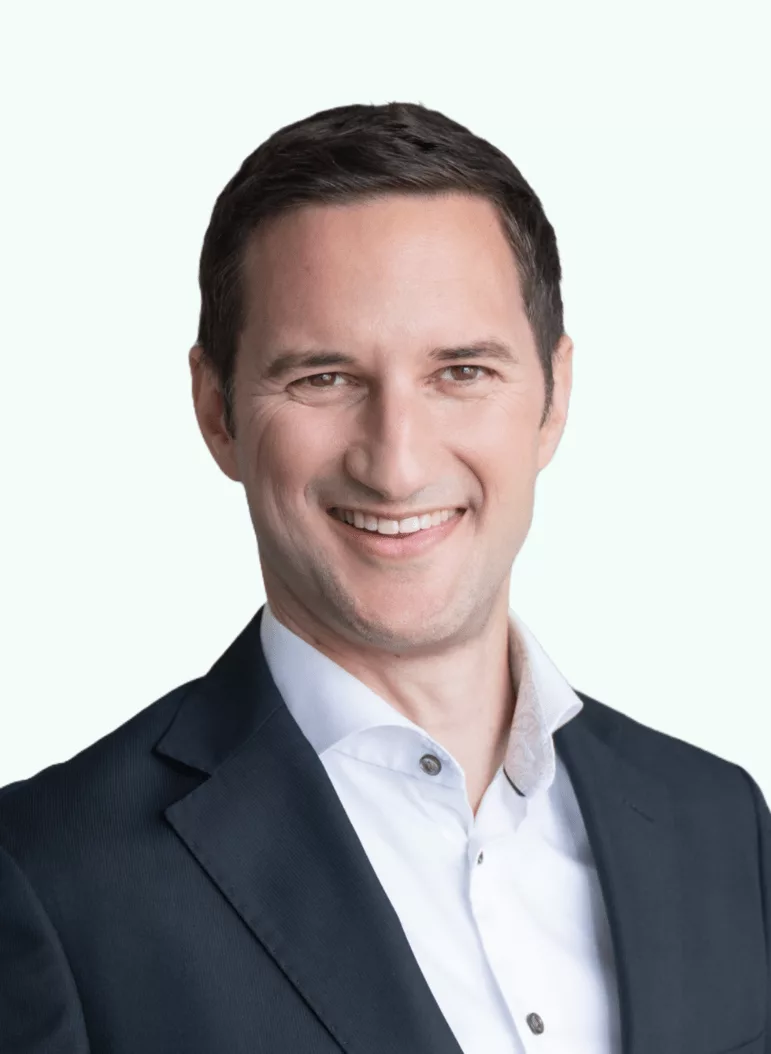
Pascal Stämpfli leverages over a decade of expertise in corporate finance and venture capital to scale and optimize businesses. A CFA charterholder with a Master's in Economics from the University of St. Gallen, Pascal specializes in market & company assessments, strategy, and business value creation. Having assessed more than 1,000 companies for financial and strategic investors provides him with a sophisticated understanding of investor rationale and capital allocation. As the Managing Director of Scalemetrics and Managing Partner at COREangels Big Data & AI Europe, Pascal operates at the intersection of financial discipline and technological innovation.