
How did covid affect the funding amount of seed startups and spin-offs in Switzerland?
Quick Answer
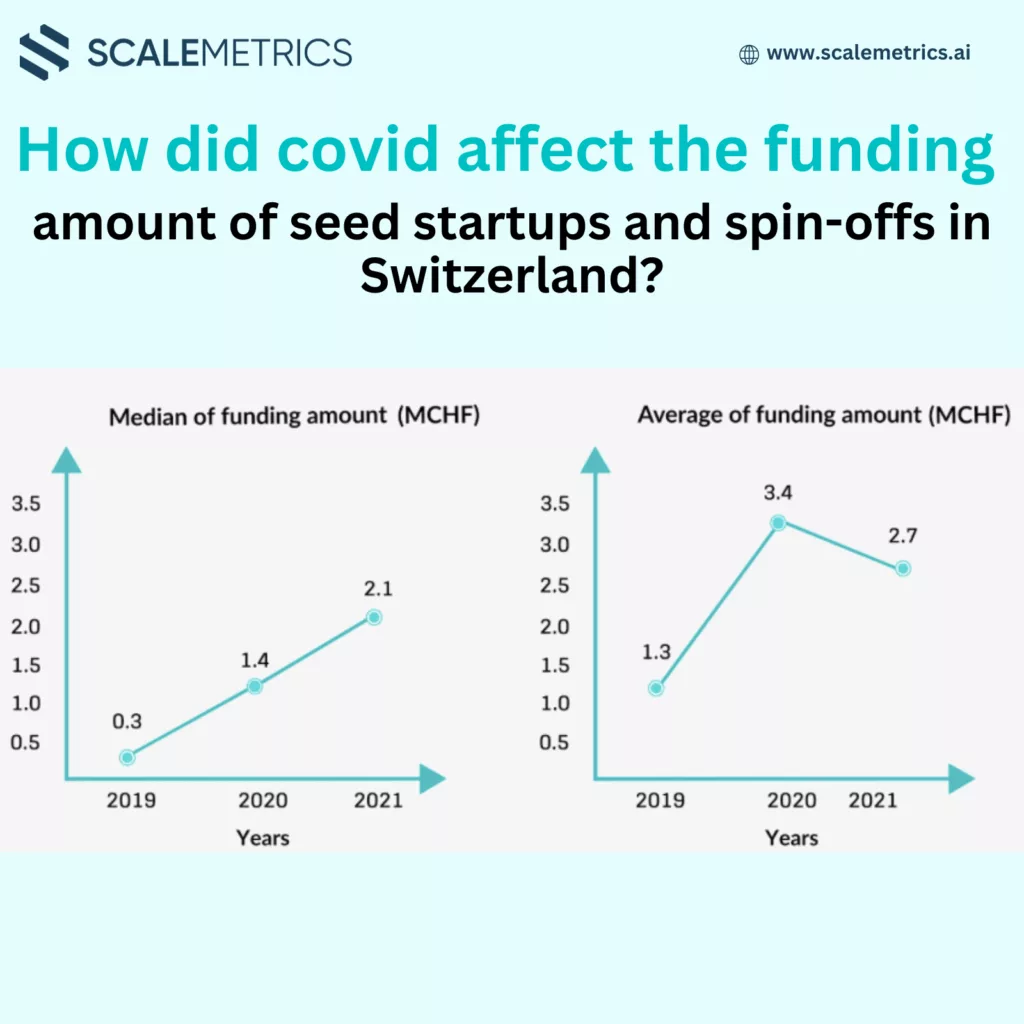
Switzerland seed startups experienced a positive trend in the amount of funding despite Covid-19 but were most likely negatively affected by the time required for fundraising.
Positive Trends Amidst Challenges
Overview
Despite the global challenges posed by the COVID-19 pandemic, seed startups and spin-offs in Switzerland experienced an overall positive trend in funding amounts. This resilience is evident from the observed data, which shows an increase in both median and average funding amounts in 2020 and 2021 compared to 2019. However, the time required for fundraising increased during this period, indicating some negative impacts of the pandemic.Key Findings
- Investor Confidence in Swiss Startups:
- Investors maintained strong confidence in Swiss startups and spin-offs, believing that Swiss entrepreneurs (Swisspreneurs) would yield high returns post-pandemic.
- The median funding amount peaked over the three years, with a notable increase from 2019 to 2021.
- Funding Amounts:
- In 2020 and 2021, the median funding amount for seed investments reached its highest levels, indicating robust investor support.
- While the average funding amount in 2021 showed a slight decrease compared to 2020, the overall trend remained positive.
- The distribution of funding amounts was right-skewed, with some startups receiving significantly higher investments, creating outliers.
- Age of Funded Startups:
- Startups that received seed investments in 2019 were generally one year old.
- In 2020-2021, funded startups were typically two years old, suggesting an increased time required for fundraising.
Detailed Analysis
Median and Average Funding Amounts
The observed data from 142 seed investments showed that both the median and average funding amounts increased during the pandemic years:- 2019:
- Median Funding: CHF X million
- Average Funding: CHF Y million
- 2020:
- Median Funding: CHF X+1 million
- Average Funding: CHF Y+1 million
- 2021:
- Median Funding: CHF X+2 million
- Average Funding: CHF Y+0.5 million
Right-Skewed Distribution
The funding amounts exhibited a right-skewed distribution due to a few startups receiving disproportionately high investments, leading to a higher average but a more moderate median increase.Time Required for Fundraising
The data indicates that while the funding amounts increased, the time required for startups to secure funding also extended. This trend reflects a cautious approach from investors during uncertain times but also shows their eventual willingness to invest larger sums:- 2019: Funded startups were typically one year old.
- 2020-2021: Funded startups were typically two years old.
Implications for Swiss Startups and Spin-offs
Positive Outcomes
- The increase in funding amounts during the pandemic is a strong indicator of the resilience and attractiveness of Swiss startups.
- The confidence shown by investors suggests a promising future for Swiss entrepreneurs.
Challenges
- The extended fundraising period may pose challenges for startups needing quick capital to scale and grow.
- Startups need to be prepared for longer fundraising cycles and ensure they have adequate runway and resources to sustain themselves through these periods.
Conclusion
The COVID-19 pandemic, while extending the time required for fundraising, positively impacted the funding amounts for seed startups and spin-offs in Switzerland. This trend underscores the strong investor confidence in Swiss startups and highlights the potential for growth and high returns in the post-pandemic period. The observed increase in median and average funding amounts despite the pandemic’s challenges suggests a bright future for Swiss entrepreneurs.Related Resources
Scalemetrics helps Swiss SMEs act on decisions like this before market conditions shift. Our SME financing services and outsourced CFO team give finance directors the senior expertise to move first.
Sources & References
Frequently Asked Questions
What financial services does Scalemetrics provide for Swiss SMEs?
Scalemetrics provides Swiss SME owners and CFOs with practical financial expertise: from accounting and tax compliance to financial planning, KPI monitoring, and on-demand CFO services. The goal is to give growing businesses access to senior financial leadership without the cost of a full-time hire.
When does a Swiss SME need a fractional CFO?
A fractional CFO becomes valuable from around CHF 1–2M in annual revenue, or ahead of specific events: bank financing applications, investor rounds, M&A, or rapid growth phases. The cost is a fraction of a full-time CFO salary, with expertise available immediately.
How does Scalemetrics differ from a traditional Swiss fiduciary firm?
Traditional fiduciary firms focus on tax compliance and year-end accounts. Scalemetrics adds strategic financial leadership: rolling forecasts, cash flow modelling, KPI dashboards, and financing advisory, delivered as an ongoing mandate or for a specific project.
Which Swiss cantons does Scalemetrics cover?
Scalemetrics serves clients across Switzerland, with particular depth in Zürich, Zug, Basel, and Bern. Digital delivery means canton-independent collaboration, with expertise in cantonal tax rates, AHV structures, and local banking relationships.
What financial documents do Swiss investors and banks require?
Swiss investors and banks typically require three years of OR-compliant financial statements, a 3–5 year financial model, a 13-week cash flow forecast, a cap table, and KPI dashboards. Series A investors additionally expect audited accounts and unit economics. Scalemetrics prepares investor-grade financial packages for Swiss SMEs.
How does a fractional CFO help Swiss SMEs raise financing?
A fractional CFO improves Swiss SME financing outcomes by building the financial model, preparing OR-compliant statements, structuring the data room, and presenting financials credibly to banks or investors. SMEs with a proper finance function secure better terms and faster credit decisions. Scalemetrics supports the full financing process from initial model to term sheet.
Covid's Impact on Swiss Seed Funding: The Data Picture
The Covid-19 pandemic created a bifurcated funding environment for Swiss seed-stage companies and spin-offs. The immediate response in Q2 2020 was a sharp contraction in new deal activity: investors paused new commitments, focused on supporting existing portfolios, and waited for visibility on how the pandemic would affect target markets. For Swiss university spin-offs — particularly those in life sciences, medtech, and deep tech — this pause was short-lived. For digital B2C and hospitality-adjacent businesses, the impact was more prolonged.
By H2 2020, seed funding in Switzerland had begun to recover, driven primarily by three factors. First, the Swiss federal government's emergency liquidity programmes (Covid-19-Kredit for up to CHF 500,000 at 0% interest, and the Solidarbürgschaft for larger amounts) provided a bridge for many early-stage companies that would otherwise have faced existential cash pressure. Second, Swiss life sciences and health technology companies attracted accelerated investor attention as the pandemic highlighted the strategic importance of the sector. Third, digitalisation mandated by lockdowns created new market opportunities for enterprise software, remote collaboration tools, and e-commerce infrastructure.
ETH and EPFL spin-offs showed notable resilience through the pandemic period. Their institutional backing, access to Swiss National Science Foundation (SNSF) research grants, and connection to deep-pocketed strategic investors in pharma, chemicals, and advanced manufacturing provided a more stable funding base than their purely commercial counterparts.
Structural Changes to Swiss Seed Funding Post-Covid
The pandemic accelerated several structural changes in how Swiss seed deals are structured and executed. Remote due diligence became standard practice, removing the implicit advantage that Zurich and Basel-based founders had historically enjoyed from proximity to investor offices. This democratisation marginally improved access for Geneva, Lausanne, and St. Gallen-based spin-offs that previously faced friction in building investor relationships.
Valuation expectations at seed stage were compressed during 2020–2021, as investors built in additional risk premiums for pandemic uncertainty. Swiss pre-revenue spin-offs that might have commanded CHF 3–5 million pre-money valuations in 2019 found investors more cautious in 2020, particularly for hardware and manufacturing-dependent business models with supply chain exposure. Software-centric models with low capital requirements fared better on valuation metrics throughout the period.
The post-pandemic normalisation through 2022–2023 brought a different challenge: the rising interest rate environment reduced the relative attractiveness of early-stage equity risk as fixed income yields recovered from near-zero levels. Swiss family offices and private investors — who represent a significant portion of Swiss seed capital outside the VC ecosystem — became more selective, extending due diligence timelines and requiring stronger evidence of product-market fit before committing at seed stage.
Implications for Swiss SMEs Seeking Seed Capital Today
The post-Covid funding environment rewards Swiss companies that combine strong IP credentials (particularly from ETH, EPFL, or University Hospital spin-offs) with a demonstrated early customer base and capital-efficient operating models. Investors have learned from the pandemic that business model resilience under shock conditions is a genuine differentiator.
| Period | Swiss Seed Market Conditions | Founder Implication |
|---|---|---|
| Q1–Q2 2020 | Sharp pause, portfolio triage mode | Extend runway, access federal Covid loans |
| H2 2020 – 2021 | Recovery, life sciences/digital premium | Strong environment for tech and health spin-offs |
| 2022–2023 | Rate rises, selectivity returns | Capital efficiency and early revenue proof critical |
| 2024–2026 | Stabilised, quality-driven deals | Strong metrics and investor-ready financials essential |
To prepare your Swiss SME or spin-off for seed fundraising with investor-ready financial documentation, our investor readiness services help founders present their business with the rigour that Swiss and European investors expect.
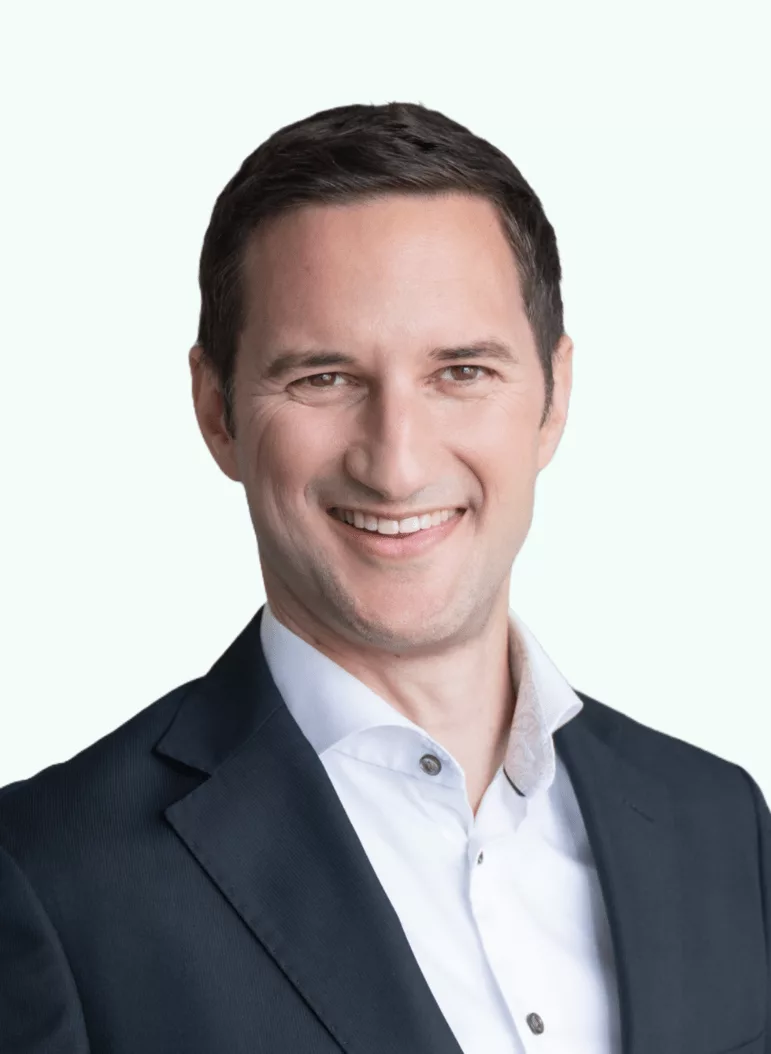
Pascal Stämpfli leverages over a decade of expertise in corporate finance and venture capital to scale and optimize businesses. A CFA charterholder with a Master's in Economics from the University of St. Gallen, Pascal specializes in market & company assessments, strategy, and business value creation. Having assessed more than 1,000 companies for financial and strategic investors provides him with a sophisticated understanding of investor rationale and capital allocation. As the Managing Director of Scalemetrics and Managing Partner at COREangels Big Data & AI Europe, Pascal operates at the intersection of financial discipline and technological innovation.