
Scaling Swiss Startups: 2026 Funding Metrics Benchmark
Quick Answer
Benchmarks für das Wachstum Schweizer KMU 2026: Finanzierungsrunden, ARR-Wachstumsraten, Burn-Rate und Runway. Datenbasierte Analyse für Schweizer Unternehmen.
Swiss founders and CEOs face a dynamic 2026 funding landscape fueled by AI, quantum tech, and cleantech booms in hubs like Zurich and Geneva. This guide benchmarks key ARR/MRR metrics per stage against EU peers, helping you optimize for smarter capital raises.
2026 Swiss Funding Landscape
Switzerland’s startup ecosystem hit $2.8 billion in total funding in 2024, with a 42% YoY growth driven by biotech (31%), fintech (26%), and deeptech (22%). Seed rounds averaged €2.2 million, while Series A medians reached €15 million-outpacing many EU peers amid global innovation leadership (Switzerland ranks #1 on the Global Innovation Index).
Zurich’s Crypto Valley and EPFL spin-offs dominate, with 756 tracked startups showing international co-founders in 38% of cases. Investors now prioritize capital efficiency, early traction, and AI-readiness over pure vision.
Key Metrics Breakdown by Stage
Focus on these high-intent metrics to signal scalability:
- Seed Stage: Target ARR > €500K within 12 months post-funding; median raise €1-3M. Efficiency ratio: Burn < 1.5x raise amount. Swiss biotech seeds hit €2M+ medians vs EU €1.8M.
- Series A: ARR €2-5M, with MRR growth >20% MoM. LTV:CAC >3:1 essential; median €15M raise reflects 50% higher than 2023.
- Series B+: ARR €10M+, NRR >110%, churn <5% quarterly. Deeptech averages €25-70M rounds, emphasizing organizational maturity.
Benchmark Data vs EU Peers
Swiss startups outperform EU averages: 2025 data shows Zurich Series A at €18M median vs Berlin’s €12M or Paris €14M, thanks to Innosuisse grants (up to CHF 500K) and VC focus on execution.
- Fintech: Swiss NRR 112% vs EU 105%; Almanak’s $8.45M seed proves blockchain traction metrics win deals.
- Deeptech: 85% international funding; quantum firms track R&D-to-revenue <24 months.
- Cleantech: $334M total; ROI metrics (e.g., hydro power pilots) secure SFOE loans faster than EU green funds.
Gaps persist in growth capital-Swiss firms raise 20% less in late stages vs UK/France-but 2026 AI infrastructure bets close this.
Actionable Optimization Steps
- Audit Metrics: Use Google Sheets/Python for cohort ARR tracking; aim for 3x efficiency vs benchmarks. Template: Input seed raise → Auto-flag if burn exceeds 1.2x.[ from prior]
- Build Proofs: Highlight traction in pitch decks-e.g., “€2M ARR at €1.8M burn” beats vague projections. Investors like QBIT Capital demand “scientific depth + quick deployment.”
- Leverage Local Boosts: Apply Venture Kick (CHF 150K non-dilutive) pre-seed; track grant-to-ARR conversion >2x for follow-ons.
- Stress-Test Scenarios: Model 20% MRR dip; Swiss bootstrappers extend runway 25% longer via efficiency.
- Network Hubs: Pitch at Greater Zurich Area events; 89 ETH/EPFL spin-offs in 2024 averaged €10M+ rounds.
Real-World Swiss Wins
Evulpo (EdTech) hit $10.9M Series A with education metrics showing 300% user growth; Terra Quantum scaled on defensibility KPIs. These cases prove: Track ARR per employee (>€200K) and churn signals early to de-risk raises.
Scalemetrics helps Swiss SMEs act on decisions like this before market conditions shift. Our SME financing services and outsourced CFO team give finance directors the senior expertise to move first.
Frequently Asked Questions
What should Swiss SMEs know about 2026 Swiss Funding Landscape?
Switzerland's startup ecosystem hit $2.8 billion in total funding in 2024, with a 42% YoY growth driven by biotech (31%), fintech (26%), and deeptech (22%). Seed rounds averaged €2.2 million, while Series A medians reached €15 million-outpacing many EU peers amid global innovation leadership (Switzerland ranks #1 on the Global Innovation Index).
What should Swiss SMEs know about key Metrics Breakdown by Stage?
Focus on these high-intent metrics to signal scalability:
What should Swiss SMEs know about benchmark Data vs EU Peers?
Swiss startups outperform EU averages: 2025 data shows Zurich Series A at €18M median vs Berlin's €12M or Paris €14M, thanks to Innosuisse grants (up to CHF 500K) and VC focus on execution.
What should Swiss SMEs know about actionable Optimization Steps Audit Metrics: Use Google Sheets/Python for cohort ARR tracking; aim for 3x efficiency vs benchmarks. Template: Input seed raise → Auto-flag if burn exceeds 1.2x.[ from prior] Build Proofs: Highlight traction in pitch decks-e.g., "€2M ARR at €1.8M burn" beats vague projections. Investors like QBIT Capital demand "scientific depth + quick deployment." Leverage Local Boosts: Apply Venture Kick (CHF 150K non-dilutive) pre-seed; track grant-to-ARR conversion >2x for follow-ons. Stress-Test Scenarios: Model 20% MRR dip; Swiss bootstrappers extend runway 25% longer via efficiency. Network Hubs: Pitch at Greater Zurich Area events; 89 ETH/EPFL spin-offs in 2024 averaged €10M+ rounds. Real-World Swiss Wins?
Evulpo (EdTech) hit $10.9M Series A with education metrics showing 300% user growth; Terra Quantum scaled on defensibility KPIs. These cases prove: Track ARR per employee (>€200K) and churn signals early to de-risk raises.
Sources & References
The Swiss Startup Funding Landscape Has Structurally Changed
The 2026 Swiss funding environment is materially different from the 2021 peak in ways that are important for founders to internalise rather than dismiss as a temporary downturn. Total Swiss venture investment declined by approximately 35% from its 2021 high through 2023, stabilised in 2024, and has partially recovered in 2025–2026 — but the recovery is concentrated in specific sectors (AI, deep tech, climate) and specific stages (Seed and Series A) rather than distributed across the full funnel. Growth-stage rounds (Series B and beyond) remain significantly compressed, with median time-to-close extending to 10–14 months in 2025 compared to 5–7 months in 2021.
The practical implication is that Swiss founders must now plan for a longer, more demanding fundraising process, and must enter that process with better financial data than was required three years ago. The bar for a Series A in Switzerland in 2026 is approximately where Series B was in 2020 — in terms of revenue scale, governance standards, and the depth of financial analysis an investor expects to review.
2026 Funding Metrics Benchmark: Swiss Stages Compared
The following benchmarks are derived from disclosed Swiss fundraising data for 2024–2026 and conversations with Swiss VC investors active in the local market:
Pre-Seed (CHF 250K–1M). Typically based on founding team quality and concept validation rather than financial metrics. Swiss accelerator participation (MassChallenge, Kickstart, F10) is a credible signal but not a requirement. Financial model expected but not heavily scrutinised at this stage.
Seed (CHF 1M–4M). First customer revenue expected; gross margin profile must be visible. Swiss VCs at Seed stage focus heavily on the size of the addressable market and the founder's ability to articulate a path to CHF 5M ARR within 24 months of the round closing. MWST registration and AHV compliance are basic due diligence checks at this stage.
Series A (CHF 4M–15M). ARR of CHF 1.5–4M required; NRR above 100%; demonstrable product-market fit in at least two customer segments. Audited financials expected for the prior fiscal year. Investor-grade financial model with 36-month projection is standard.
Series B (CHF 15M–60M). ARR of CHF 6M+; EBITDA breakeven modelled within 18–24 months. International revenue (DACH minimum) strongly preferred. Board composition including at least one independent director expected.
Swiss Funding Benchmarks by Stage 2026
| Stage | Typical Round Size | Revenue Expectation | Time to Close (2026) |
|---|---|---|---|
| Pre-Seed | CHF 250K–1M | Pre-revenue to CHF 200K ARR | 2–5 months |
| Seed | CHF 1M–4M | CHF 200K–1.5M ARR | 4–8 months |
| Series A | CHF 4M–15M | CHF 1.5M–4M ARR | 6–10 months |
| Series B | CHF 15M–60M | CHF 6M+ ARR | 10–14 months |
The founders who shorten their fundraising cycles in 2026 are those who arrive investor-ready. That means a clean cap table, audited financials, an investor-grade financial model, and a CFO-quality narrative around the key metrics. An investor readiness engagement compresses months of preparation into four to six weeks and materially improves the probability and terms of a successful raise.
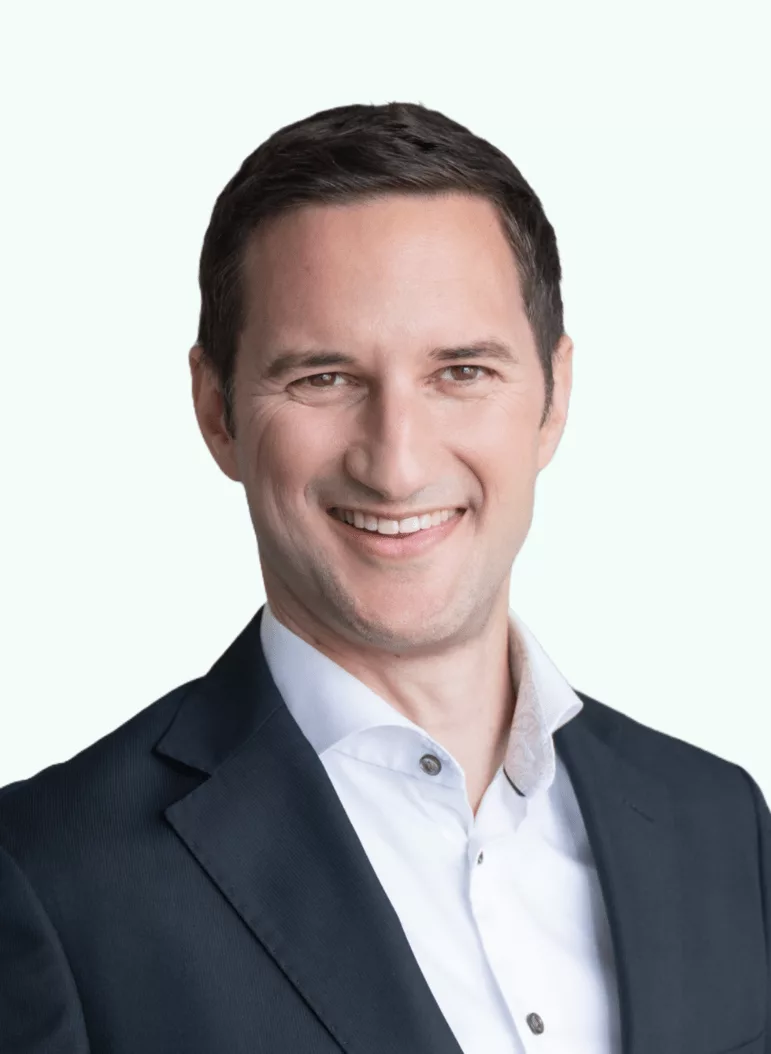
Pascal Stämpfli leverages over a decade of expertise in corporate finance and venture capital to scale and optimize businesses. A CFA charterholder with a Master's in Economics from the University of St. Gallen, Pascal specializes in market & company assessments, strategy, and business value creation. Having assessed more than 1,000 companies for financial and strategic investors provides him with a sophisticated understanding of investor rationale and capital allocation. As the Managing Director of Scalemetrics and Managing Partner at COREangels Big Data & AI Europe, Pascal operates at the intersection of financial discipline and technological innovation.